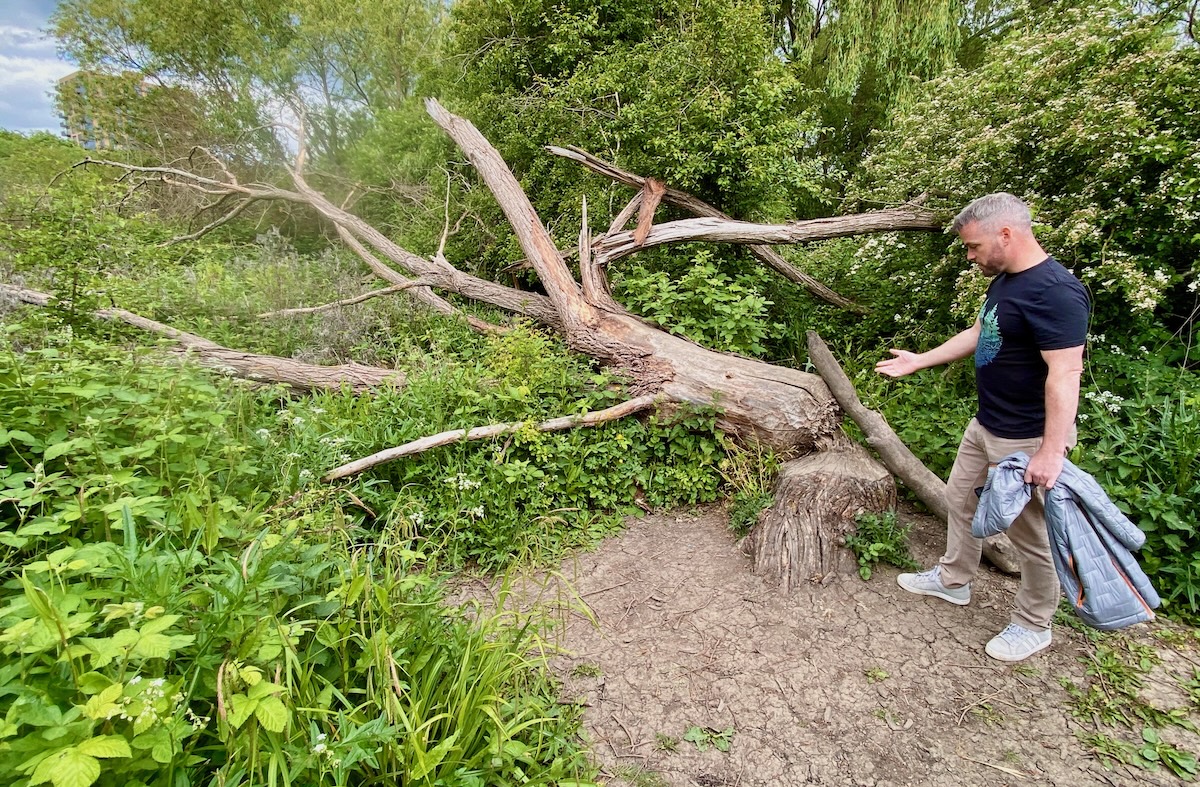
Sean McCormack is a vet, wildlife presenter, conservationist and naturalist. He is also founder of the Ealing Wildlife Group and Project Lead for the Ealing Beaver Project. I met up with Sean at Paradise Fields in Greenford, London, the site of the Ealing Beaver Project, to learn more about the project and Sean’s role within it.
Sean grew up in the east of Ireland, completed an undergraduate degree in Animal Science at the University of Essex and University of British Columbia in Vancouver, and then graduated from the Dublin Vet School in 2010. Sean researched the potential for beaver reintroductions as part of his undergraduate degree and was struck by the size of a beaver dam at Stanley Park, Vancouver when in Canada, and the potential for the return of beavers to urban settings in the UK.
I had become aware of Sean through his social media posts, and joining online events sharing the work of the Ealing Beaver Group, after beginning my own beaver focused research with Queer River. I’ve been keen to visit the Paradise Fields site since the beavers’ release there in 2023, inspired partly by Sean’s obvious passion for the beavers and his other work locally (e.g. the ongoing reintroduction of Harvest Mice to the borough). I was interested to hear about Sean’s experiences of the environmental sector as a gay man, and – as I learned as we talked – someone recently diagnosed with/identifying as ADHD.
Nature has always offered me a place where those human labels seem far less important, and I can escape to and get totally absorbed in the detail, ecology and beauty of the natural world. It’s where my racing thoughts slow down and my busy brain finds peace and quiet in what can be a stressful world and day to day life.
As a gay man, I’ve spent much of my life navigating systems and expectations that suggested there was one “right” way to live. My happiest moments have often come from stepping outside those expectations and embracing a path that felt more authentic. In some ways, rewilding feels similar in being less about control and more about trusting the process, that maybe nature actually knows best.
Sean
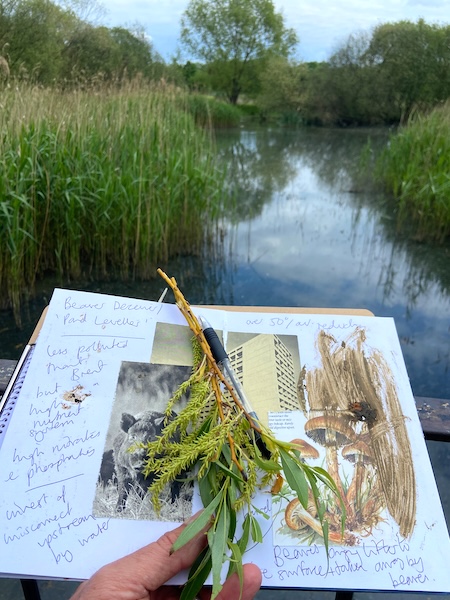
Paradise Fields is a 10 hectare piece of land that was previously farmland, and later became a golf course, with the surrounding retail park being built in 2000. Costons Brook and a field ditch cut across the site and feed its ponds. The Brook goes underground after leaving the site, and then feeds into the River Brent, itself a tributary of the River Thames. Although the Brook is less polluted than the River Brent, it is as Sean told me high in phosphates and nitrates. Testing onsite and a focus on the need to improve water quality for the beavers has led to some action being taken by the water company upstream, to identifying incorrectly connected waste pipes that were polluting the Brook.
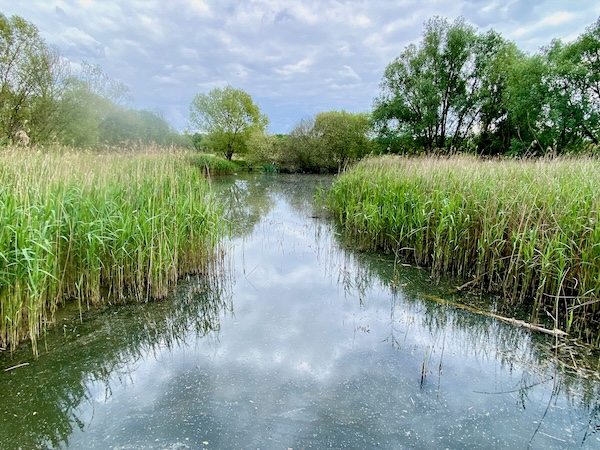
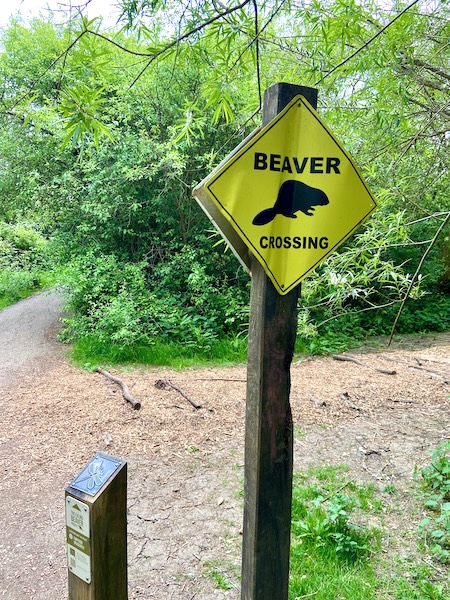
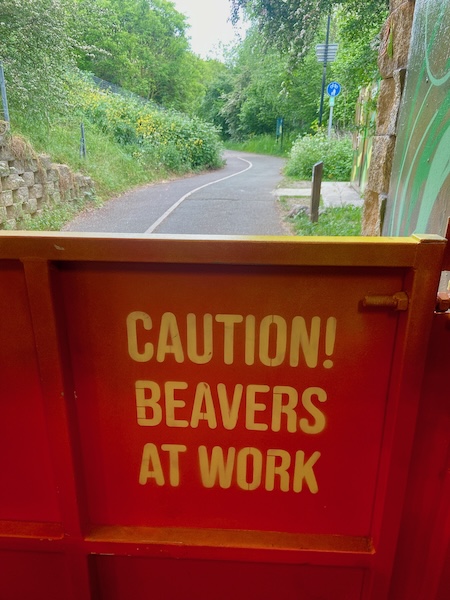
I arrived at Paradise Fields a little flustered, after several delays and cancellations to my train journey from Wiltshire, and met Sean outside the Beaver Project gates by the Westway Cross Shopping Park. After entering the site via the underpass, Sean gave me an introduction to the history of Paradise Fields, and then took me on a walk around the site, sharing information on the impact of the arrival of beavers on the site’s ecology and its local community.
The Ealing Beaver Project is one of only a few urban beaver reintroduction sites in the UK, and the only one in London, the first urban reintroduction having taken place in Plymouth in 2020/21. The 8 hectare enclosure at Ealing is the only one that is accessible 24 hours a day to the general public, lying as it does on the path of the Capital Ring walking route. The site was identified following the scoping of a number of London locations in 2022, followed by a feasibility assessment supported by Beaver Trust, and a public consultation led by the Ealing Wildlife Group (see the full timeline here). In the end, a family of 5 beavers were translocated from Scotland and released onsite in October 2023. You can watch the film Beavers in Paradise produced by Matt Brierley, and a recording of the associated panel discussion (including Sean) on YouTube.
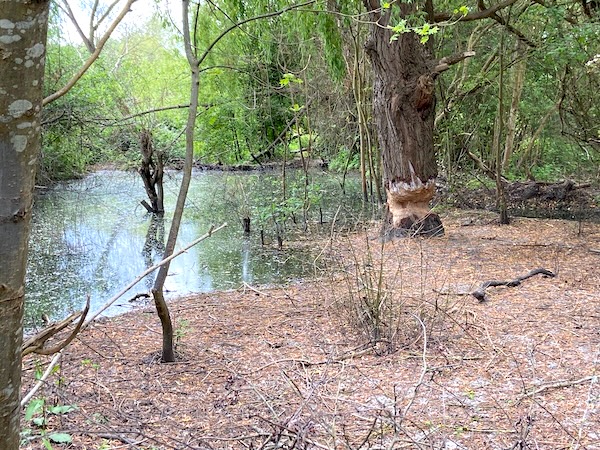
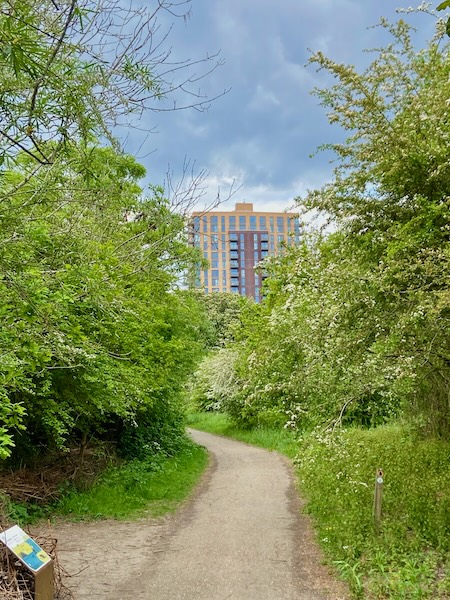
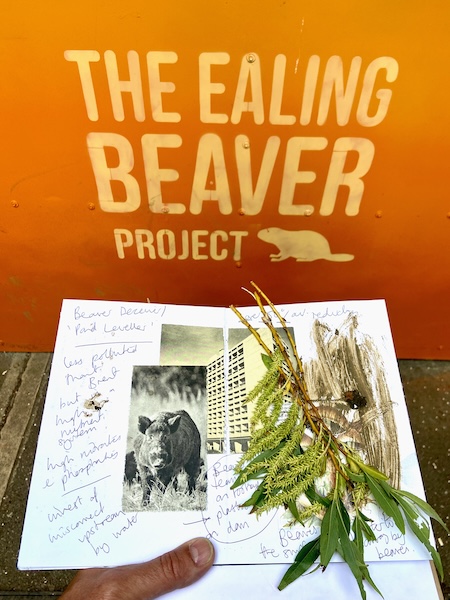
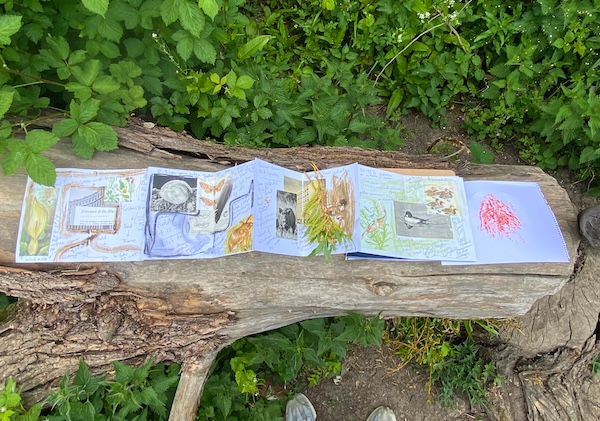
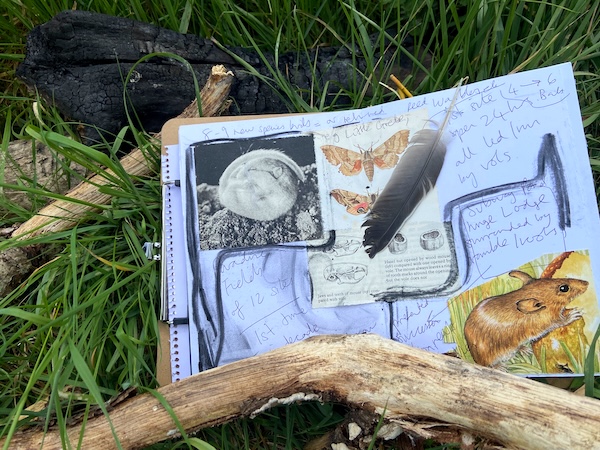
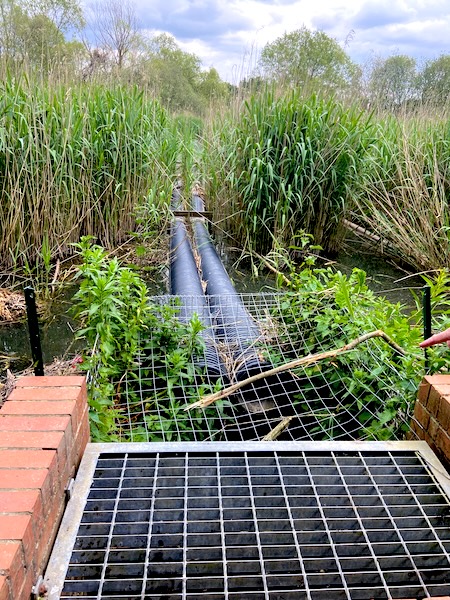
As we walked and talked around the site I made notes onto a more compact set of Beaver Walking Pages than usual (see Walking Out for the others I’ve been working on) to capture the main points, and when Sean needed to head off to his next meeting, I continued my wander by taking a closer look at some of the interpretation and infrastructure, both beaver and human made.
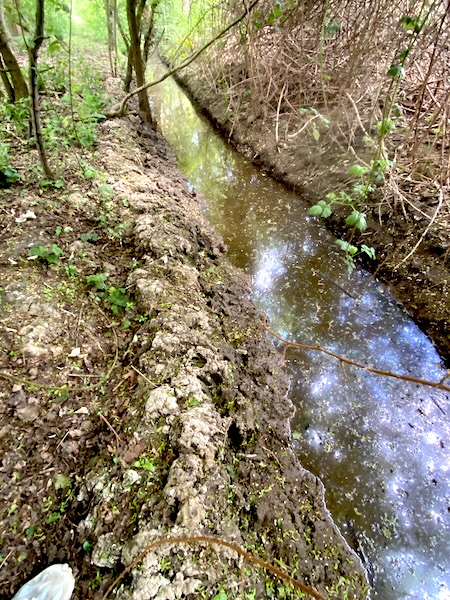
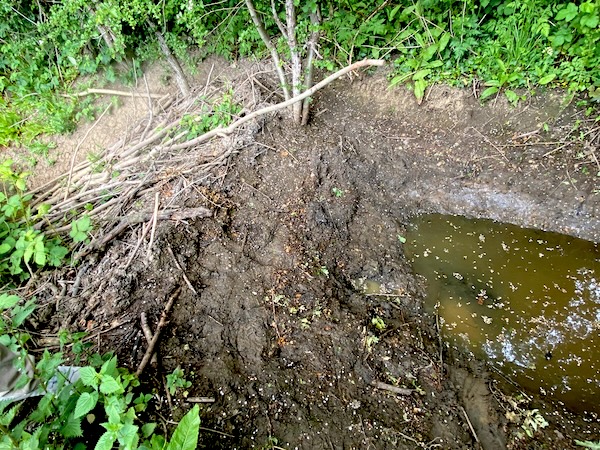
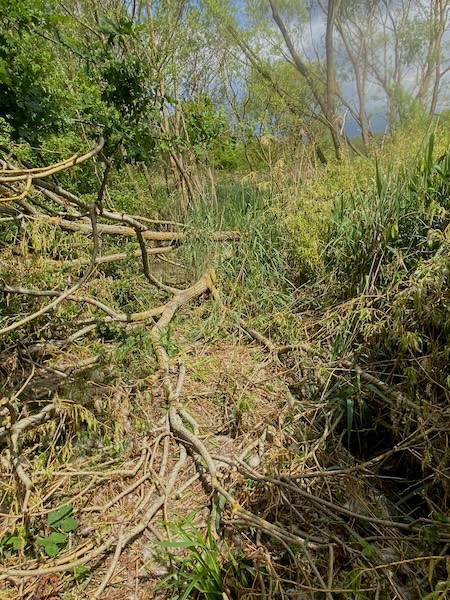
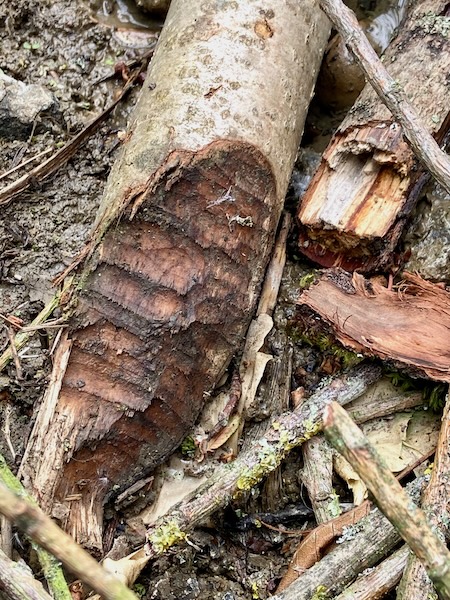
Although the beavers have only been on-site (at the time of visiting) for 2 years and 7 months, the EBG team have already made some really interesting observations on the impact of the beaver’s ‘re-making’ of a previously degraded wetland habitat. Felling and coppicing trees for access to food and to use as building materials for lodges and dams, digging canals and grazing waterside plants, the beavers create a mosaic of habitats, re-wet drier ground, filter sediment and pollutants, and create opportunities for other species to take up home.
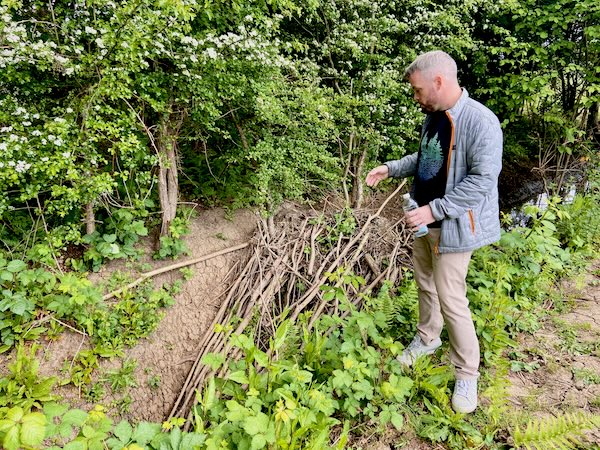
10 new bird species have been recorded and 2 previously recorded species have returned to breed at the site after an absence, whilst the number of bat species recorded at Paradise Fields has increased from 4 to 6. In 2025. Common Frogs returned, quick to take advantage of the opportunity to spawn in the beaver wetlands, with Sean describing the sight of a ‘black slick of tadpoles’ filling one section of beaver canal. Common Toads have now also been observed on site for the first time.
The Ealing Beaver Project isn’t only for wildlife. Sean sees the project as being about social and environmental justice as much as a demonstration project to show the beneficial impact of beavers on urban ecosystems. The project brings local people into contact with green and blue spaces and is supported by a team of local volunteers who take on roles from fence checking to litter collection, aided by the beavers who uncover historic litter through their digging of canals and dredging of ponds.
It’s not enough to celebrate the ecological benefits if we aren’t also asking whether the animals themselves are thriving. These beavers are living in a landscape heavily altered by people, affected by pollution and constrained by fencing. That inevitably raises questions about welfare, choice and autonomy.
What gives me optimism is that the project continually asks those questions. Good conservation should never stop interrogating itself. We should be able to hold two truths at once: that the beavers are delivering extraordinary benefits for biodiversity and people, and that we have an ongoing responsibility to ensure their welfare remains at the centre of decision-making.
Sean
For the first time in a decade, an area of Greenford downstream of Paradise Fields didn’t flood last year, due to the beaver’s engineering works, and Sean tells me, anti-social behaviour on site has decreased by over 90%. A seeming recognition that beavers belong and are welcomed in the area is reflected in the actions of local people and businesses, with the local beer festival incorporating a beaver into their logo and developing a Beaver Ale, with notes of willow, oak and vanilla, to reflect the historic use of beaver castoreum as a scent and flavouring.
Sean and the project team are determined that the project provides access for a diverse range of human visitors. Big Gay Beaver Days have sought to provide a safe space for the queer community to engage with local nature, with one including a drag performance by Sean as Sophie Beaver Hawkins singing ‘Dam I wish I was your Beaver”.
I’m instinctively drawn towards celebrating diversity, complexity and coexistence rather than trying to force things into neat categories, or go blindly with the status quo. The natural world is messy, dynamic and full of exceptions. I find comfort in that. It reminds me that difference is not something to be tolerated; it’s something fundamental to the health and resilience of any ecosystem.
Sean
Urban Beaver Officer Şeniz Mustafa has also been brought into post to increase engagement with a range of groups. I was lucky to bump into Şeniz in the undergrowth at Paradise Fields, after having read about her experiences as a neurodivergent person working in the environmental sector, in Joe Harkness’ book Neurodivergent by Nature.
We are currently standing at an environmental precipice…. Habitats are disappearing as our climate is changing beyond recognition. To combat these challenges we need diverse perspectives, innovative ideas and radical approaches. We need neurodivergence. We need it where it matters, whether that’s knee-deep in the meadows surveying insects, or sitting round a table deciding the next year’s objectives of an NGO. To ensure our planet has a resilient and hopeful future, we must embrace all forms of diversity. A diverse future is a flourishing one…
Joe Harkness
Sean ascribes his determination to ‘push the dial‘ on urban rewilding, to both a self assurance that grows from surviving growing up with a sexuality that one is told is wrong or unnatural, and the justice sensitivity often linked to ADHD. He describes his focus on ‘getting out with other people and getting things done’ as a response to his own eco-anxiety, championing grass roots community action in the face of the climate and ecological crises.
We talked together about how it feels to be working as a neuroqueer person within the environmental sector, the sometimes frustratingly slow pace that things move at (particularly species reintroductions), and the limiting nature of the gatekeepers that seem to want to hold on to the status quo within more established conservation organisations.
For me, as an queer, autistic artist who understands the value of bringing a range of voices and experiences into the sector, and ways of working that are creative, playful and experimental, I often feel that I am left peering in from the outside, waving the flag for expanded ways of knowing that value arts and culture as well as science, and practices that support people who don’t see themselves reflected within the mainstream.
I’m sure I say this at the end of most of my Queer River posts, but there is so much more that I could say about Sean’s work and the Ealing beaver Project. As I write I am waiting to hear if I’ve been successful in applying for another PhD studentship. As written here before my research will focus on Neuroqueer Ecologies and arts-based mapping of beaver wetlands, especially the interrelationship of human and beaver infrastructure, and the re-making of degraded wetland systems in a time of climate and biodiversity crisis.
We need people who can see beyond inherited ideas and concepts, who question the boundaries that have set up between urban and rural, land and water, humans and (the rest of) ‘Nature’, and I think Sean is one of those people. Thanks Sean, I’d love to come back…
I’ve also always felt most at ease around animals and in wild places. Whether that’s connected to neurodivergence, sexuality, personality or some combination of all three, I’m not entirely sure. But I do know that nature has often provided a refuge from the noise, complexity and expectations of human society. Nature doesn’t moralise differences or create labels in the way humans often do. Animals don’t judge, and forming relationships with them, whether they are pets or wild, can be incredibly fulfilling. Particularly when wild animals learn to trust you, that’s always a glorious feeling that never gets old.
Sean
Since writing this post I’ve accepted a place as a PhD researcher with Winchester School of Art / Southampton University, exploring the application of an arts-based, Neuroqueer Ecologies methodology to the mapping of beaver wetlands . Unfortunately I wasn’t successful with my studentship application for a 2026 start, so will be starting in Autumn 2027 and using the time to explore different funding options. If you have any suggestions for sources of funding for PhD research please do get in touch I would love to hear from you.

