Walking with… Ecologist and Researcher Tim Sykes

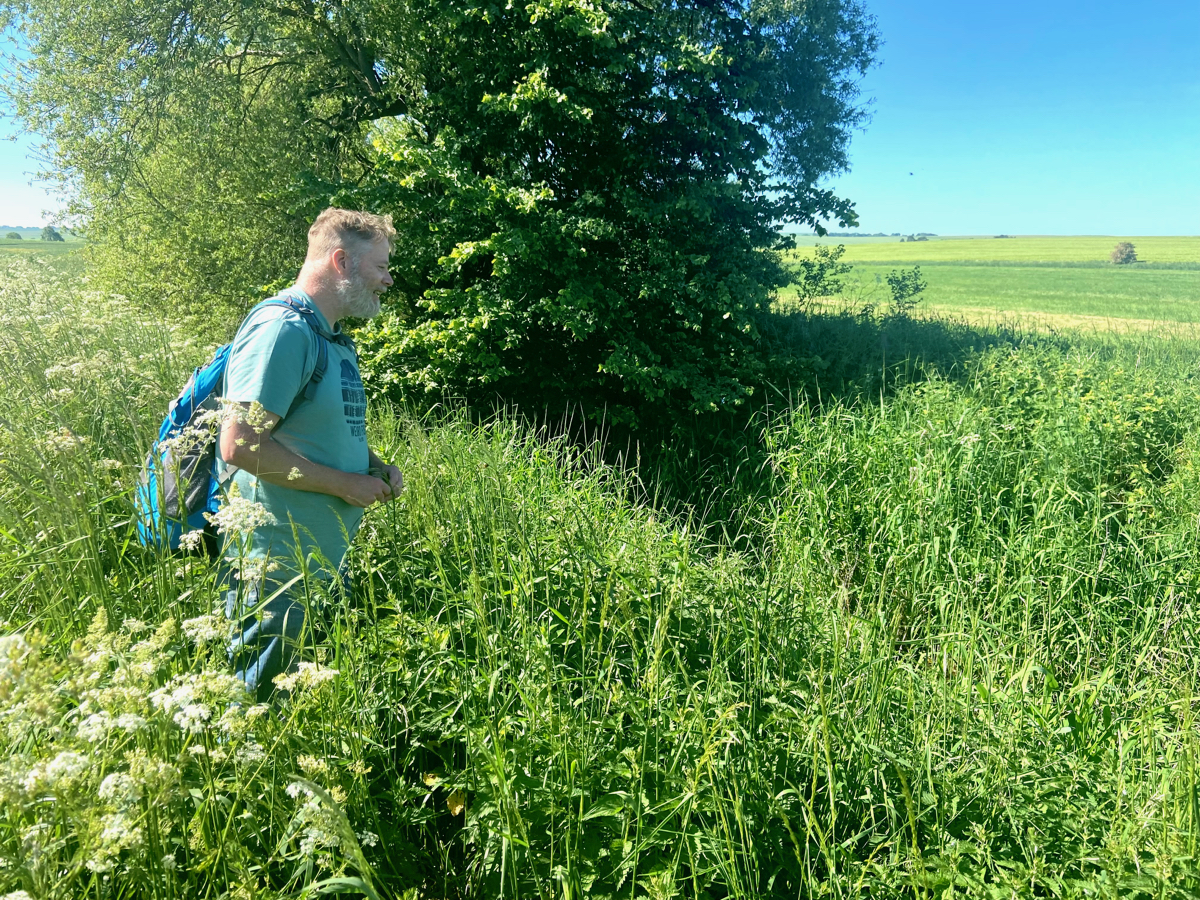
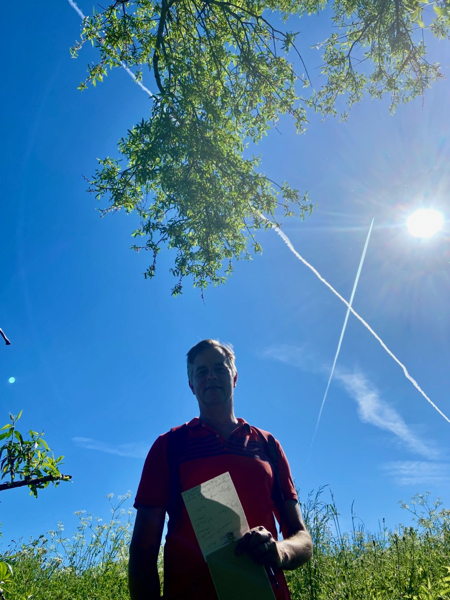
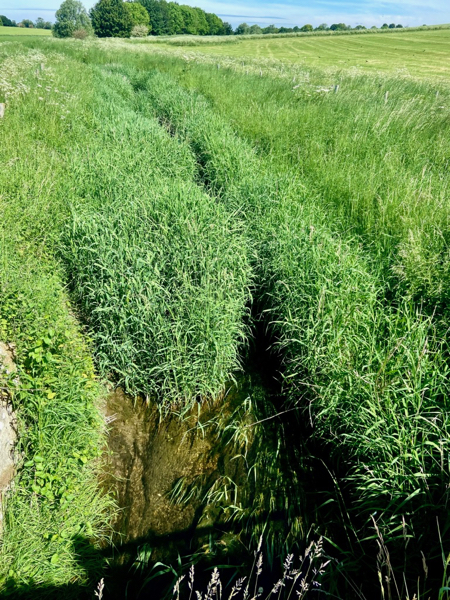
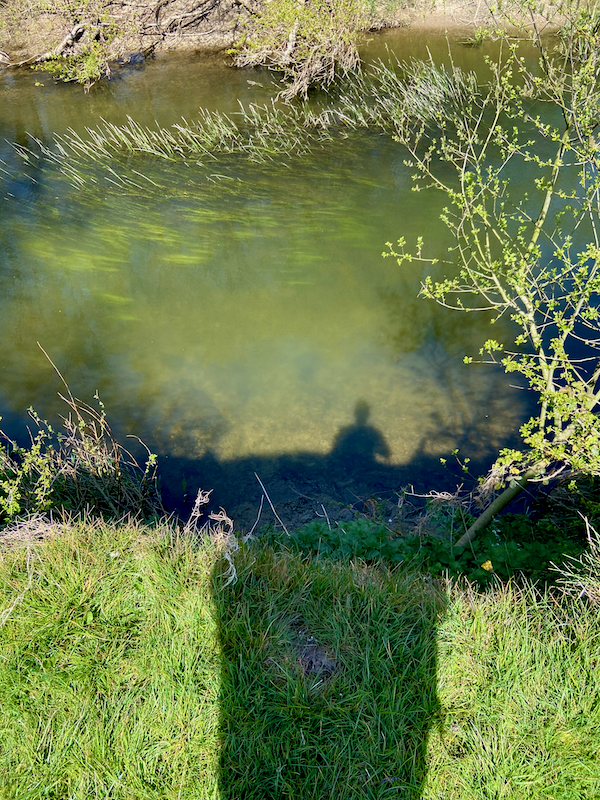
Yesterday I took a walk with Tim Sykes along the River Kennet from Avebury. Tim, an ecologist who works for the Environment Agency, contacted me via Twitter (@RiversAndPeople) in connection with his doctoral research with Southampton University, into people’s relationship with and perceptions of chalk stream winterbournes.

‘I am especially interested in contributions to happiness, well-being, life satisfaction, sense of place, place identity and attachmentI aim to contribute to the public health, blue health and nature connectedness agenda… and inform better Governance of water resources… properly valuing the true benefits & costs of water…’

Tim Sykes

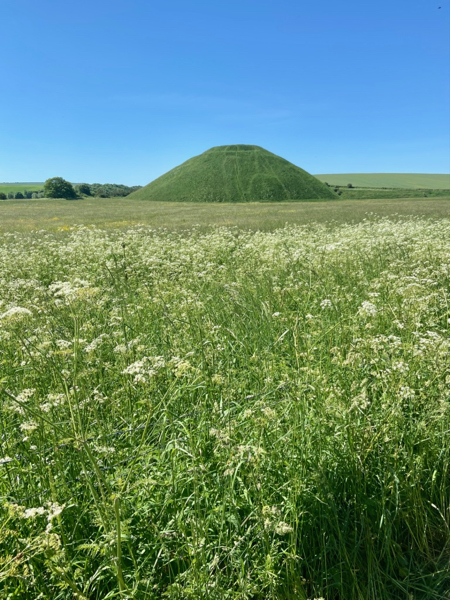
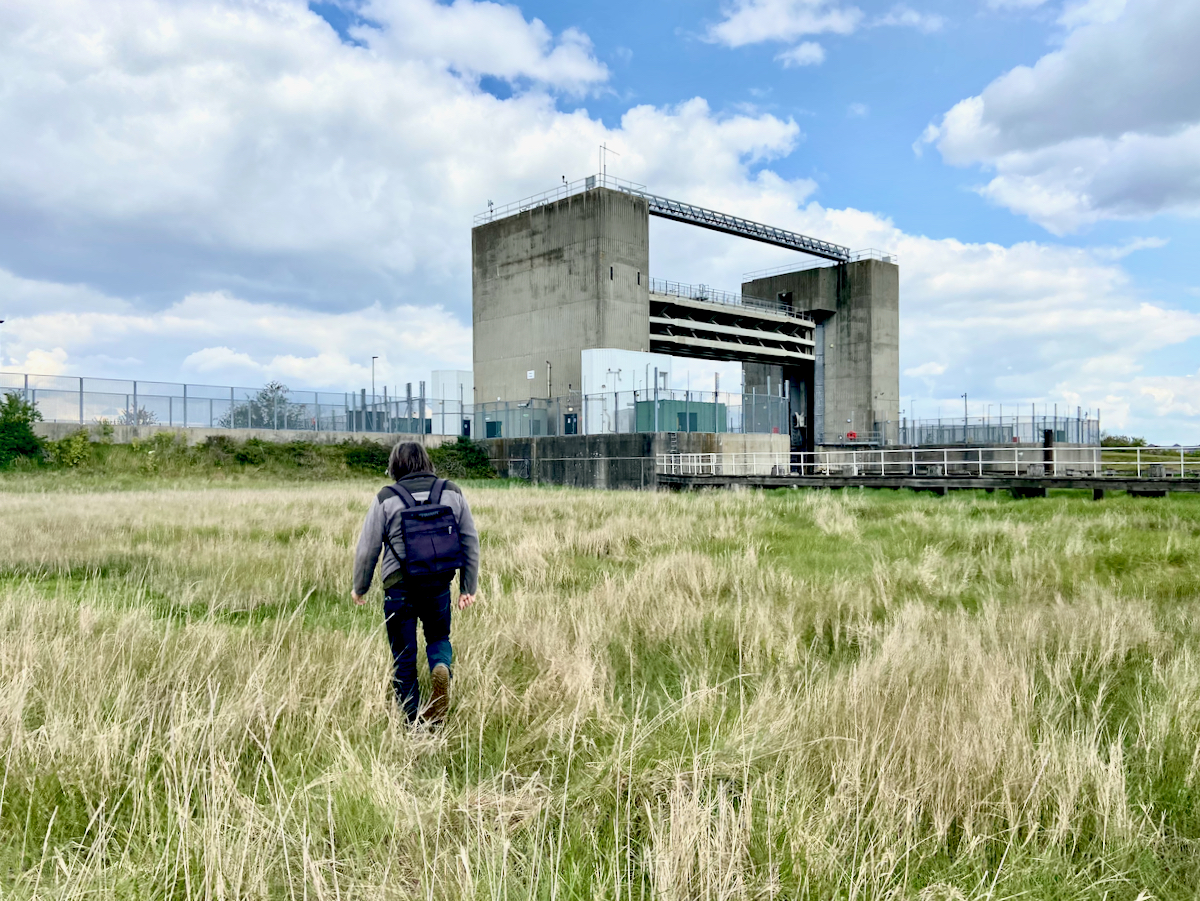
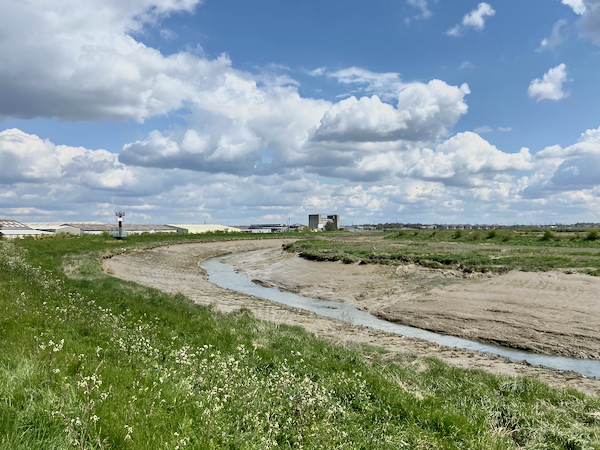
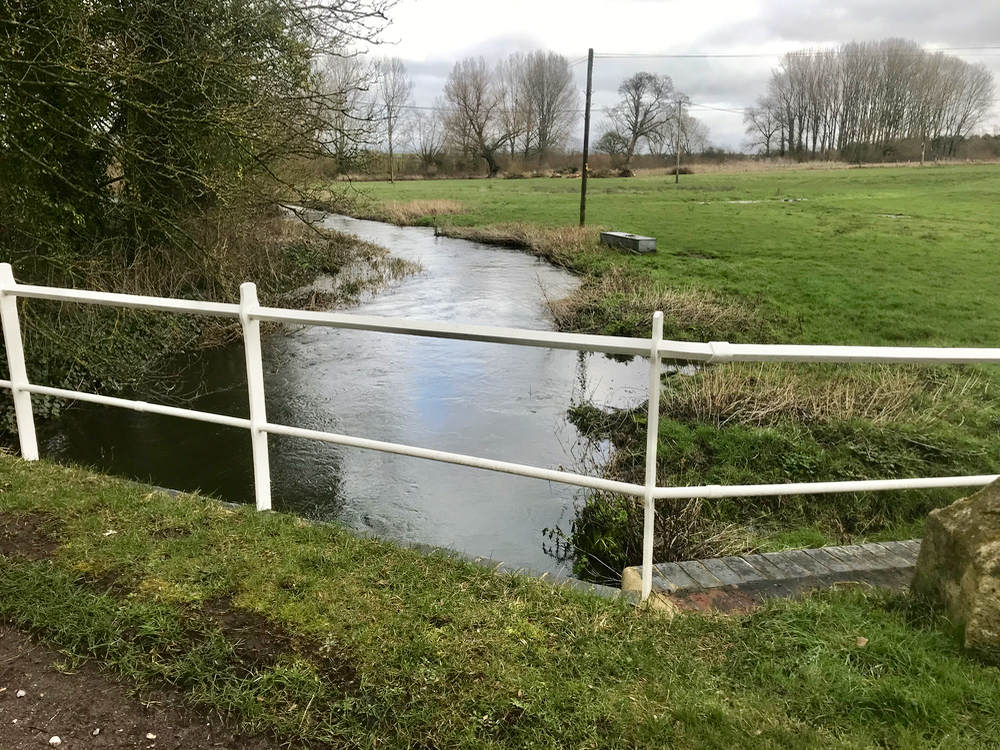
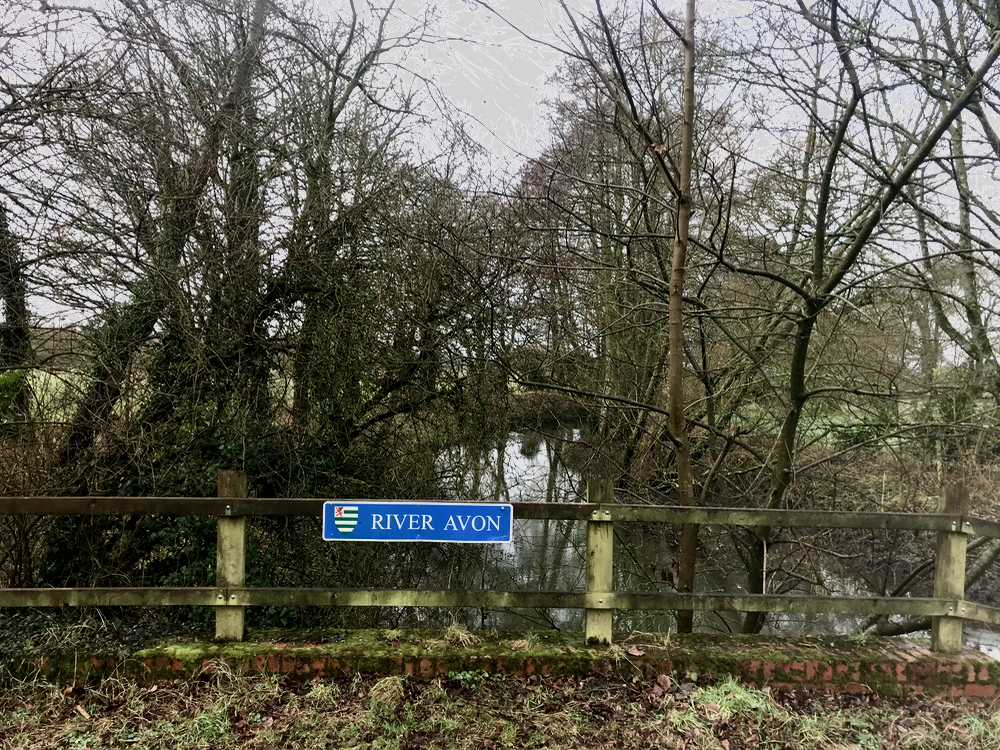
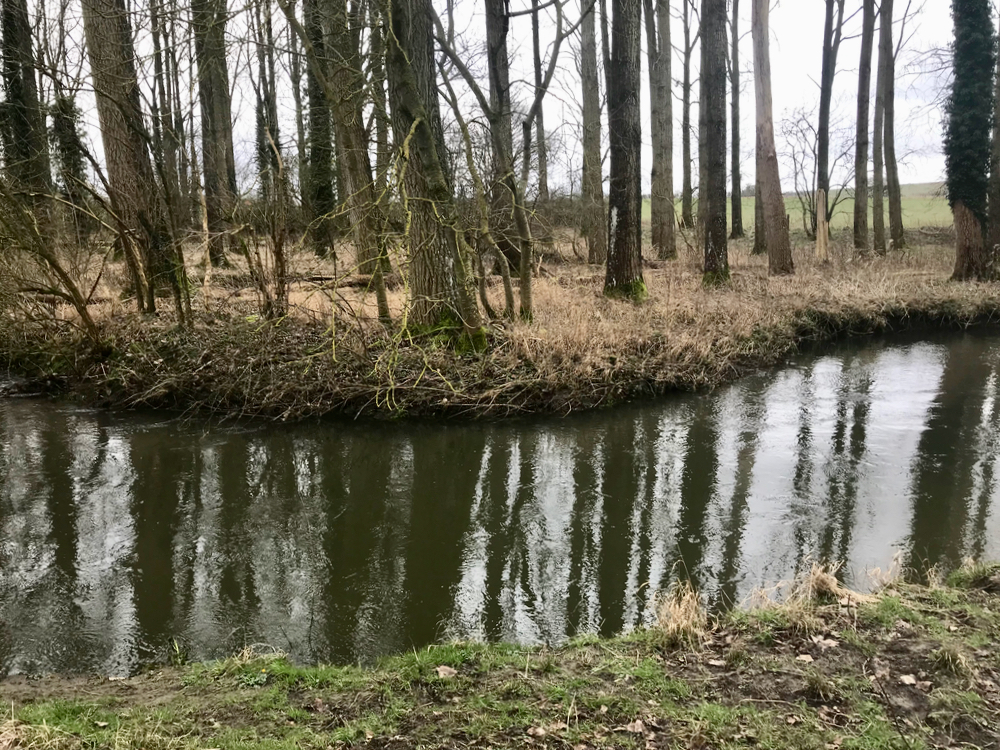
We met at the National Trust car park on the edge of Avebury village, and made our way along the Kennet to Silbury Hill, Swallowhead Spring (one of the sources of the Kennet), and West Kennet Longbarrow.

Avebury is very much a part of my local patch, but as I started this research focusing on the Avon, I hadn’t yet included it or the River Kennet within my Queer River walks. I also hadn’t throught of this stretch of the Kennet as being a winterbourne, despite the act that it disappears during the summer months.

I made my first film and audio work Walking Back to Marden in response to neolithic monuments and their relationship with rivers, and included this area in the sites that I visited, alongside Marden Henge and Durrington Walls. I was also aware from my time working at Stonehenge on various projects in the past, of the role of chalk in the creation of henges and mounds, and of the flint that forms within the chalk in the creation of flint tools, but my knowledge of chalk streams until now has been fairly limited.

I knew that both the River Kennet and the Salisbury (or Hampshire) Avon are chalkstreams, that they are camparatively rare, and often threatened by over extraction of water, and pollution from agricultural run off. I had also begun discussions with artist Jac Campbell about the relationship between our river related practices, and a possible collaboration linked to our local chalk streams (Jac makes work about/with the River Lark in Suffolk) . But I hadn’t got much further than that.

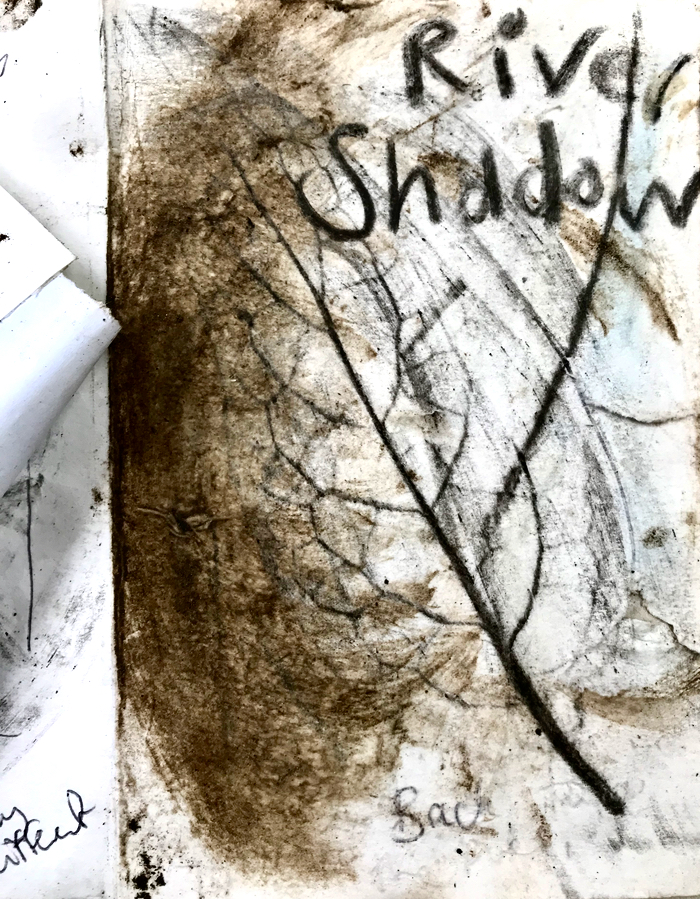
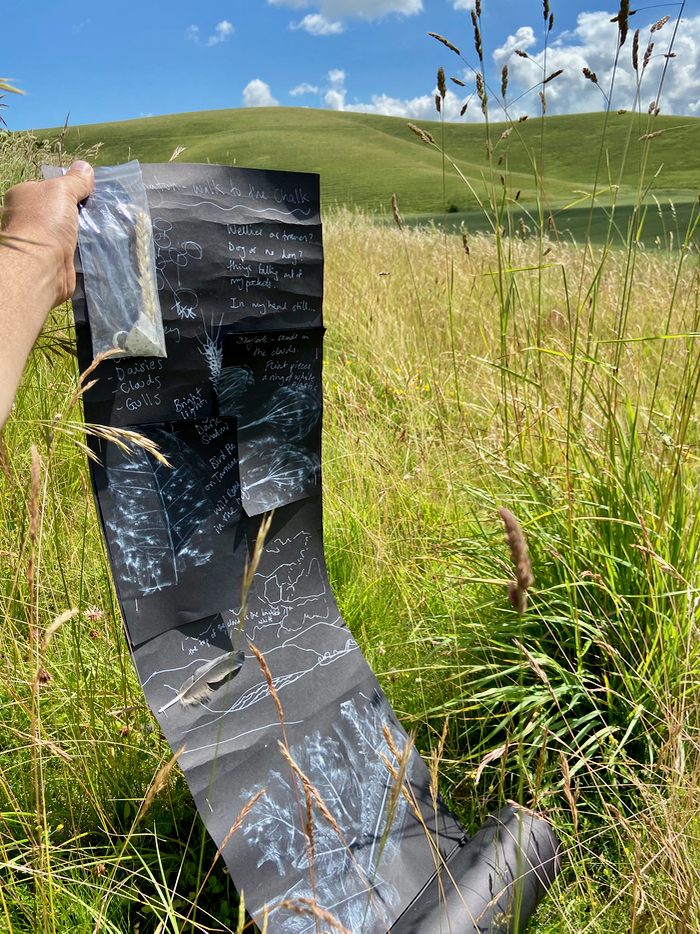
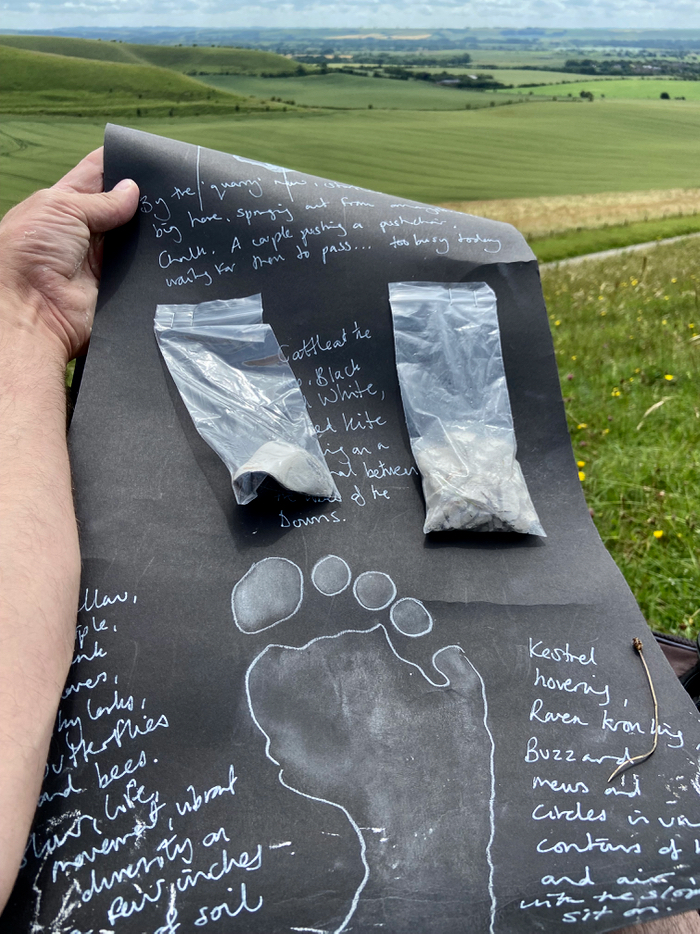
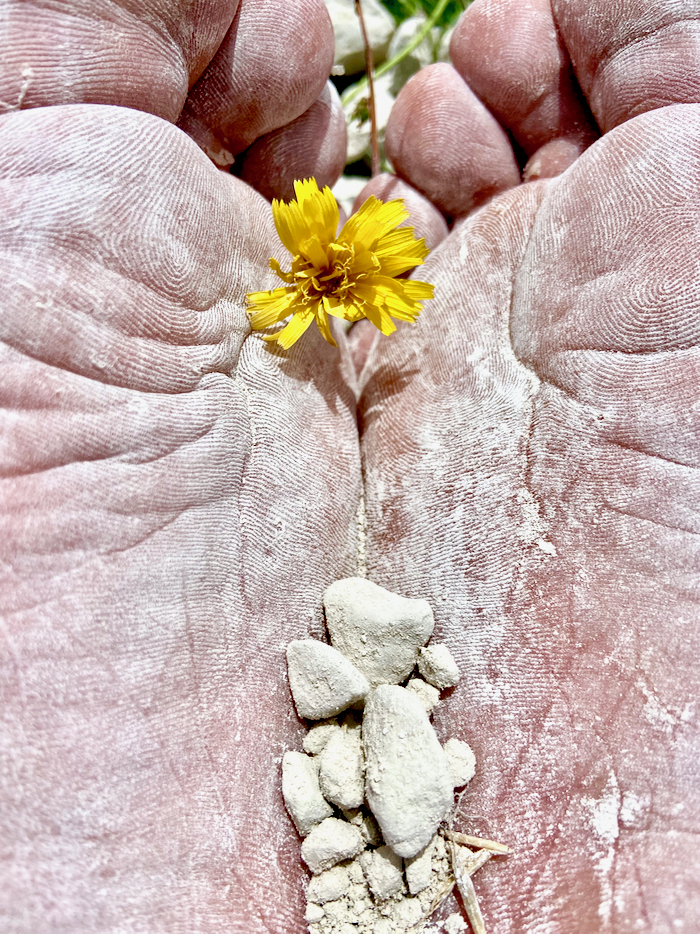
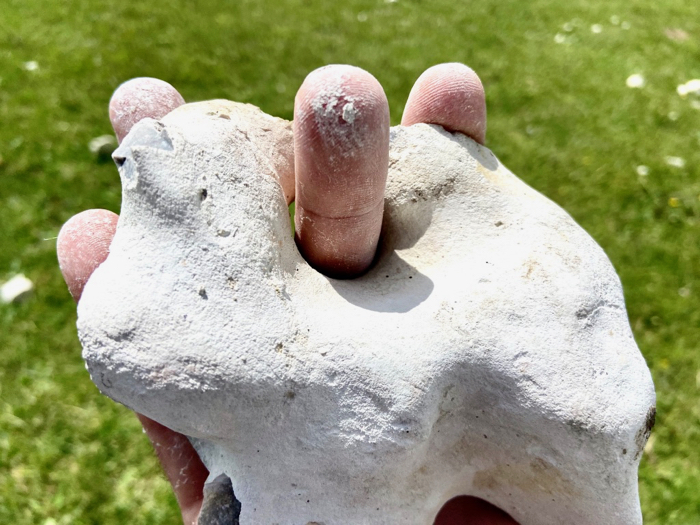
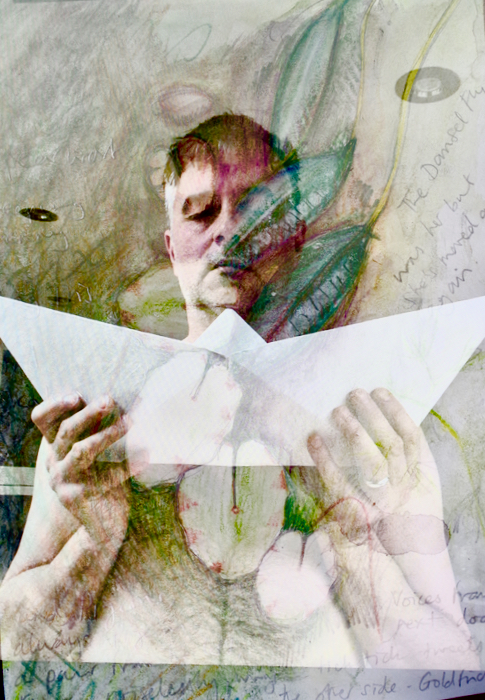
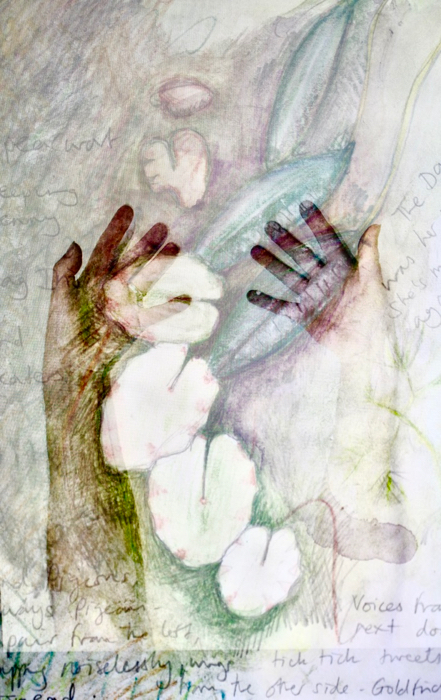
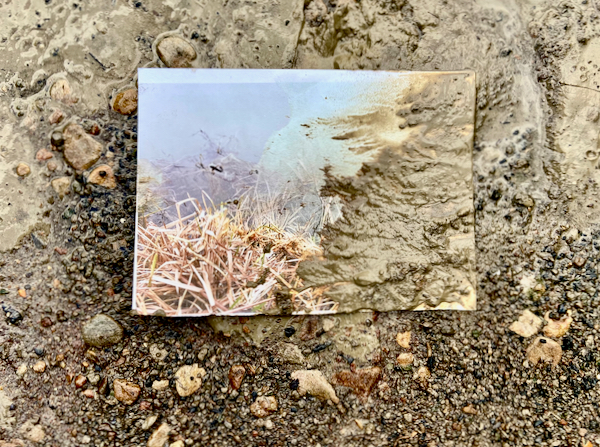
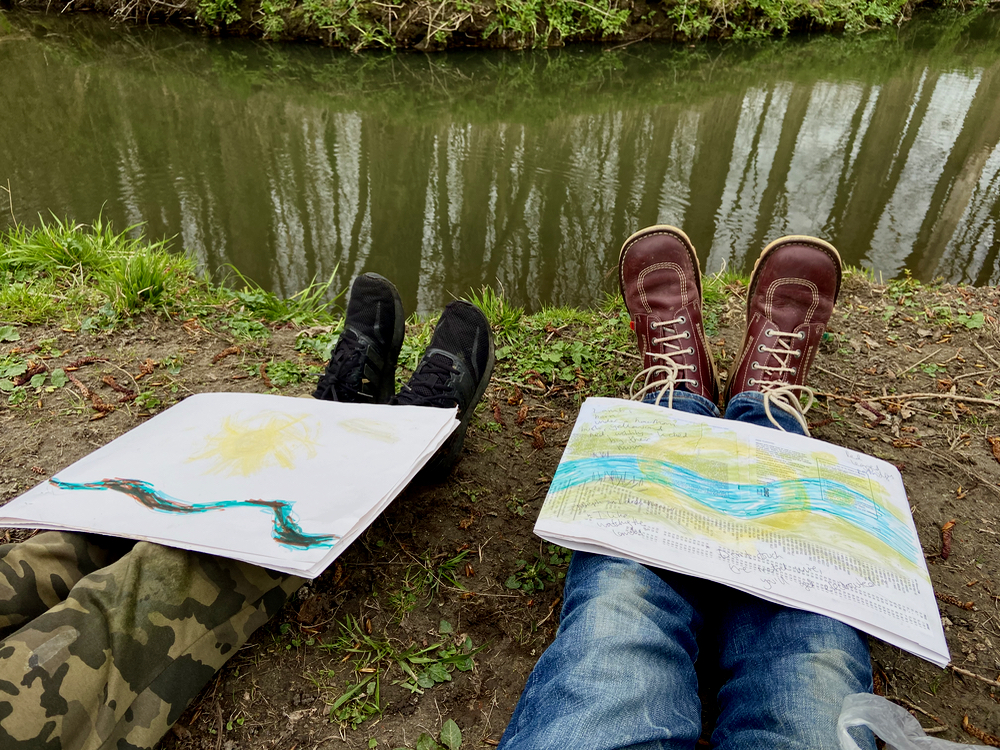
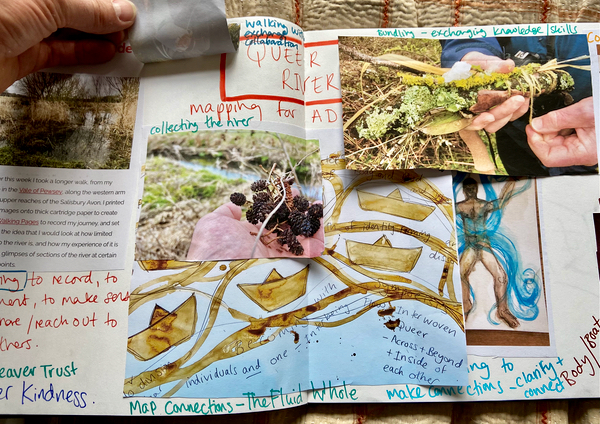
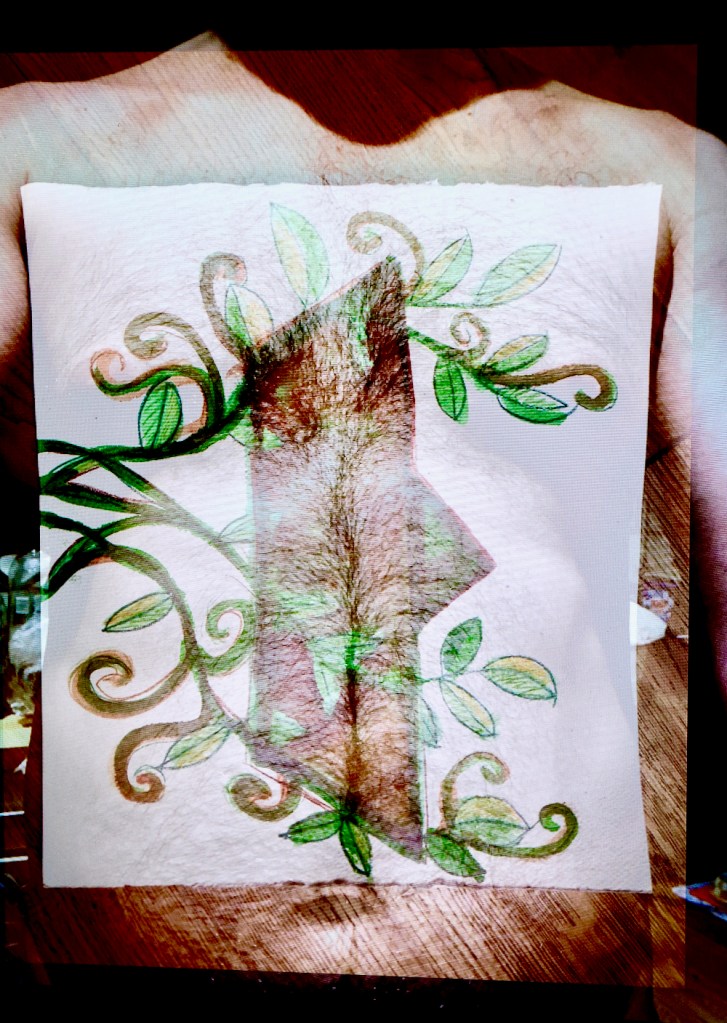
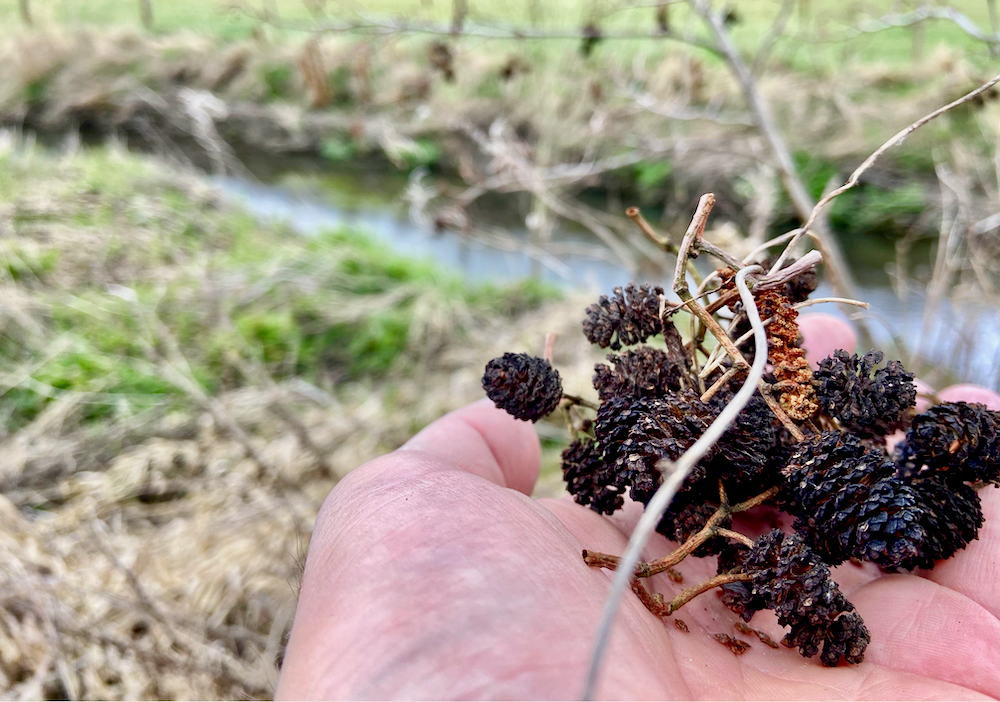
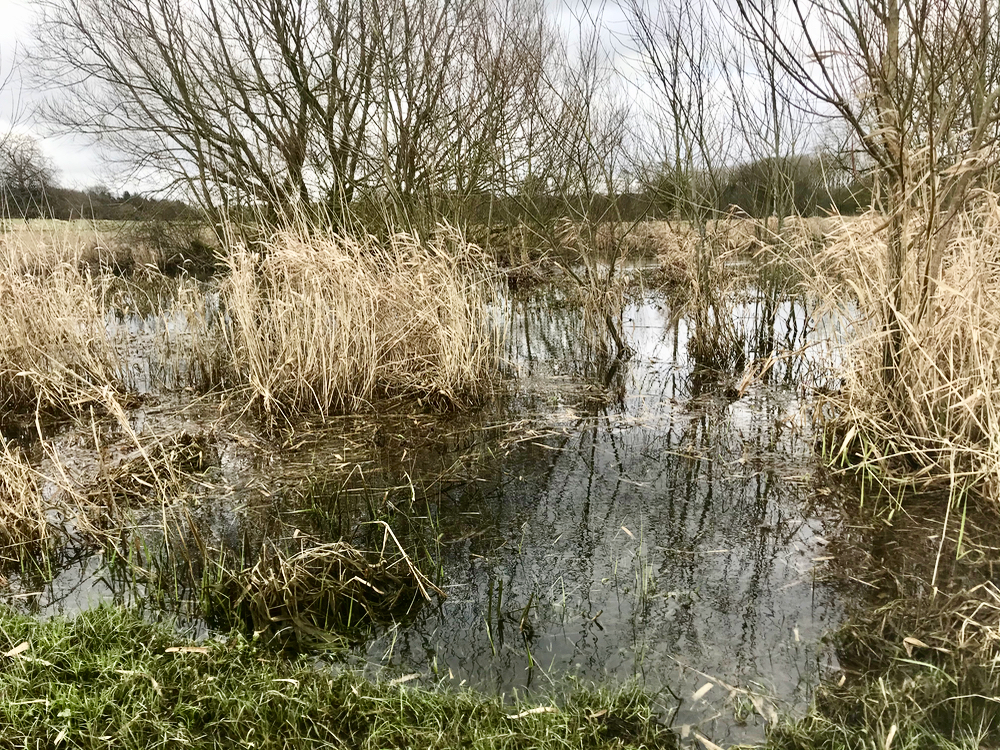
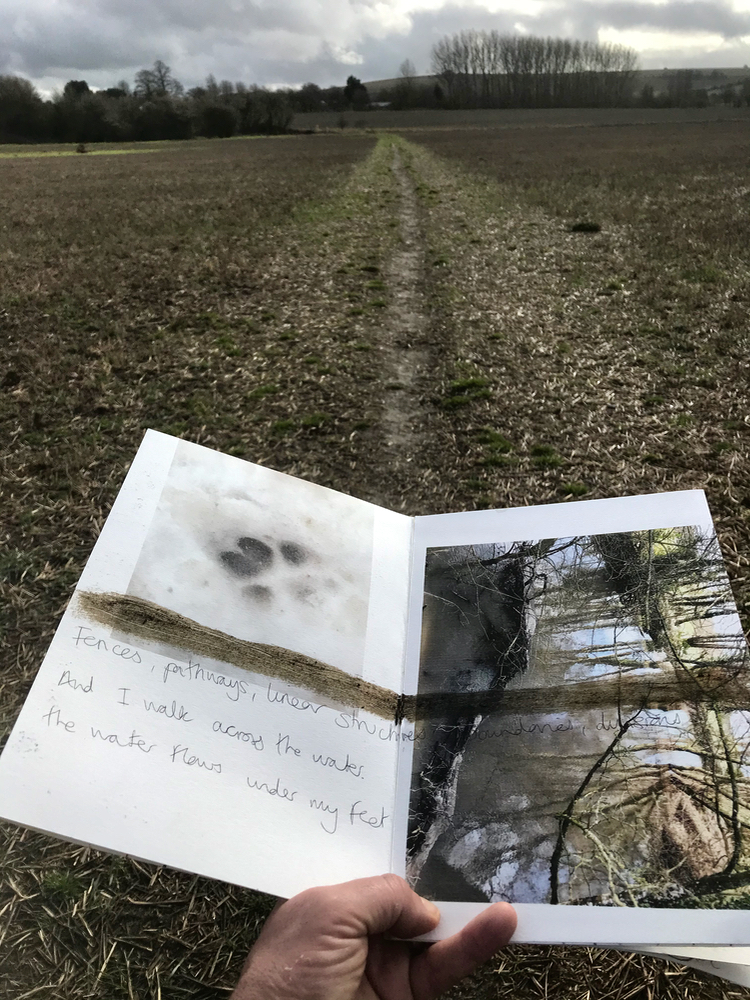
As we walkied I made notes on paper and took photographs with my phone, which I later experimeted with printed over the pages of notes and drawings. As with all my walks, it’s hard to condense all that was discussed and explored into a single post, so alongside an increased awareness of what a chalkstream is, I’ve pulled out three key subjects that we discussed, which will inform and feed into future Queer River work.

Layered notes and images from our walk

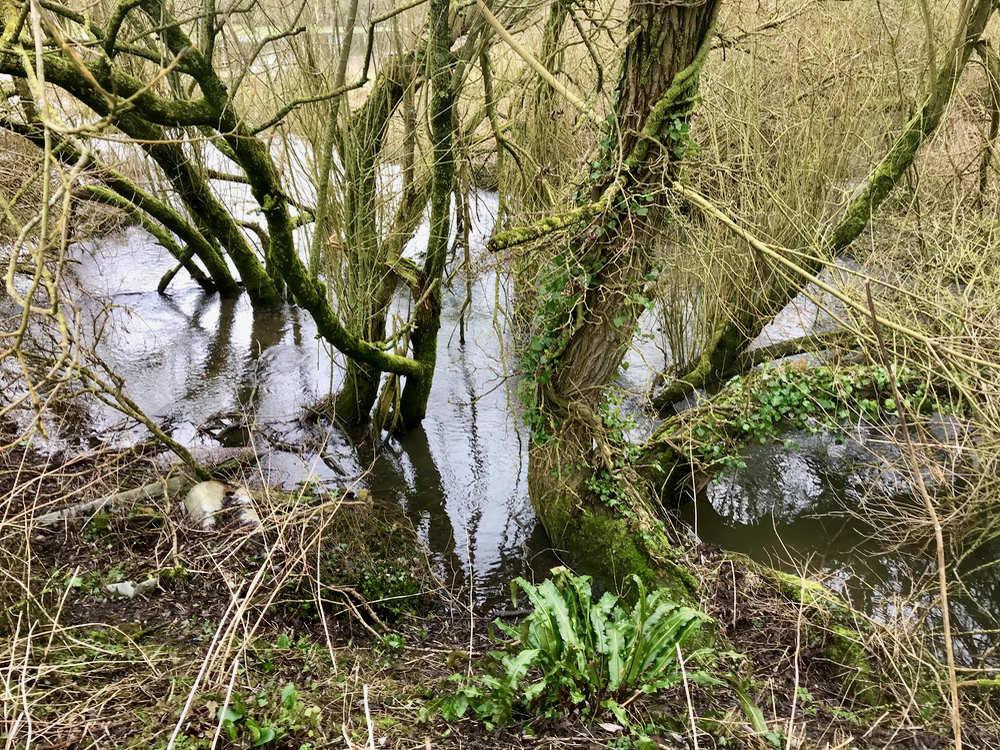
Winterbournes – I learned from Tim that a winterbourne doesn’t have a be an entirely seasonal river, i.e. a perennial river like the river Kennet can have a stretch that is a winterbourne, like at Avebury, where the position of the spring head of the river changes with the seasons and weather. I also learned that certain species are adapted to living in/at the site of Winterbournes. I feel like I’ve gone from thinking about a winterbourne as a bit of a sad thing (as if it and all its inhabitants die or fail) to being a special kind of river that I need to know more about.

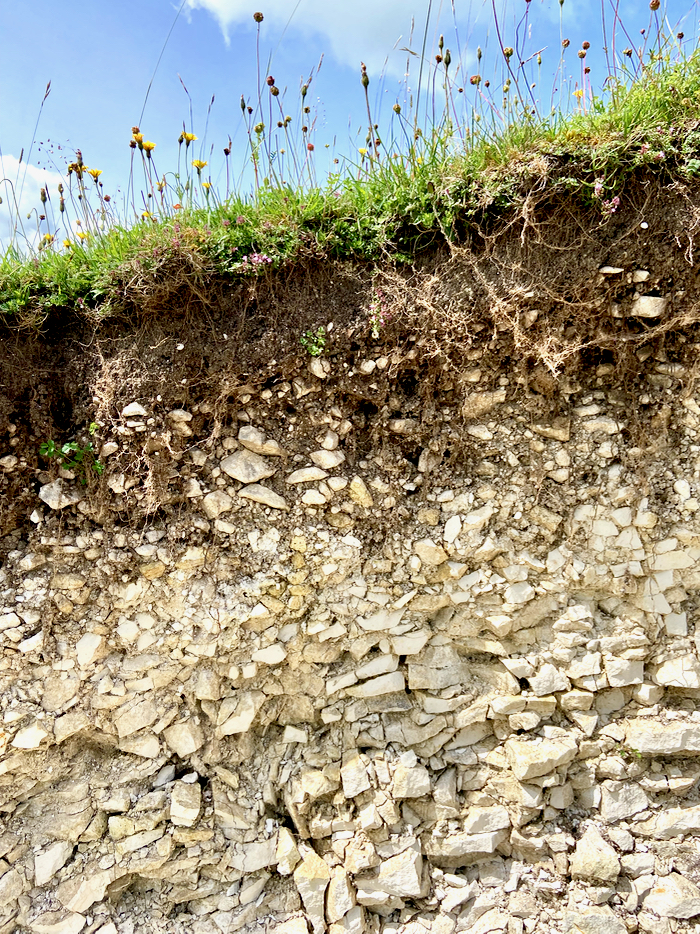
Aquifers – I guess I always had an image of some kind of underground pool of water when aquifers were mentioned. To be honest I’ve never really thought about them much before, but through talking with Tim now have a much clearer understanding of what they are and how they function, and they’ve really grabbed my imagination. Because chalk is permeable, in areas like mine, much of the water sits below the surface of the land, flowing within the chalk itself.

‘ I do think, when trying to help society become cognisant of aquifers, the messaging might think how to translate these hidden waterbodies into the equivelence of lakes like Loch Ness or Windermere that many people are familiar with – we have our very own Lake District in chalk-dry Wiltshire, its just that like an iceberg we only see it when it spills out to form springs and chalk streams.’

Tim Sykes

Rivers (more specifically chalk streams), and neolithic cultural practices (earthworks, rituals etc) – I’ve not got much more to say about this at the moment, apart from the fact that my walk with Tim really helped to connect this area of my practice, which I’d kind of put on hold, with my Queer River work, and that’s exciting.

The idea that a chalkstream is just the tip of the iceberg, a small part of a much larger water body is really exciting too. In the past I’ve written about the way that rivers are seen as linear, that maps with thin blue lines, and agricultural or engineering practices that restrict rivers by encroaching on them, reinforce our idea of a river as an isolated ribbon of water that runs along the surface of the land, but the idea that a river goes below the ground, as Tim said, literally adds another dimension.

So thank you to Tim for your time, knowledge, and enthusiasm. I can feel a whole new chalky, watery world opening up to me!

——————————————————————————————————

I’m also on the look out for funded opportunities to share my Queer River work with the LGBTQi+ community, through events and workshops that support others to have similarly creative, hands-on experiences of their own local wetlands. If you’re part of an organisation who would be interested in working together on that, or would like to help support in another way, please do get in touch.

Ponds, Boats and Bodies

Drawing the plants in the garden pond

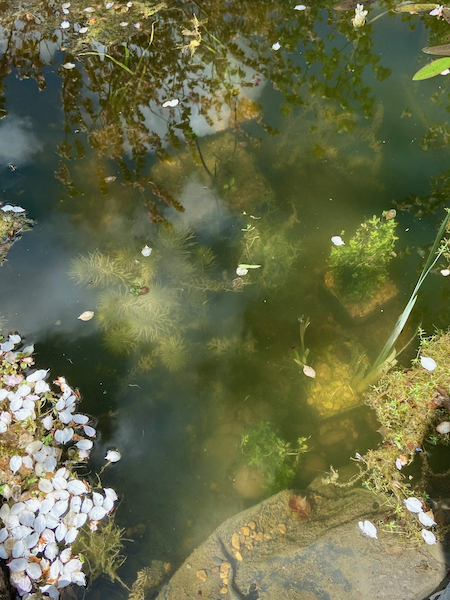
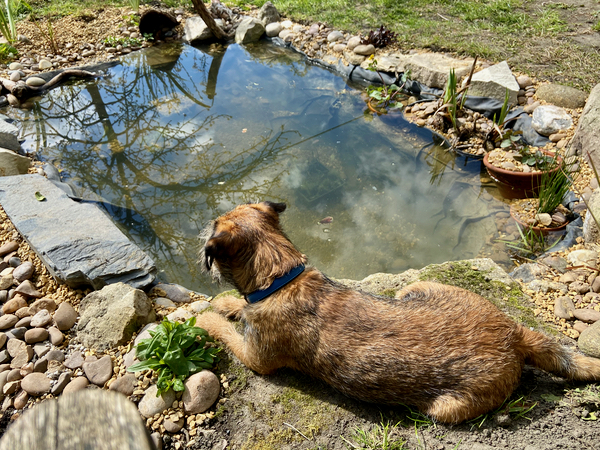
At the same time that Queer River evolves to include different wetland habitats, my garden wildlife pond, dug in early April continues to evolve, with diving beetles, pond skaters and various fly larvae arriving. Yesterday I sat by the pond to start to draw some of the plant life, and saw my first damsel fly, a Small Red.

I’m fascinated by this new community of life that I’m helping to create, and the changing shapes, colours, movements, reflections and growth that I observe from day to day, the relationship between the above and below, land and water, man-made and wild.

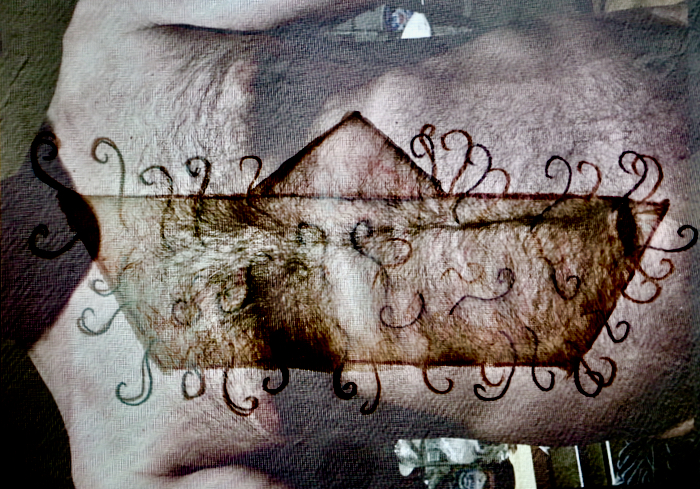
Pond drawing with paper boat – multiple exposure photograph

Multiple exposure photographs allow me to layer different imagery together, to play with the relections, depth, transparency and interbeing that I notice within different wetland habitats, to (once again) blur boundaries and remove obstacles to a more fluid way of seeing the world.

Walking with… Botanist Mark Spencer

A couple of Saturdays ago, I met with the botanist Mark Spencer, at Slade Green railway station in south east London, for a walk across the Crayford Marshes (an area of grazing marsh near to Erith) down to the River Thames. I had heard Mark talking about his work on Radio 4’s The Life Scientific (listen again here), so got in touch to let him know about Queer River, and invited him to choose a location for our walk together.

Dr Mark Spencer is an experienced and internationally respected botanist. His expertise covers many disciplines including forensic botany, the plants of North-west Europe, invasive species and the history of botanical science. He also works globally as a seasoned writer, public speaker and television presenter. As a forensic botanist, Mark has worked on various missing person enquiries, murders and other serious crimes.

www.markspencerbotanist.com

I layered printed pages with text and found objects as we walked

Mark has been involved in gay activism and HIV/AIDS activism through organisations such as Act Up, particularly in the early 1990s, which struck a chord with me and my research into the relationship between the AIDS crisis and the Earth Crisis, and was a founding member of the London House of The Sisters of Perpetual Indulgence.

The Sisters devote ourselves to community service, ministry and outreach to those on the edges, and to promoting human rights, respect for diversity and spiritual enlightenment. The Sisters believe all people have a right to express their unique joy and beauty and use humor and irreverent wit to expose the forces of bigotry, complacency and guilt that chain the human spirit.

LGBT History Project

As Mark and I walked and talked, he shared with me why he’d chosen this place for our walk, and what it meant to him. I asked him questions about the relationship between his work as a botanist, and his identity as a Queer man. We also discussed the impact that the changing climate and sea levels are having on the landscape and its biodiversity, on the value of urban biodiversity in general, and what the likely effects of climate breakdown will be in the future.

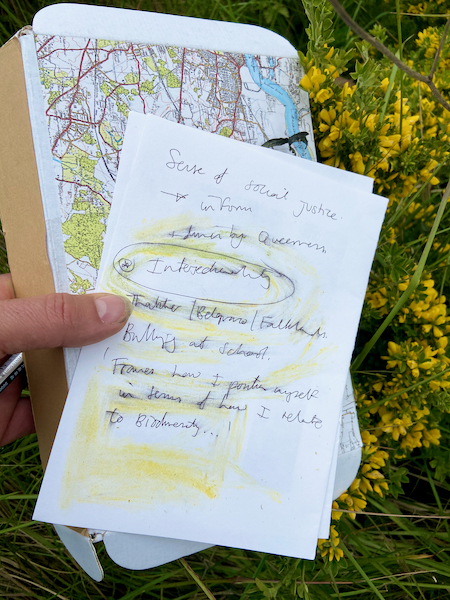
On the way, I made notes of key names, facts and quotes, and gathered different objects from along our path and down by the river’s edge. I recorded the walk using a box of pages that I had put together a couple of days previously, sheets of paper printed with maps of the site and images of previous Queer River walks, overlaid with my notes, mud from the riverbank and the objects that I collected (see the ‘The River is a Guide to the Land’ for another example of how I use Walking Pages to document Queer River walks).

Some of the pages after our walk

We talked about the relationship between botany and colonialism, in the context of museums and collecting. I was interested in what Mark had to say about botanic terminology that enables us to understand when and how plants have arrived in this country, and whether they are seen as native, invasive etc. I was also struck by the relationship between the site’s timeline of historic changes/adaptations, its current industrial uses, and the current/coming impacts of climate breakdown – between what many might see as ‘natural’ forces and man-made development.

Plants which can tolerate salt water are becoming more common as sea levels rise, and seaweeds are gradually moving upstream as salinity increases. Dumps of domestic and industrial waste along the coast are at real risk of being submerged and leaking into the sea as the low lying land is engulfed. As Mark said: ‘This is in many ways a Queer landscape… diverse, weird and at the edges… like our community’.

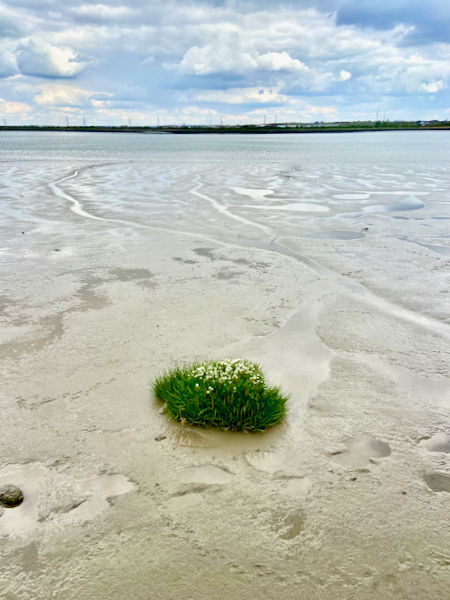
The edge of the Thames at Crayford

Mark shared how his sense of social justice was informed by his upbringing and his queerness, including being bullied at school. His sense of what is kind and fair is profoundly intersectional and ‘frames how I position myself in terms of how I relate to biodiversity.’
I asked Mark of his thoughts on Rewilding, a useful concept we both agreed, but a word which may now be being ‘corrupted’, or morphed from its original meaning, as people use it for all kinds of acts and projects that, although coming from good intentions in the face of climate fear and grief, may do more harm than good.
For example, tree planting schemes that plant trees onto increasingly rare grassland habitats in urban areas, or too closely together and without thought for the understorey, which is necessary for a healthy, functioning woodland ecosystem. Or the scattering of wildflower seed mixes without an awareness of whether those species are suitable for where they are being scattered (or the impacts upon existing vegetation). Mark, as I understand it, champions the process of ‘minimum intervention restoration’, an approach to landscape regeneration that is sensitive to what has come before.

We talked about what it means to be an activist, and why Mark feels the work of scientists such as himself isn’t valued as activism. That his advice is often not sought or listened to when such ‘rewilding’ projects take place, and why it’s the big, visual acts that are often valued, rather than the quieter, slower processes based on research into the site’s ecology and history.

As with all my Queer River walks, there was much more than I could include here. This post is just a beginning. All of our conversation will continue to inform my work both inside and outside of Queer River, and I’m grateful to Mark for being so generous with his time and open with his reflections.

My time with Mark has strengthened my resolve to look more closely at the biodiversity of wetland sites and the relationship between Queer people and wetlands. In recent weeks I’ve been digging a wildlife pond in my garden and have been sourcing native aquatic plants to add to it. I’ve enjoyed being able to spent time focusing on a small scale, newly created, wetland habitat, and watch it change day by day as new organisms such as diving beetles and pond skaters arrive to colonise it. Habitats like marshland, ponds and riverbanks have always captured my imagination with their merging of water and land, their feeling of being on the edges.

In the future I plan to take a walk with the geographer, artist and researcher Sage Brice, whose research in the past has incorporated time spent in a range of watery landscapes, and among other things, making use of peaty soil to draw the Eurasian Cranes she found there. Sage also researches trans perspectives on/experiences of the land.

One of the subjects that Mark and I touched on were the changes that are taking place in our landscapes due to the changing climate, including the spreading of new or previously locally rare plant species, and the influx of new bird species such as egrets and herons. (Alongside the reintroduction of Cranes, White Storks and Sea Eagles. Today it was announced that a scheme to reintroduce eagles to Norfolk has been given the go ahead).

Of course its not all about our landscapes being enriched with a new variety of bird and plant life. As our climate changes and bird species move up into the UK from the south, those species that specialise in living in colder, upland habitats to the north get pushed off of the top. Equally, it’s easy for me to lapse into thinking about new species of wetland plants colonising coastlines and estuaries, or shifting from one place to another, but the fact is that sea level rises may be too fast and too high in the future for these areas to exist above water at all, and many coastal habitats, such as Crayford Marshes, precious strips of land sandwiched between the sea and industrial or housing development, may be lost altogether.

As the waters rise, will there be anywhere for the plants and animals of coastal marshland to move to? Will we finally stop building on floodplains, and how will we manage the retreat from the edges that will be necessary? What will we do when the floodwaters reach the hundreds of coastal landfill sites, waste dumps and nuclear power stations? And how will we coexist with all the other plants and animals as the land shrinks?

Lots more for me to think about, thank you Mark.

Queer River at the Yarmouth Springs Eternal Exhibition

I’m excited to have been invited to share some of the Queer River artwork as an installation at the Yarmouth Springs Eternal exhibition in Great Yarmouth next month.

‘Yarmouth Springs Eternal is an arts, nature and walking project based in Great Yarmouth, Norfolk. It will take place from the Spring Equinox to Summer Solstice in 2021. The overall ethos of Yarmouth Springs Eternal project is about connecting with nature and seasons, with a particular focus on overlooked spaces and everyday interactions. The project will also explore the importance of this relationship on our wellbeing, the feeling of wholeness connecting with nature can bring, and the “awe” of being part of something bigger. Yarmouth Springs Eternal is also underpinned by research outlining the inequality of access to green space in the UK.’

www.genevieverudd.com

The project has been set up by Artist Genevieve Rudd and the exhibition will be curated by Kaavous Clayton of Original Projects. The exhibition runs from 19th May until 20th June, at PrimeYarc, a former Debenhams store in the Market Gates shopping centre, with a conference on Saturday 22nd May at which I and the other artists involved will be talking about our work.

The Yarmouth Springs Eternal exhibition will feature artwork and a co-designed pamphlet created during a series of artist-led community walks/workshops, attended by adults in Great Yarmouth with lived experience of homelessness and migration. The exhibition will also include showcases from guest exhibitors from across UK exploring creativity and the connection to the natural world: Jacques Nimki, James Aldridge, Jason Evans Bill Vine and Company Drinks.

Norwich and Norfolk Festival

I’ll share some images of the full installation once it’s up and I’ve visited the exhibition, in the meantime I’ve included some photographs of work in progress for the exhibition, from a walk along the River Avon (Bristol Avon) near Lacock yesterday.

Different Parts of the Same Whole

It’s school Easter Holidays here, and I’ve been balancing starting a new project (www.noticing-nature.com) and joining the occasional meeting, with helping our boy venture out of lockdown to meet friends and be more sociable again. I also dug myself a pond, which I have been extremely excited about planting and filling, and waiting for a community of pond-life to establish itself.

River relaxing by the pond

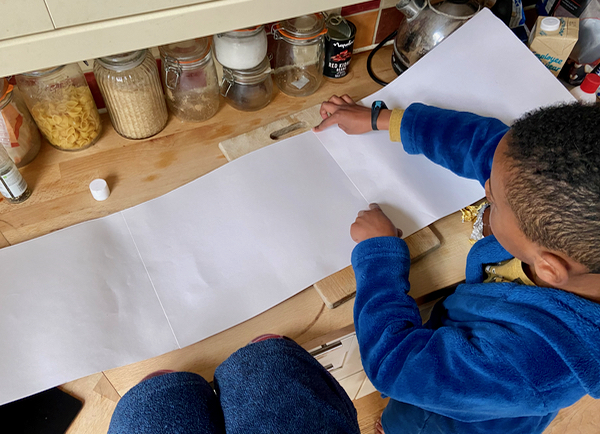
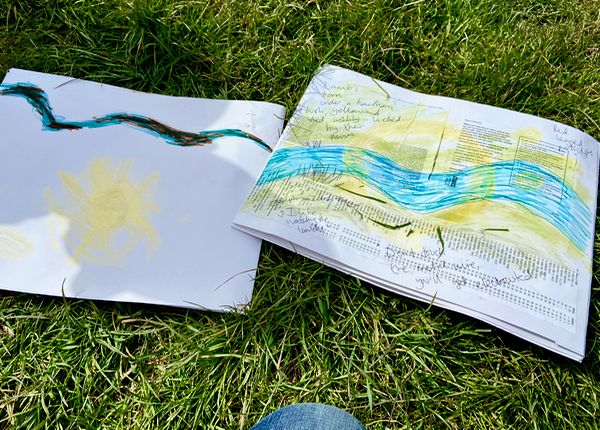
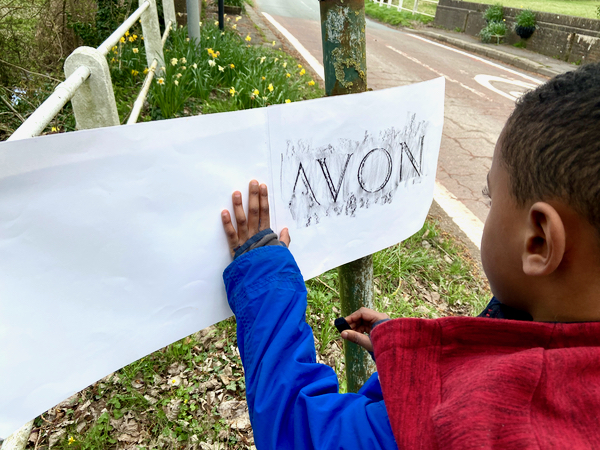
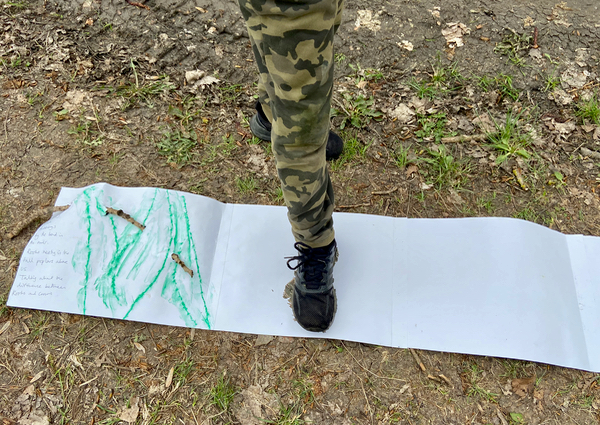
I asked our son Joseph if he’d like to join me for a river walk last week, and what he’d like to do on the walk; to collect, draw, write, make etc. He replied that he liked the river plants best and he’d like to draw those. So we created a fold out sketch book each, packed drinks and snacks, mark-making materials and a blanket, and drove to a nearby stretch of the Salisbury Avon, where you can get right down near the river and walk along its banks.

Making our Walking Pages

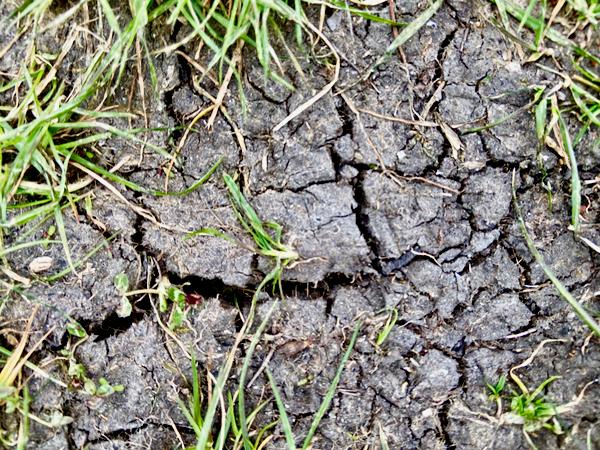
One of the first things Joseph noticed was the cracks in the dried out soil about which he said “It’s the crackly skin“. We talked about the soil as the skin of the earth, and how to me they also looked like the tributaries of a river or the branches of a tree. Our conversation took me back to my very first walk, with Claire from Wessex Archaeology with whom I discussed dendritic (tree like) patterns in and around rivers, the repeating patterns of branching connectivity that we saw in trees, bushes, river mud and on the surface of flints at the river’s edges.

Cracked earth

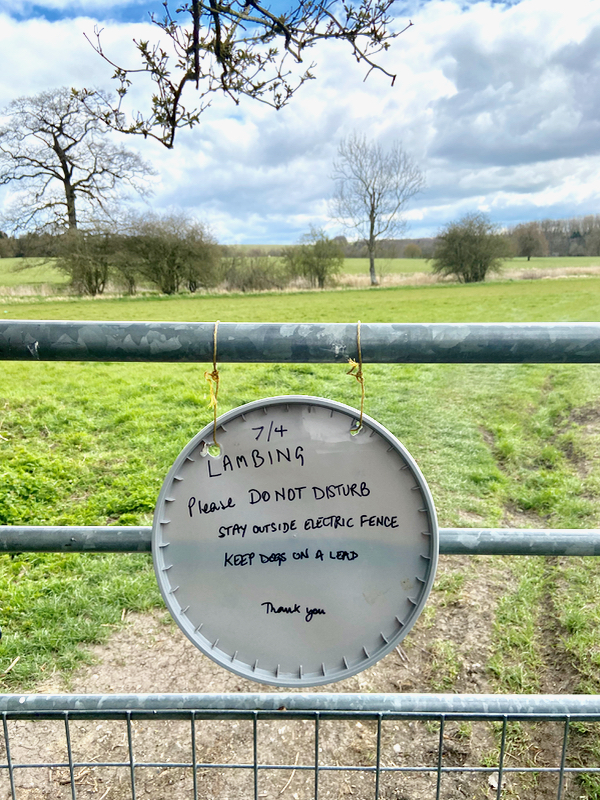
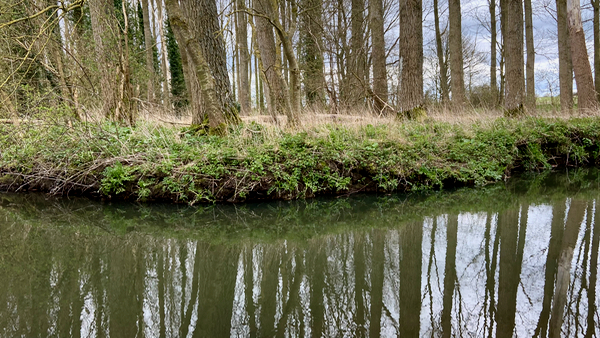
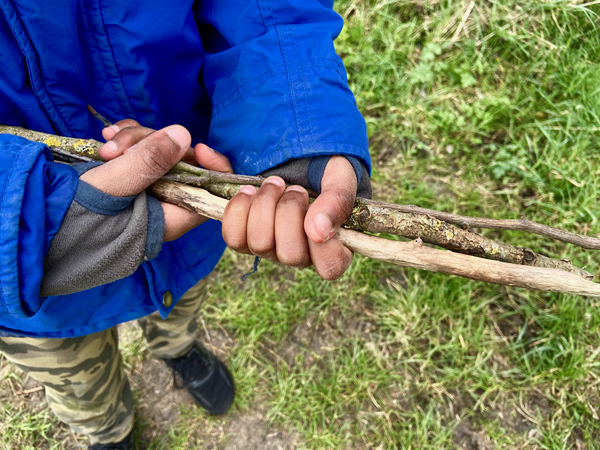
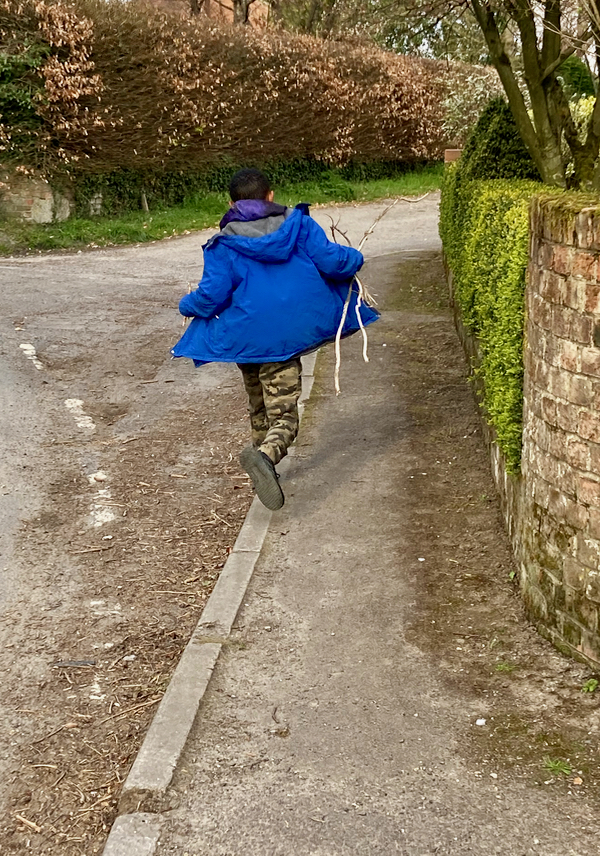
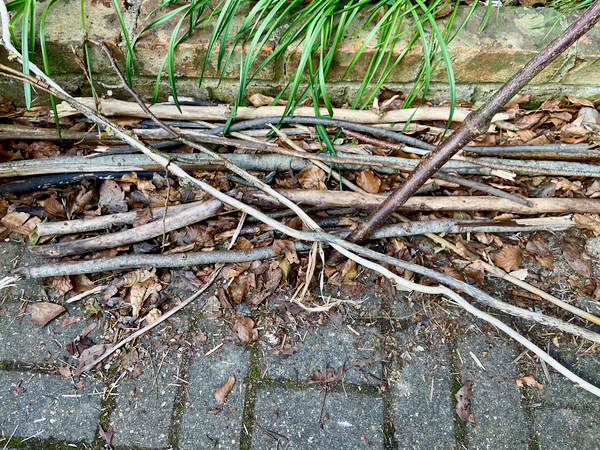
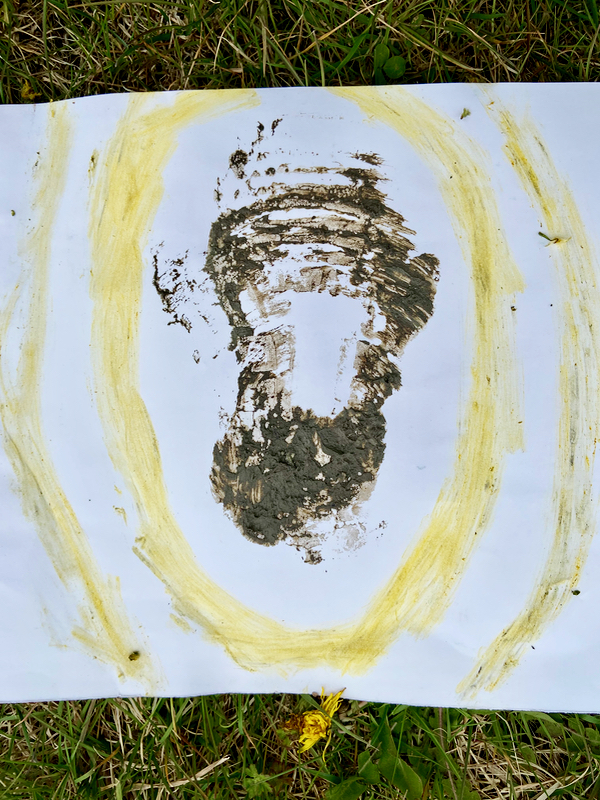
As Joseph and I continued to walk, we used dandelions to make yellow marks on pages, blended felt-tip colours to record our impressions of the meandering river, and noticed the shapes that trees made on the water through their reflections. We sat and watched ewes lick their freshly born lambs clean, changing from yellow and red to white, and Joseph began to gather sticks. He’s a big fan of sticks and the possibilities that they offer for becoming other things.

While we sat and watched the lambs and ate our snacks, I asked Joseph a few questions, about rivers and what he thought or felt about them. Here’s a little of what he told me:

“I like the meandering bits and the parts that you can get right down to and have a paddle… I like feeling the water on my feet and its just very relaxing. It makes me feel happy, especially if it’s a hot day. I like the feeling of it being next to me.

Drews Pond is my favourite memory of a river – is it a river? – because Archie (a good friend of Joseph’s) fell into it (the stream) and that was very funny. I want to do some pooh sticks now, I want to find out how far they go.”

Focusing on the reflections after playing Pooh Sticks

Alongside my adventures with Joseph, a new piece of work has started to feed into my Queer River research. I’m collaborating with Dr Steve Marshall and Dr Katherine Semler, faculty on the Executive Doctorate in Organisational Change (EDOC) at Ashridge College, to inform a workshop I’ve been asked to run for current students. In the workshop I’ll be sharing the role that art and making plays within my research, focusing on Queer River and its multi-layered, collaborative nature.

As Steve, Katherine and I have met over the weeks to share our individual research interests, and find the places where our separate inquiries connect to form a shared inquiry, it’s caused me to explore the relationship between the different elements of Queer River more deeply, so that I can better articulate them. Because Queer River is all about collaboration, connection, exchange and ‘becoming with’ others, as I share the process, draw and talk about it, and hear about Steve and Katherine’s methods and practices in return, rather than just talking about it as a separate piece of research, our dialogue becomes a part of Queer River itself.

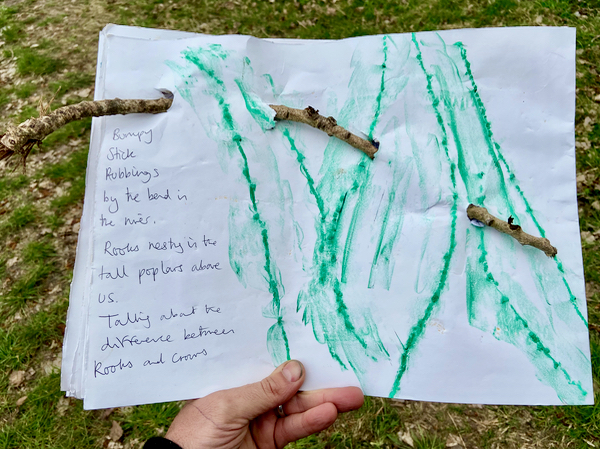
Back on my walk with Joseph, I felt him start to lose interest in making marks on paper, drawn as he was to playing with his sticks. It makes complete sense, every walk we go on he picks up and uses sticks. Perhaps if I’d planned it differently it could have been me joining him in a riverside exploration of sticks rather than him joining me in using Walking Pages. So I tried to blend the two. As he collected sticks to float and race on the river, I collected sticks to make rubbings, and pierced the paper with them, weaving them into the fabric of my page.

Stick rubbings and weaving

I asked Joseph what he liked about sticks so much and he replied, “It’s like free lightsabers and pistols, everytime I go out I think about different things I want to use them for”. Next time, I told him, I’ll leave the paper at home and we can spend more time exploring with sticks.

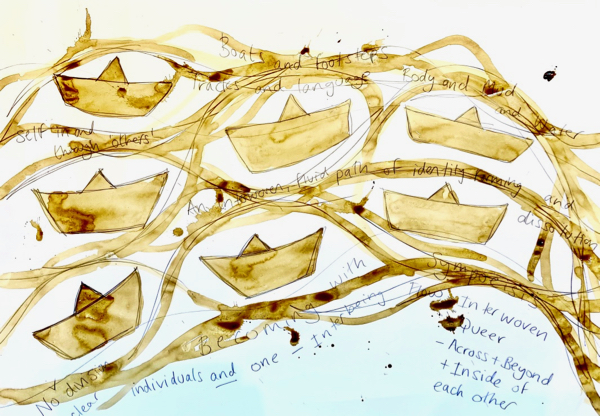
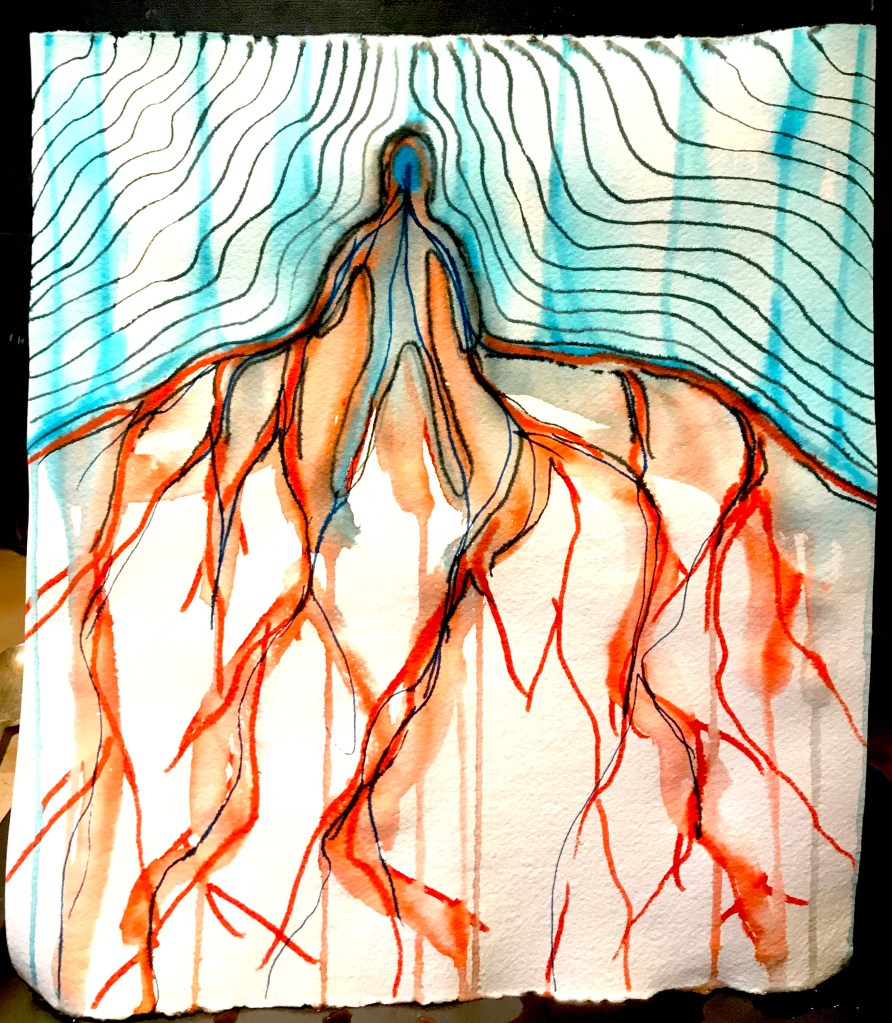
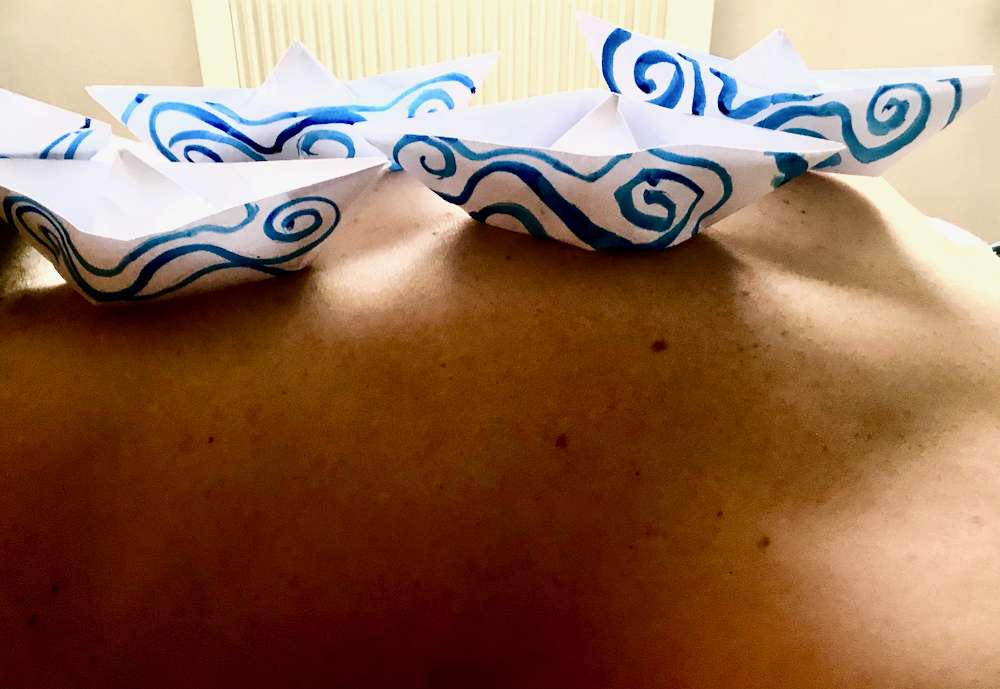
In the drawings that I’ve created recently, to make sense of the different relationships and subjects within Queer River, I’ve used imagery of the flowing river itself, with boats to represent individual people, and the same dendritic patterns that Joseph noticed, to connect them.

In our first conversation as part of the Ashridge work, Katherine asked me how I chose the people I walk, talk and make with. It’s something I’ve thought about a lot since. In many ways it’s an intuitive process, if I’m interested in their work and it connects in some way with rivers then it’s likely to be a good fit.

If I know and respect them and their work and know that they in turn will be interested in exchanging thoughts and ideas with me, then that’s a good fit too. As I become more aware of the connections within my work then I also become more aware of where I want to go next, and who might be an appropriate collaborator on that journey. And that’s where the title of this post comes in, together we are different elements of the same whole, our different paths interweaving and flowing together, and through dialogue with each other, we can catch a glimpse of that larger whole.

Queer River drawing using Alder Cone Ink

It matters less that I know exactly what each exchange will look like. I don’t want to overplan it, I have a methodology in place and I can trust that. I process what our exchange means for my research, by documenting it in the moment, and then reflecting on it later through writing and drawing.

As the research develops and I share it more widely, more people are getting in touch with whom it resonates, and who are carrying out their own related research, to propose walking and talking together, so sometimes it’s more about them choosing me, or choosing to become involved themselves.

One last rubbing on the way back to the car

I’ve three more walks planned for the next few weeks, as well as the Ashridge College Workshop. I’ll also be exhibiting/presenting at the Yarmouth Springs Eternal exhibition and conference at the end of May/beginning of June. In addition I’m waiting to hear about a DYCP (Developing Your Creative Practice) funding application, that I should get the response to from Arts Council England over the next couple of weeks, and which would make a huge difference to this project if I’m successful.

My first walk takes place next week and is a remote walk. It’s something I’ve been looking to develop for a while. I can’t always meet to walk with people in person, because of geographical limitations or Covid, so I’ve been keen to develop ways of walking with people when I’m by my river and they are by theirs. I’ll be walking with the artist Jacqueline Campbell who is based in Suffolk, and who has been using her arts practice to engage with her own local chalk stream. Jacquie, who I met through Instagram, will be walking and making along the River Lark near Bury St Edmunds, while I walk along my stretch of the Avon, and we will agree a shared focus or questions as a framework for our walk before we go.

My second walk will take place at the beginning of May, in the marshes close to the River Thames to the East of London, and I will be walking with the Botanist and Mycologist Dr Mark Spencer. I contacted Mark after hearing him talk about his work on this episode of The Life Scientific on Radio 4. His work includes a focus on invasive species, urban botany and forensic botany.

Thirdly I will be walking in the Salisbury area later in May with the Art Psychotherapist and Doctoral Researcher Eugene Hughes. Eugene got in touch via Twitter. His research asks the question ‘How does being alone with nature influence a sense of self?‘ Eugene will interview me, and we will discuss his research so far, as we walk.

As with each of the previous walks with project partners/collaborators, I will be documenting them and writing a blog post here, to reflect on and share what we discover together.

HIV/AIDS and the Earth Crisis

I’ve been planning on writing this post for a while, but it’s a massive area of interwoven threads, so I’ll just start by saying that this isn’t intended to neatly tie up all the connections between HIV/AIDS and the Earth Crisis, it’s meant as a beginning, a way of starting to track what I am learning about the relationship between viral pandemics, the Climate/Ecological Emergency, and climate justice, through the lens of the experiences of LGBTQi+ people.

This morning I dropped my son off at school and then took the dog for a walk on the way back home. After we’d been on our walk and I’d cleared my head, I got back in the car and turned on the radio.

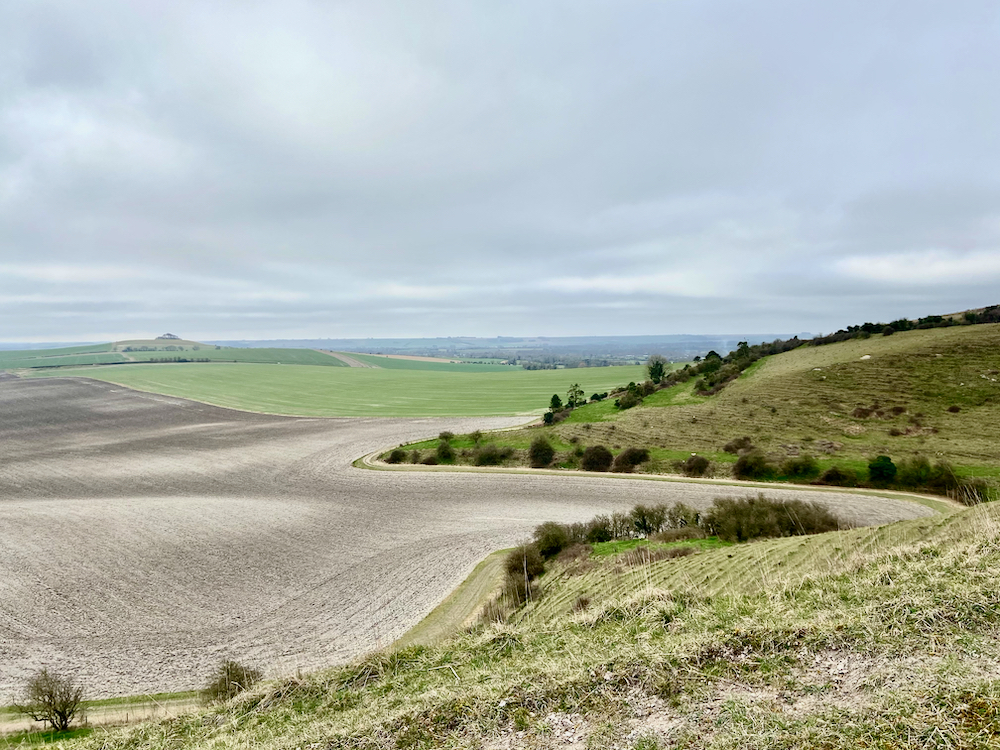
Pewsey Downs

It was Radio 4 and Start the Week was half way through, with Chris van Tulleken, infectious diseases doctor and presenter, describing how researchers had now pinpointed the time and place that HIV jumped from chimpanzees to humans.

Van Tulleken goes into more depth in ‘The Jump: HIV’, one of three episodes in the series, which explores the point at which viruses jumped from animals to humans, and what led up to/caused that to happen, including Coronavirus. With HIV, enslaved soldiers in Cameroon in the First World War were forced to kill wild animals for food with guns, and the blood from an infected chimp had entered the body of one of the soldiers.

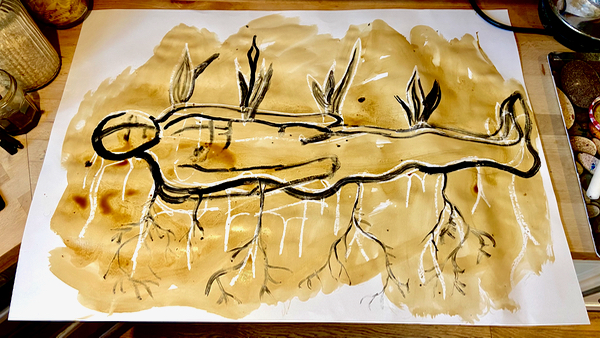
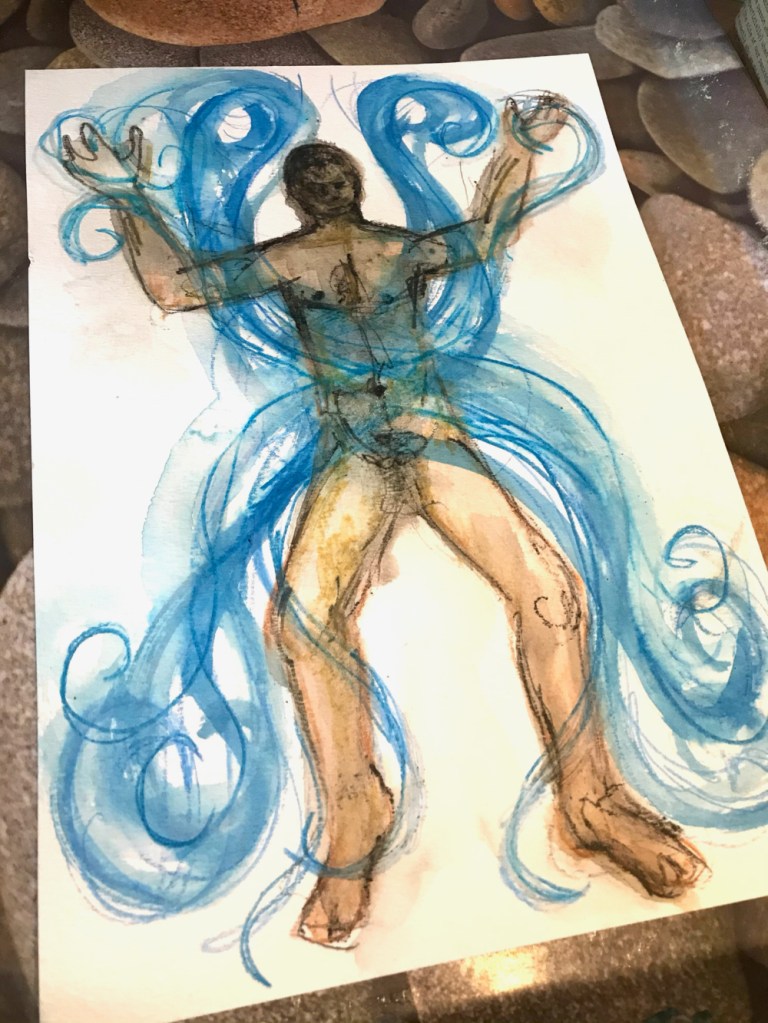
River Body Drawing

In terms of Coronavirus, there has been increased discussion over the last year or so, about the origins of the current pandemic, and its relationship with habitat destruction, which brings humans into closer contact to wild animals. Climate Museum UK founding director Bridget McKenzie has been gathering such material together through contemporary collecting project ‘The Pandemic and the Earth Crisis’, which includes this quote from Jonathan Foley:

“Countless reports have warned us during the last thirty years…that changing environmental conditions were contributing to increasing disease threats. Numerous studies highlighted how infectious diseases could arise from deforestation, habitat and biodiversity loss, wildlife exploitation, the bushmeat and traditional medicine trade, confined animal agriculture, and antibiotic misuse.”

Jonathan Foley, After the Storm

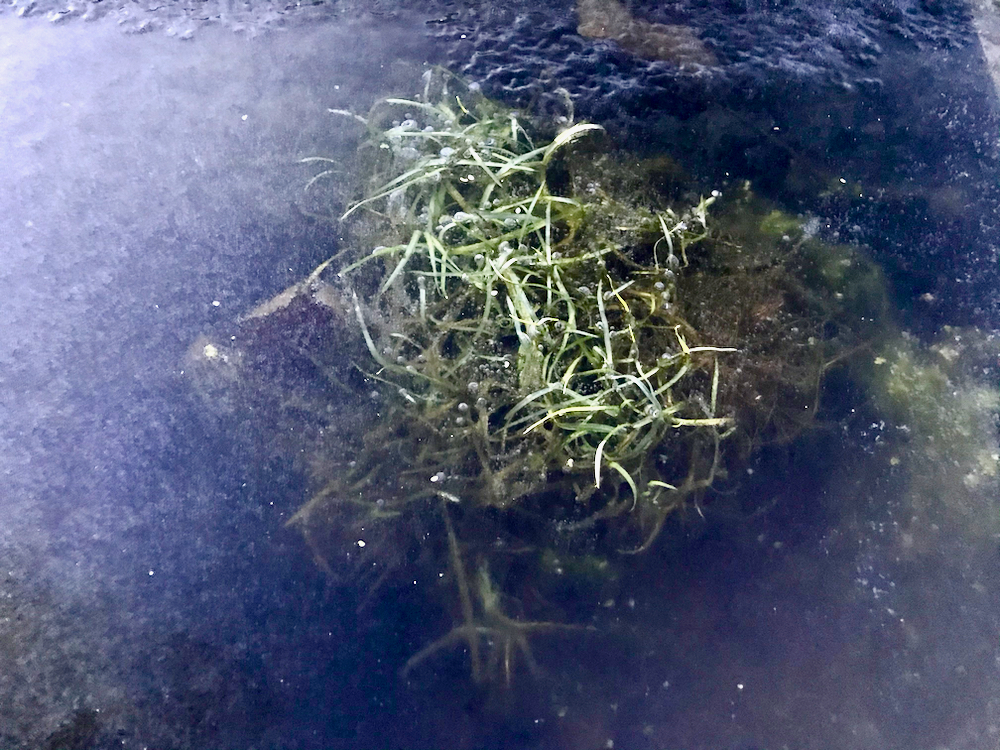
Ice and Algae

One thing that Van Tulleken is keen to point out in ‘The Jump: HIV’ is that indigenous people have been hunting wild animals for a very long time, using sustainable methods, with no ill effects. In this case, during WW1, allied forces invaded Cameroon (then a German colony) and ordered starving Congolese soldiers to go into the jungle to hunt animals for meat. To put it simply, the jump was enabled by the move from small numbers of local Cameroonian people hunting enough animals for their own needs, and not killing chimpanzees, to thousands of armed men coming into the area from outside, and killing chimpanzees and other wildlife with firearms.

Taking a big leap forwards now to the 1970s and 80s, and the HIV virus was causing men from the gay community in the US and then Europe to become ill and die. Because the new disease was seen as a ‘gay plague’ or a ‘gay cancer’, the Reagan administration in the US didn’t see a reason to take the immediate action that people desperately needed, whilst in the UK Margaret Thatcher’s government were wary of being associated with the disease or the ‘immorality’ of gay sex. Thatcher worried that educating young people about safe gay sexual practices would encourage them the try them out and somehow become gay:

‘Children who need to be taught to respect traditional moral values are being taught that they have an inalienable right to be gay…’

As her press secretary Norman Fowler recalled, there was a reticence to including information on sexual practices that were unsafe in literature on HIV/AIDS because of this:

‘“Her concern was – it’s always seemed to me a bit odd – that we were teaching people, telling people things about which they didn’t know – the implication being that, once they knew it, then they would go out and experiment.”

So what has this all got to do with Queer River? Alongside a physical exploration of rivers and their futures, and the value of walking with a river as a model of ‘becoming with’ the river or sympoeisis, one of the key strands of this research project is Climate Justice and the experiences of LGBTQi+ people.

‘Climate justice” is a term, and more than that a movement, that acknowledges climate change can have differing social, economic, public health, and other adverse impacts on underprivileged populations. Advocates for climate justice are striving to have these inequities addressed head-on through long-term mitigation and adaptation strategies.’

What is Climate Justice? – Yale Climate Connections

When the AIDS crisis hit the US, and gay men were the first to be affected, the response was slow because it didn’t appear to affect the majority, or those in power. Later, when it came to climate breakdown, the countries of the Global North (although the highest polluters) seemed to get off lightest, with the majority of extreme weather events affecting the Global South, and as with the AIDS crisis, the governments of countries such as US and the UK have been slow to act.

Exploring Symbiosis

As the effects of climate breakdown builds and starts to be felt in different ways around the world, those that are already vulnerable because of social inequalities will face/are facing increased hardship and violence. Although in this particular project I’m particularly looking at LGBTQi+ people, the effects are born by a range of groups, as the piece in Yale Climate Connections explains:

‘Low-income communities, people of color, indigenous people, people with disabilities, older or very young people, women – all can be more susceptible to risks posed by climate impacts like raging storms and floods, increasing wildfire, severe heat, poor air quality, access to food and water…’.

To use a simple example, a trans climate migrant will face increased danger, because of transphobia and the higher levels of violence that trans people, especially trans people of colour, experience, as well as the physical danger of having to leave their home country. A young Jamaican queer person may well end up living in the sewers of Kingston because of the laws and attitudes of that country. With increased extreme weather events such as cyclones, their vulnerability to the effects of climate breakdown are then also increased.

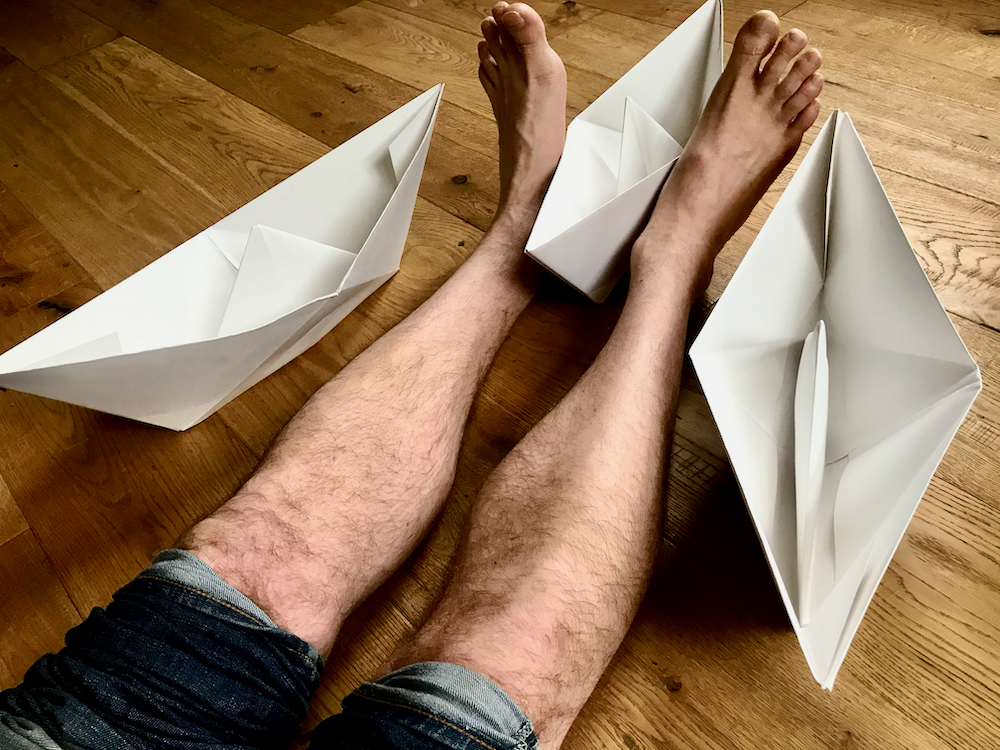
Boats and Bodies Drawing

So what can we do about this, and what can we learn from LGBTQi+ people themselves? In Climate Stew Episode 16 – A Queer Response to Climate Change, the podcast explores how we can learn from the AIDS crisis to inform our response to the climate (earth) crisis, and how organisations such as ACT UP were created because ‘ the (gay) community had to educate themselves and look after each other’ because no one in power was going to:

(ACT UP) was founded in March 1987 at the Lesbian and Gay Community Services Center in Manhattan, New York, in response to what was seen as the U.S. government’s lack of action on the growing number of deaths from HIV infection and AIDS. By 1987 AIDS had killed almost 60,000 people worldwide, and more than 40,000 were HIV-positive in the United States alone.

Through constant public protests, open forums, and information sharing, ACT UP was able to help reverse these misconceptions and stereotypes and bring attention to the inadequacies of the U.S. government’s treatment of people with AIDS.’

https://www.britannica.com/topic/ACT-UP

The Climate Stew podcast goes on to explore how an ‘ACT UP For the Climate’ organisation might work in the future, including the adoption of the ACT UP campaign slogan SILENCE = DEATH.

In another podcast, this time from the Our Climate Voices site, five queer and trans climate justice organisers come together to discuss how the connections between trans and queer liberation intersect with issues of climate justice:

‘If our analysis isn’t intersectional, then the solutions won’t be either… climate change is a symptom of not taking care… of the climate and of ourselves… the global climate crisis is made up of multiple systems of repression…’

As with my own explorations of the value of Queer perspectives on living well with the land, (see A Queer Path to Wellbeing), the contributors to this podcast explore the value of the viewpoint that their sexuality/gender identity and exclusion from mainstream society has provided them, as they seek connection and understanding beyond binaried divisions ‘…because we live outside the boxes, we care for each other in different ways.’

Collecting Alder Cones for Ink

As I said at the beginning, its a big subject, and I’m learning as I go along, but at the heart of all this I understand the need to decolonise systems in order to see each other clearly, and to understand the value that our different viewpoints and voices can bring (on a smaller scale, my walks with others along rivers provide an opportunity for an exchange perspectives and experiences, including non-human as well as human voices).

The AIDS crisis is relevant because it was itself caused by colonial and extractivist practices, and its effects were exacerbated by the prejudices of western society towards a particular group or groups. It is a valuable lesson because it can teach us the value of caring for each other in times of crisis, and the impact of denying care to another because of difference. As many of the contributors to the articles and podcasts that I have quoted here have said, LGBTQi+ people have faced existential threats before, (as have people of colour and disabled people), and we bring skills and ways of seeing and being with the world that are of benefit to all.

‘Even in the moments when we’re in pain, when we’re uncomfortable, when the task ahead feels overwhelming, and we feel defeated by the sheer scope of everything that’s wrong in the world, we don’t have to give up on life or on humanity. Queer and trans disabled people know that, because that’s how we live. At this moment of climate chaos, we’re saying: Welcome to our world. We have some things to teach you if you’ll listen, so that we can all survive.’

To Survive Climate Catastrophe, Look to Queer and Disabled Folks

Talking with… Timothy Allsop of Queer Rural Connections

Today I spoke with Timothy Allsop, founder of Turn of Phrase Theatre Company and co-lead of the Queer Rural Connections Project, with Kira Allmann and The Oxford Centre for Research in Humanities (TORCH).

‘The project collects oral testimony from rural queer people and engages them in the making process of both theatre and film. This is a participatory project and our methodology places the interviewees and communities at the heart of the storytelling process. The film and theatre piece will tour several heritage and arts venues, and will also be part of an Oxford panel day in the summer of 2021’

www.torch.ox.ac.uk/queer-rural-connection

This video is taken from Tim’s instagram feed and will also be available on the Queer Rural Exchange website soon. In it we discuss the inspiration behind the Queer River project and its relationship to the rural landscape which I call home. Thank you to Tim for inviting me to share my practice as part of #QueerRuralX.

You can watch recordings of converstions between Tim and other ‘artists, researchers, writers, and thinkers on queer rural issues’ via the QRX Showcase page of the Queer Rural Connections website.

The River is a Guide to the Land

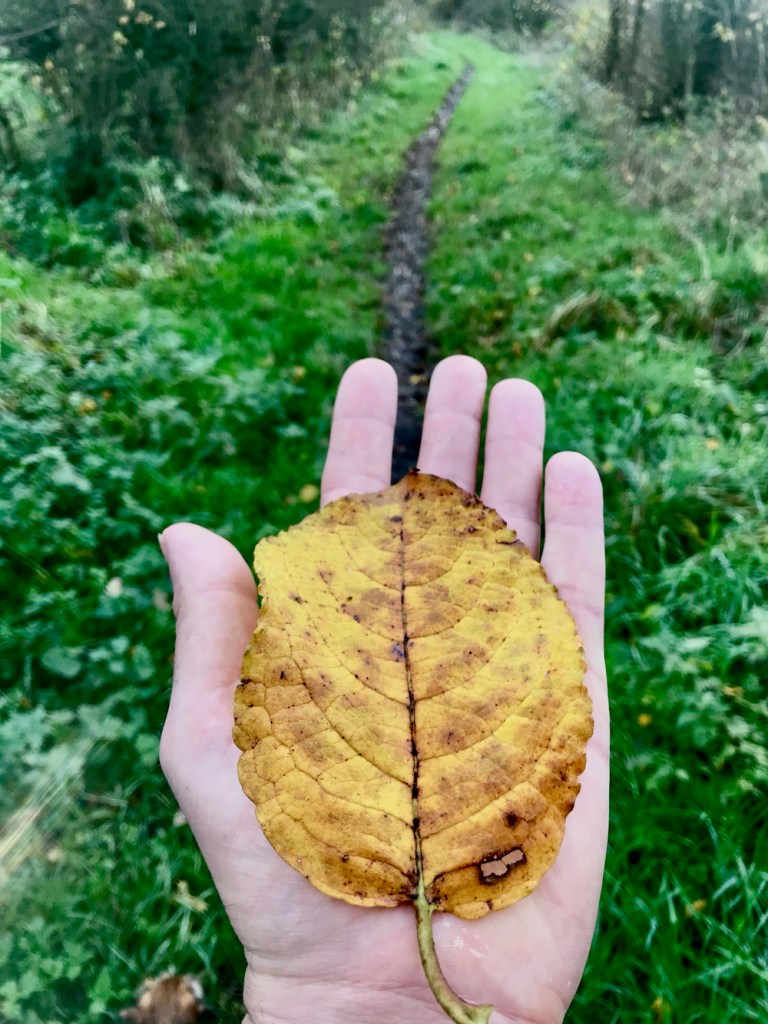
Earlier this week I took a longer walk, from my home in the Vale of Pewsey, along the western arm of the upper reaches of the Salisbury Avon. I printed some images onto thick cartridge paper to create some Walking Pages to record my journey, and set out with the idea that I would look at how limited access to the river is, and how my experience of it is limited to glimpses of sections of the river at certain crossing points.

I ended up walking until the western arm reaches the eastern arm at Rushall, joining forces to flow south towards Salisbury. My Walking Pages lasted for about half of my walk, as I made my way via the villages of Chirton, Patney, Marden, Wilsford, Charlton St Peter and Rushall, following public footpaths and country roads, keeping as close as I could to the path of the river.

I had realised quite early on in the developent of this project that my idea of walking along the length of the river wasn’t going to be possible. In each of my walks so far, except perhaps for the first one with Claire from Wessex Archaeology, the times when I can actually stand on the banks of the river are pretty few, generally I am looking down from a road or foot bridge.

During my talk with art.earth, artist/geographer Sage Brice asked whether my research would look into these issues of river ownership and control. This longer walk felt like the ideal opportunity to start to explore how human infastructure and the river intersect to enable or deny access, and to document the vantage points from which such glimpses were taken.

Often on these walks, what I set out to do doesn’t always translate into what happens. As with the walk to find the source of the river, the river often shows me a different way of seeing and thinking about it and the wider landscape. In this case, yes I took photographs of the different bridges, the gaps in hedges, the white highlighted wrought iron barriers, and felt frustrated at points that I couldn’t get closer, but I also started to notice the relationship between the water and the land in a different way too.

As I walked along lanes, over stiles and across fields I was very aware of whether my path echoed the path of the river, whether we moved in parallel or whether my route took me away. As I walked I recorded my thoughts and feelings onto the paper of the Walking Pages:

‘I find it really uncomfortable walking the wrong way, like going against the flow. I know the river carries on but I have to turn around, up the road, to cut across again… But then I heard the swans, heard their wings. The River came to meet me, they flew directly over me, and as I wrote this they returned, lower, circling twice, as if to land. Then lower still, behind the trees to the water.’

The experience with the swans reminded me the writing of Peter Reason in On Sentience, when he writes about his own experience with swans, this time at the place where the Bristol Avon and River Frome meet:

‘One might say, well this was something that just happened as the swans went about their daily business. Yet the unexpected quality of the event washed away any scepticism: I had no doubt that it was an intentional move, a choreographed gesture from the whole River being, a reciprocal act in response to… my invocation.’

As I continued on my walk, I was increasingly aware of the shape of the land in relationship to the river, and of the birds that I noticed (or who showed themselves to me). At the start of the walk I had seen a Barn Owl, shaking the wet from its feathers from its perch on a wooden rail, quite out of place at 10am. During the walk I talked to the swans that I saw in flight and on the swampy fields between villages. They seemed like guardians of the river, its representatives on land, and were reasurring and familiar as I made my way along pathways and through villages I’d never walked through before. Woodpeckers drummed, a Sparrowhawk flew fast from the trees, and a pair of Mallards flew nearby, unseen by me but calling as they went. And then at the end, right where I stopped and thanked the river, another Barn Owl flew across the river in front of me, up into the branches of a willow tree.

I was walking with the understanding that being alongside the river wasn’t possible all the time and I wanted to make note of when I couldn’t be and how that felt. However, as the walk went on I didn’t feel so disconnected from it after all. When I walked along a road, I found myself noticing the standing water or the trickle down a drain. When I walked along the wet margins of a field I saw the soil being carried away down the slope, Everywhere I walked I noticed the gradient of the land’s surface, and how it guided the water back down towards the path of the river.

I thought again about the word catchment, and another comment from the art.earth discussion, as we talked about not being able to tell where a river starts or ends, Richard Broadbent observed in the Zoom chat, ‘Rivers don’t start or end, they gather’.

‘Everywhere I look, I see the way that land and water work together. I can’t stop noticing the gradient of the land… reading the land, understanding its hills and dips, highs, lows and flows.’

It’s taken me a while to write this post as I wasn’t sure what to write, and in some ways its still not completely resolved, but I want to share the experience while it’s still fresh. It was a longer walk than usual and the more I walked the more I stepped out of thinking and just kept on walking. Towards the end of the walk there was a surprising amount of footpaths that followed the riverbank too, and I started to feel like we were flowing together.

Then, as I reached Rushall Church (swearing quietly to myself at the wonder that was the Barn Owl marking the end as well as the start of my walk), I sat down on my coat on the grass, and asked myself a few questions:

What have I learned today? What have I gained or let go of? To be more open… open about asking, open about receiving. Open to all of it.

The river is a guide to the whole, it’s not ‘just’ a river, not separate to the rest of the world, not just one element but a connector, a bringer and receiver. It leads and shows and teaches, and I ask for it to share its knowledge with me, to be guided, supported, enabled.

Thinking About ‘The Language of Place’

Since the First Friday event last week with art.earth, and my walk with Peter Reason before that, I’ve been thinking about the idea of a language (or many languages) of place. In the questions that came up during last Friday’s event, there were a few on sentience and panpsychism (more in relationship to Peter’s work and his collaboration with Sarah Gillespie than mine). I talked with Mark Leahy about how I am open to exploring what a response from a River or other being might look like, and with Peter about what language is/means in relationship to rivers and the communities that form them.

Looking down from the bridge

I could just as easily have called this post ‘Walking with… Joseph’ as during lockdown the large majority of my walking time is spent walking down to the river with my son, But I’ll come back to him in a future post, and concentrate on what I feel I am receiving from the river in this post instead, and whether that can be called language.

Almost at the river

On our walk this morning, along the country road that we live on, with trimmed hedges on each side, rushy ditches edging the fields beyond, and a white rusted pole alongside, I started to take photos of what I noticed (or what was shown to me), and thought about the colours, textures, shapes and patterns, as the language of my local patch,

Dried twists in the ditch

In the art.earth event several people talked about how lockdown has led them to spend more time locally, to be with their own local patches and rivers. In my practice I am always exploring ways of recording what I and others notice, and the relationship between the noticer and what is noticed. I’m interested in how/if what is noticed can be affected by the noticer’s experiences of Queerness/exclusion.

During the art.earth event I mentioned a podcast from For the Wild that has been important to me, and so am sharing it here. In ‘Reclaiming Wild safe Space’ , Queer Nature talk about how the experiences of people within the LGBTQi+ community, especially within rural spaces, are informed by historic trauma. Where rural spaces may be associated with risk and danger, it can lead to a kind of hyper-vigilance, which in turn may be made use of by the noticer to receive information. Not only information that could warn of potential danger, but information from the beings that make up their local ‘environment’ in the form of sounds, smells, tracks and signs.

Frozen footprints

So how does this inform my own receptivity to the language of a place? It’s very hard to tell. What comes from my Queerness and what comes from a lifetime of practice as an artist, or someone who has grown up with regular access to wildlife rich places, and feelings of affinity with other animals?

When I talked with Mark I spoke about watching a Buzzard fly over the river and pondering whether I can describe that as receiving a message. Not through spoken words, but in a similar way to watching a dancer perform. We also talked briefly about how our openness to the idea of sentience in other beings, and our ability to notice any communication with/from them, is informed by our beliefs. So if I don’t expect to be able to receive a message from a river then I won’t, but if I do expect it, do I read something into it that isn’t there? (this also leads me to thinking about Quatum Physics, and the observer/observed but that can wait for another post).

I don’t have clear answers to any of this right now, but am happy to be developing the language here and in my making, that I need to explore it. While I am considering what the language of a river might look/sound/smell like, I have ordered this book to read too. I will let you know what it’s like.

Talking with… Mark Leahy and Art.Earth

Yesterday I gave an informal presentation, followed by a discussion with Artist and Educator Mark Leahy, at one of the regular ‘First Friday’ events organised by art.earth. In it I talked abut Queer River, what it is, why I set it up, and what has happened so far.

Thank you to Mark and to art.earth’s Founding Director Richard Povall, for inviting me and giving me an opportunity to share the work, and explore through discussion, where Queer River might head next

‘Mark Leahy (one of art.earth’s Directors) will host artist James Aldridge. James has been our featured artist for January, and for the First Friday event he will discuss his current project Queer River. Starting with his local river, the Avon in Pewsey Vale, Wiltshire, his project has involved walks, conversations, reading, writing and making. Using the river itself and the idea of the river as prompt and impetus James has considered how queering the discourses of ecology, of environmental art, of landscape and of nature can open possibilities for a different engagement and experience of our immediate surroundings. By actively queering these contexts connections to wider situations of oppression, exclusion and difference can be brought to awareness. Following James’ presentation on the project, and a conversation with Mark Leahy, there will be time for questions from and discussion with the audience.’

Art.Earth website

First Friday event with Art.Earth, Feb 5th 2021