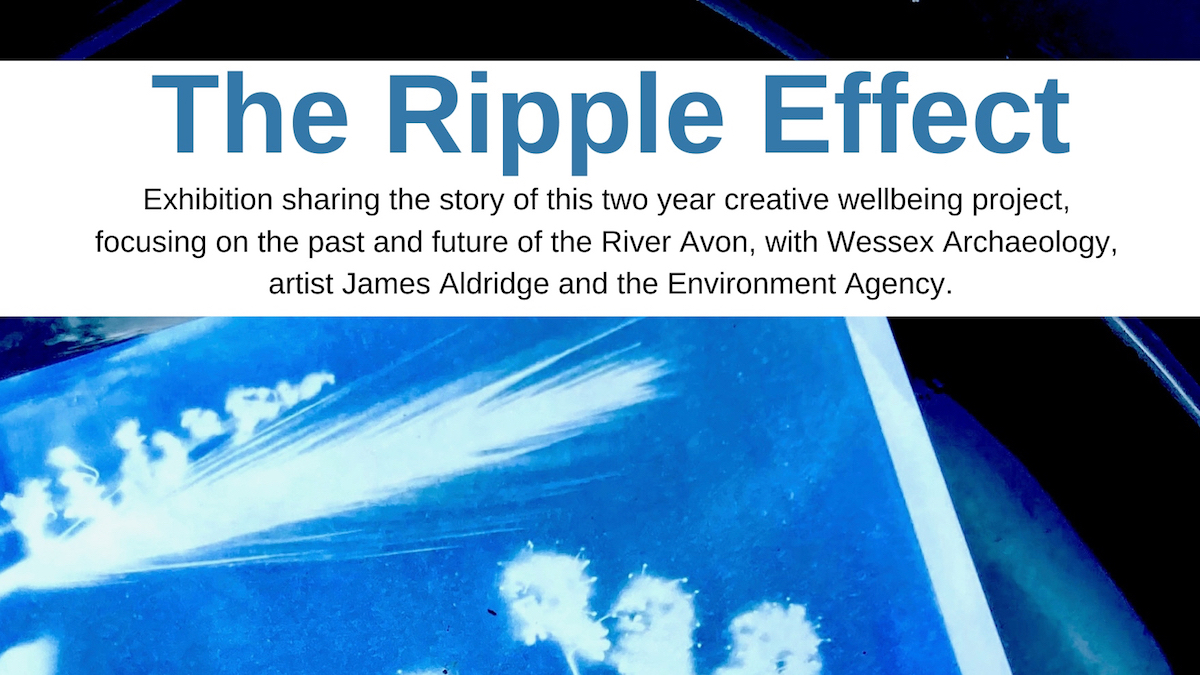
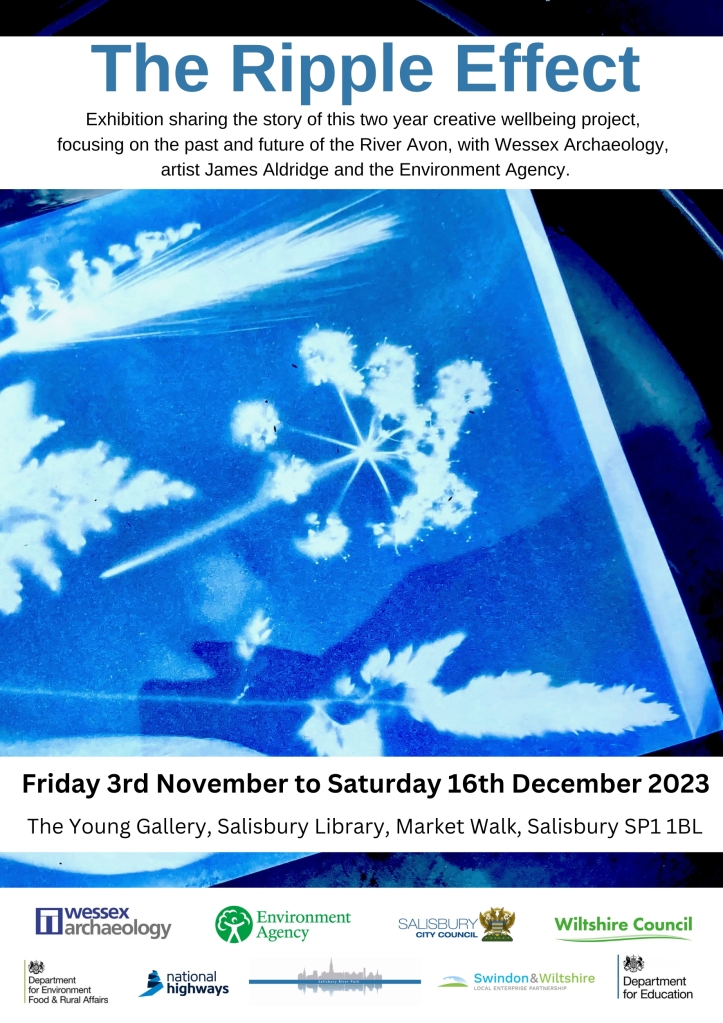
The exhibition will share documentation from project sessions, artwork made by participants, and river-themed activities for exhibition visitors, as well as launching the project film, the link to which I’ll add here when it’s available.
If you make it along we’d love to know what you think. You can email me here or share your experiences on social media using the #RippleEffectSalisbury hashtag.
I’ve always been interested in animal tracks and signs, as a way of getting a glimpse into the lives of other animals. I feel like they give us a chance to communicate with other beings, if we are prepared to slow down, and notice/listen.
Human, dog, Roe and Muntjac Deer footprints
Back in 2014 I wrote a piece about my relationship with our previous dog Moshi and what we each noticed on shared walks for Dark Mountain issue 5:
‘Here in or between fields, guided by signs, my perception colludes with the farmer’s machinery as I follow mown lines and peer through fences. Here the constant ‘show and tell-er’ of what can pass across these lines is Moshi – hearing sounds and smelling smells I can only imagine – pointing out pathways in the verges and up under the hedge that I have learnt to recognize as a badger or fox, but which to her must be so much more.‘
I also wrote a blog post a while back abut the importance of slowing down in a time of crisis. Listening to what the more than human world has to tell us, rather than rushing about acting from a position of assumed understanding/superiority – Slowing Down, Going Deeper.
This last few weeks I’ve been spending a lot of time with our son and dog. Once my exhibition was up and running, there was a bit of work here and there and a week’s holiday in North Norfolk with my husband, but apart from that, I’ve been trying to find ways to meet the needs of a 12 year old boy and a 50 year old man (me) at the same time.
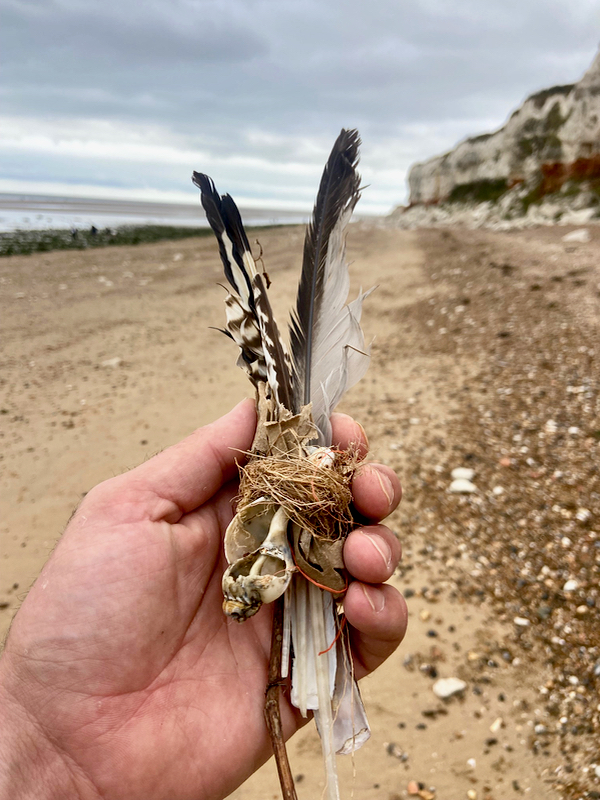
Recording Colours and TexturesNorfolk Beach FindsWalking Bundle at Old Hunstanton
I’ve made small collections (see Collecting to Connect) while he practices tricks on his scooter, gathered material for making inks whilst on dog walks, and managed to visit the odd exhibition here and there, including The Ground Beneath our Feet at Groundwork Gallery, Kings Lynn.
It’s reminded me a bit of when we first adopted our boy, and then again in lockdown, when my arts practice shrunk to fit the spaces that we inhabited, keeping a kitchen sketchbook where I used what I could find in the spare minutes between meals and playing, or taking photos of the toys that found their way into bed and baths and onto cafe tables.
Collecting orangeTesting home made inksScootering and collecting
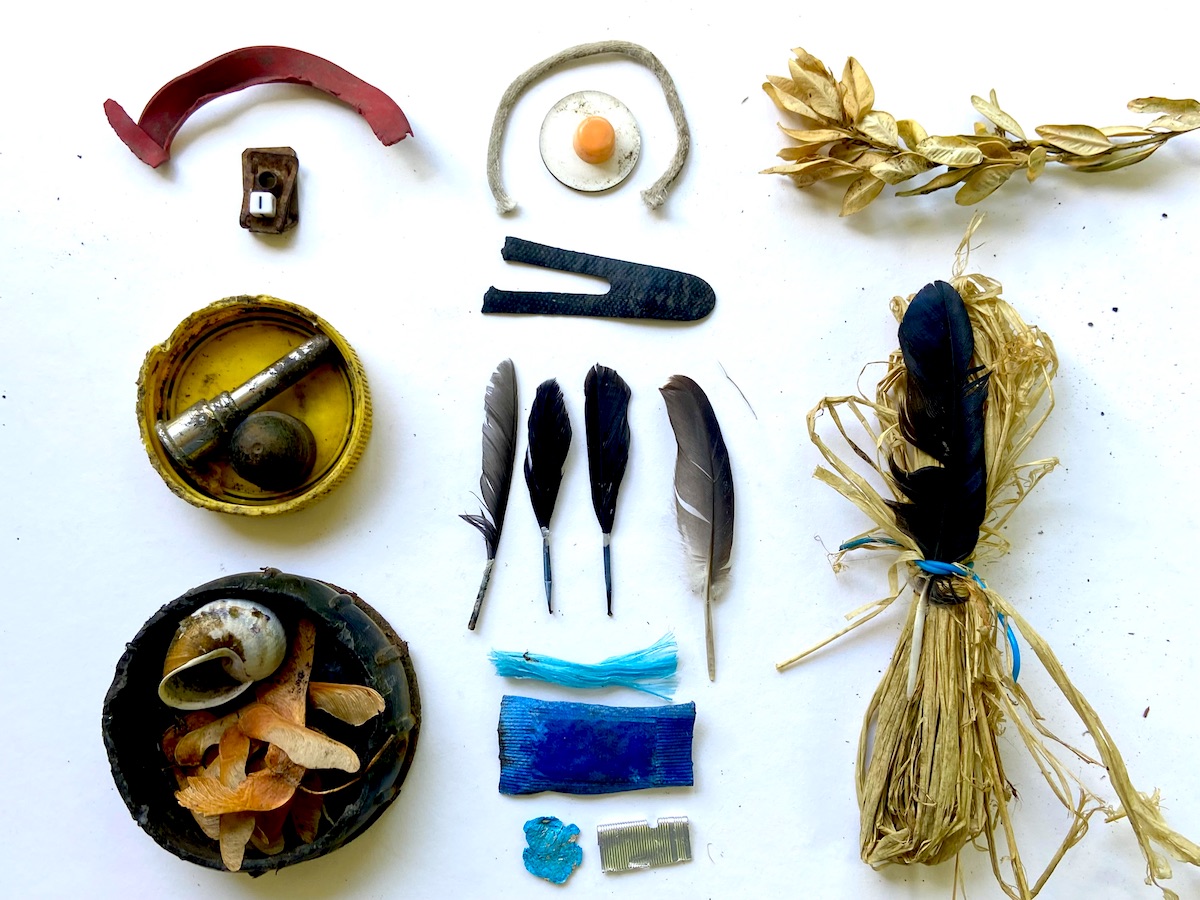
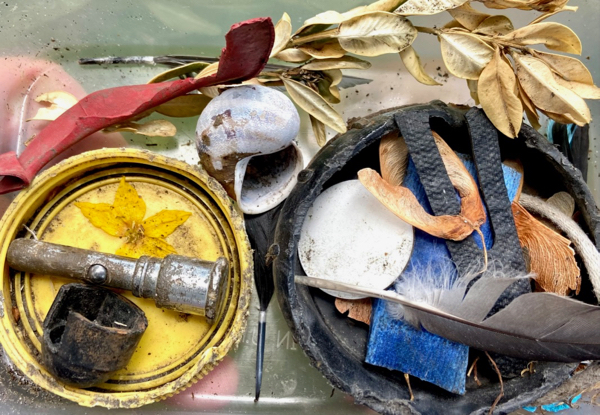
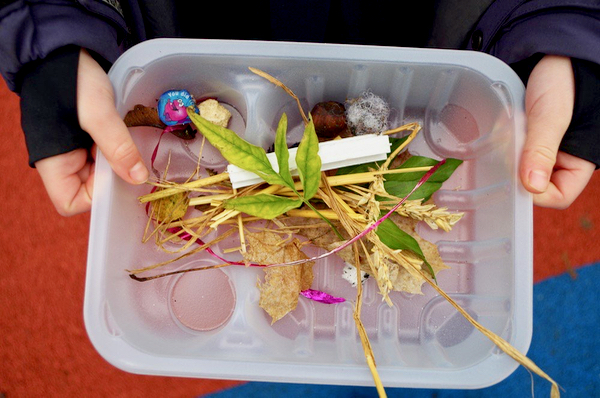
Today I made another small collection, focusing on colour (for about 5 minutes) whilst sat on the kerb at the end of our road. While I gathered together the few small finds and quickly arranged them, I started to think about these arrangements as equations.
To me a collection has mathematics in it, and seeks to find some kind of balance through the relationship of its parts. I can’t say much more than that at the moment as it’s a new realisation, but it’s similar to the way that I read animal tracks and footprints as a written language, a conversation in the mud.
Today’s very quick collection on the kerb
I’ve always felt a deep connection with animals, and growing up would often be found with horses, ducks, woodlice or tadpoles, or laying on the floor with the dogs. Now I’m thinking about interspecies relationships/communication and their relationship with Neurodivergence.
I’m planning on carrying out some experiments in the coming weeks/months (as the school term starts) as part of my Neuroqueer Ecologies research. These will build on The Ash Looks Back series (made with camera traps hung on Ash trees). I’m not sure exactly what these will look like yet, in the past I’ve left half finished artwork in my compost bin and pond, for the organisms there to complete, and I imagine there will be a similar combination of my making and theirs.
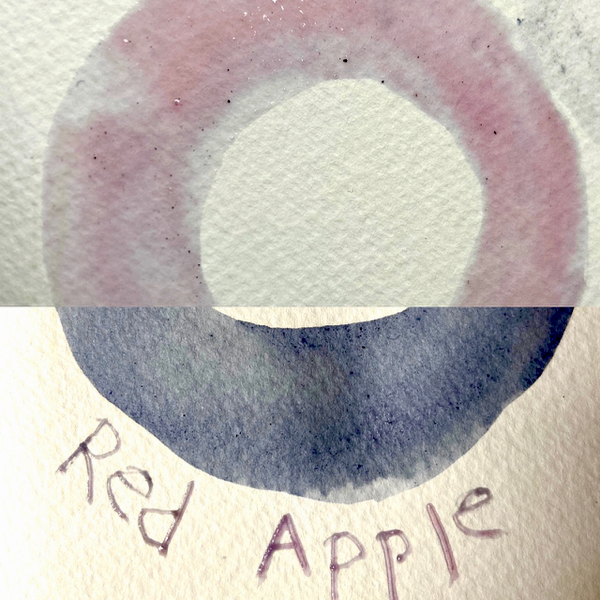
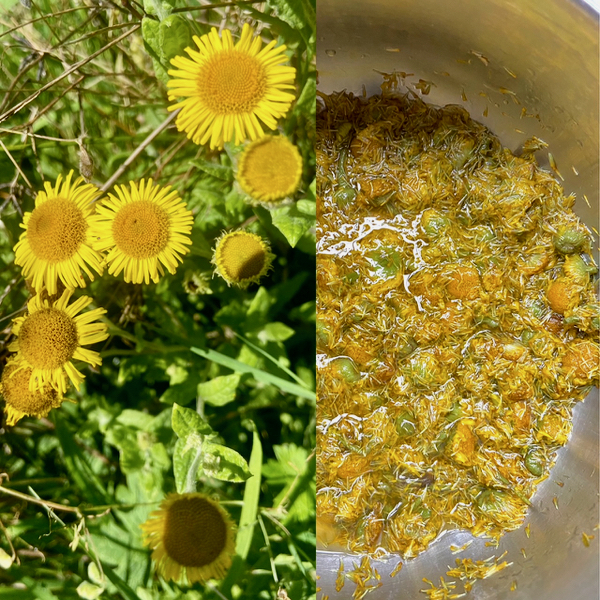
Red Apple Skin InkFleabane ink in process
My exhibition Drawing on Water at Pound Arts has just come down, so I also need to leave time and space to process all that has come out of that (I’m hope to edit together a short video tour of the exhibition for anyone that wasn’t able to make it).
Detail of ‘Other Animals’ – Walking Pages at Drawing on Water exhibition
Whether everyone else will see these interactions as conversations and collaborations I’m unsure, I’m expecting most people to see my offerings and recordings as more one-sided than that, but I want to continue to research what happens when we leave open the possibility that other beings are speaking to/with us.
Perhaps, as Peter Reason writes, if we open ourselves to that possibility, and really listen, we could receive insights that would otherwise be missing from our understanding of the world:
‘What would it be like to live in a world of sentient beings rather than inert objects? How would we relate to such a world? And what, then, would art and creativity be like? This a world of communication and interaction of which we can be a part, in which trees, crows, and rivers may grace us with a response to our attention and our call. Of course, we do live in such a world, although modern culture tragically fails to acknowledge this… If we open ourselves, if we call, the world will respond. The place of art is to foreground this perspective.‘
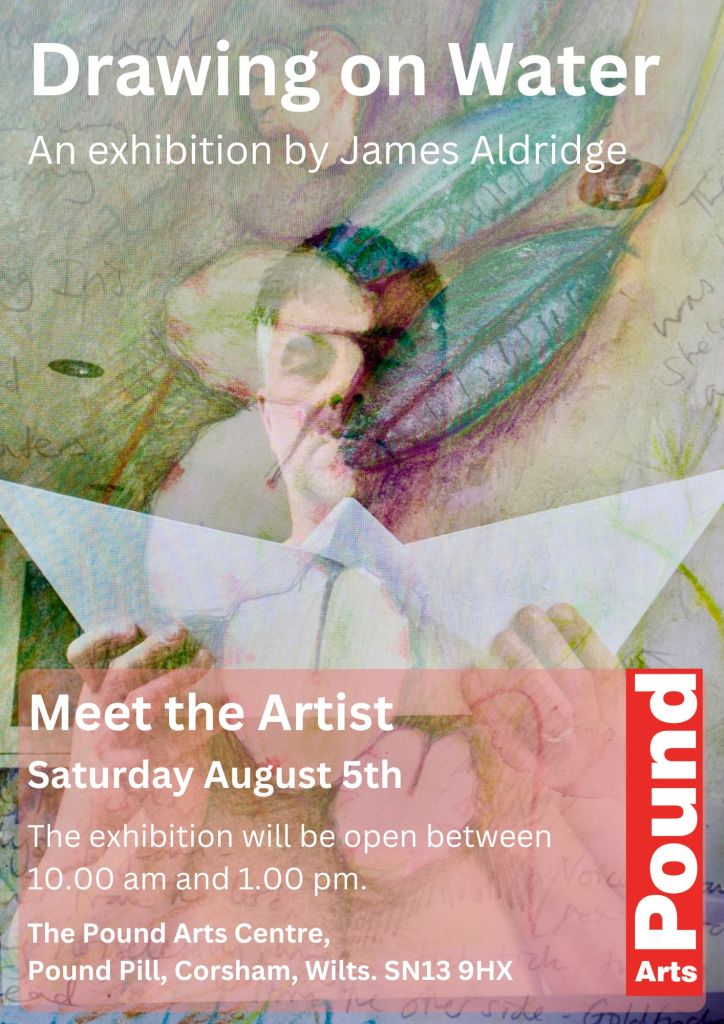
For those people that aren’t able to make the opening of my Drawing on Water exhibition at The Pound Arts Centre on 20th July, or the Creative River Walk I’m leading on Wednesday August 9th (see here for information on both), we have now added another event.
Although The Pound (and so my exhibition) will be open from Monday to Saturday in July, and Monday to Friday in August, it will be closed on Saturdays 12th, 19th and 26th August.
So if you fancy dropping in and saying hello, I’ll be at The Pound from 10.00 a.m to 1.00 pm on Saturday 5th August, and would be very happy to see you then.
I posted an image on instagram recently of my son standing on the central reservation of the M6, with the words ‘This is a place too’, and commented on how motorways can feel like non-places, but when we get a rare chance to stop we can experience them more fully.
I mentioned in the post how I’m intrigued by the idea of having miniature residences on roundabouts. There’s something about the little green islands (not so much the tarmac ones) that people whizz past in their sealed car bubbles that is calling out to be noticed and explored.
I’ve always had a thing for islands, and other small, defined spaces where I can be alone with non-human company, and in some ways roundabouts (the wooded ones especially) have a similar feel. I have camped on Great Blasket Island off the west coast of Ireland by myself in the past, in the days when all the buildings were ruined and empty, and I had it all to myself, apart from the Grey Seals of the beach, the seabirds and pods of distant dolphins.
And on Whitsunday Island in Australia too, where goannas clawed at my tent and I could watch Green Turtles from my sleeping bag, and when daytrppers left, it was just me and the other animals alone on the beach. I appreciate that the car noise, fumes and threats of being run over on a roundabout wouldn’t be quite as relaxing, but I’m still tempted.
I’ve been thinking about how recent experiences relate to my Neuroqueer Ecologies research, which I decided to host here on the Queer River site, extending Queer Ecologies research to include the Neuroqueer too.
I’m starting to consider the ways that neurodivergent people perceive/experience our environment, what we notice and how we experience it.
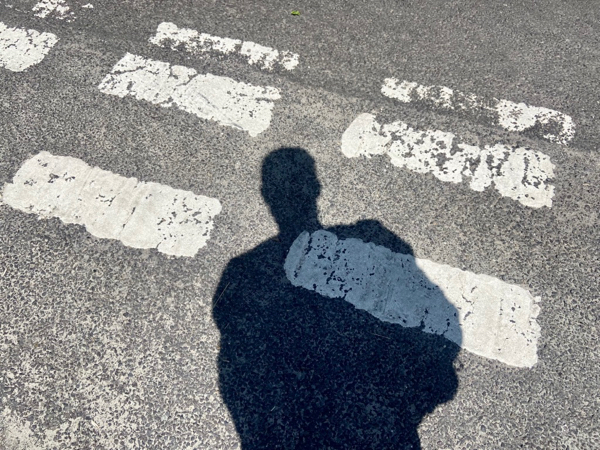
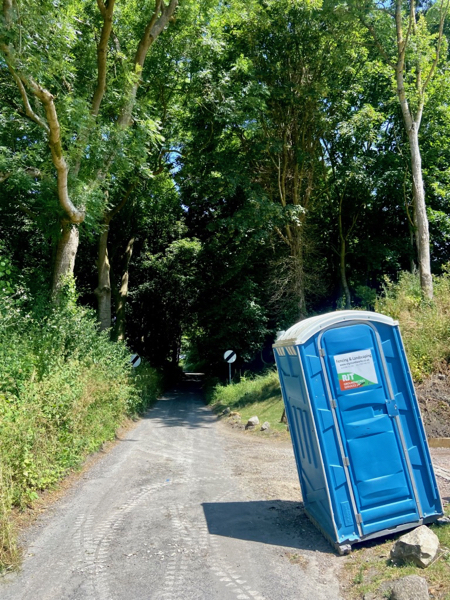
So, bringing all this together, today I thought I’d take a walk along the road from my house and focus on the road itself. Rather than just using it as a way to reach the woods or river, to actually notice the road surface, and the objects and patterns that it has accumulated, and share my discoveries here. It’s a narrow road with no pavements, but a quiet one that connects together villages in the Pewsey Vale in Wiltshire.
The walk made me think of the times when I walked with my Urban Rural Exchange collaborator Karen Wood, around her local patch of East London, and her well established practice of noticing, recording and responding to road markings, street furniture, skips etc.
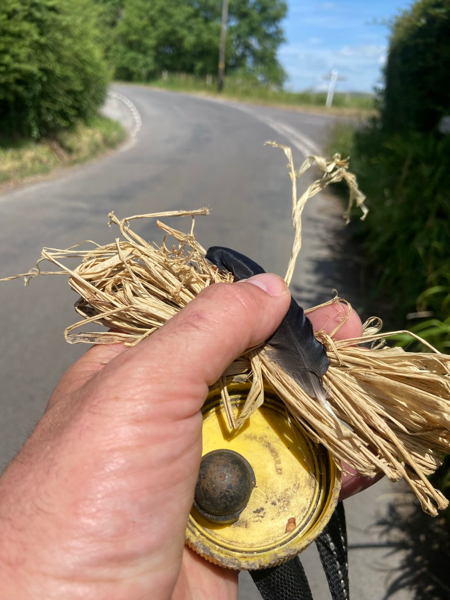
I was going to call this post Roadwalks, a bit like Roadworks I guess, with scope for wordplay as well as collecting and photo taking. But as I walked, I noticed the objects fallen or thrown from cars and pushed to the edge by wheels, and the clusters of plant material washed down the gutter and gathered together by the recent rain, and it felt like walking along a tideline, combing the eroded tarmac for treasures.
On the subject of islands and collecting, I read a wonderful book recently that I’d recommend, Sea Bean by Sally Huband, based in Shetland. I’m now also reading The Outrun by Amy Liptrot, on her experience of growing up on the Orkney Islands and returning as an adultrecoveringfrom alcoholism.
Today I walked out from The Pound Arts Centre in Corsham, Wiltshire, to follow the path of the Byde Mill Brook through the town. I’m leading a Creative River Walk with The Pound on Wednesday 9th August (follow the link to book, if you fancy joining me), so this was a chance for me to research the route, develop a new piece of artwork for my Drawing on Water Exhibition, and learn more about this tributary of the Bristol Avon.
Walking out from The Pound Arts Centre
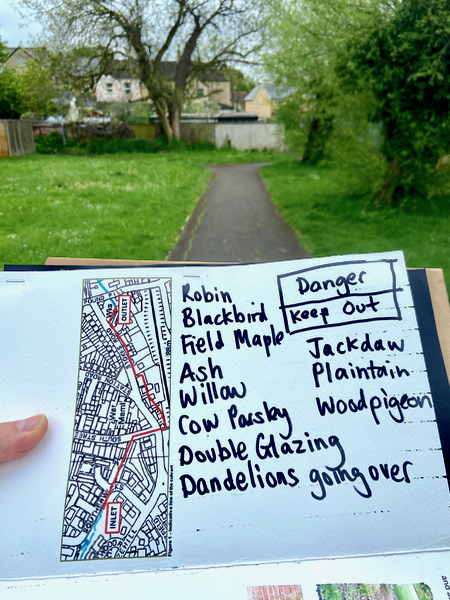
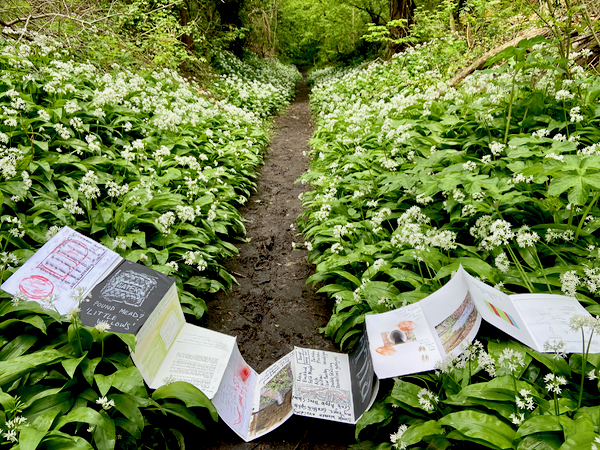
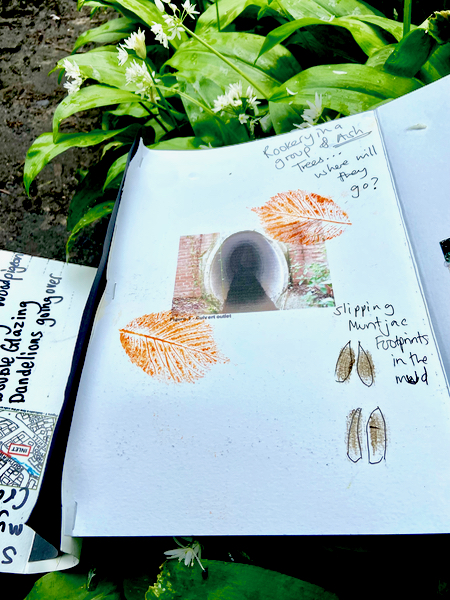
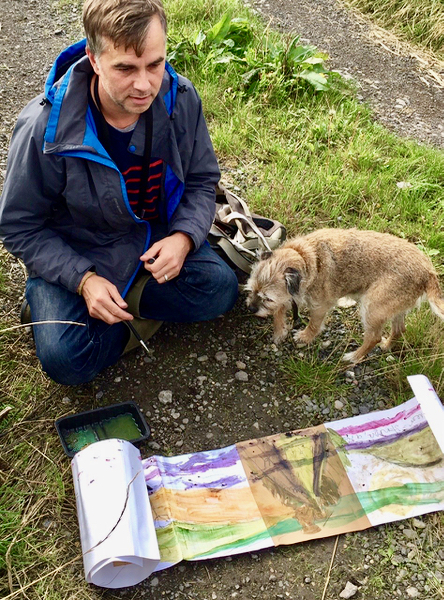
I took some new fold-out Walking Pages (I’ll be providing something similar for the participants of the August River Walk), and did my best to follow the Brook as it flows through the southern part of Corsham, both above and below ground.
Close up of Pages in ProgressFollowing the Unerground SectionBrook Enters A Culvert
The Byde Mill Brook at Corsham has been heavily modified, running through culverts in two places, under roads and houses (with no light to enable plant growth that in turn provides food and a home for other wildlife). Between culverts, the Brook passes through residential areas and is lined with lush cow parsley, docks and grasses. After the second culvert the Brook eventually emerges near the railway line, leaving the town via a long, artificially straightened channel.
Researching online, I found that chemical pollution levels between Corsham and where it meets the Avon at Lacock appear to be pretty bad, with water conditions made worse by sewage overflows at local treatment works.
According to the Top of the Poops website, the Byde Mill Brook at Corsham was polluted by Wessex Water 46 times in 2022 through the release of sewage, lasting a total of 565 hours. That’s the equivalent of 23 1/2 days solid of sewage pumping into this little river.
Walking Pages in Progress, and Wild Garlic
Please don’t let me put you off joining us for the walk! There’s some beautiful spots, and without reading up beforehand you’d probably never realise the challenges that the Brook and many others of our streams/rivers face.
I just think it’s really important that as well as enjoying our rivers, and the associated green spaces, we understand the ways that we negatively impact on their health. By doing so, we can start to think about how we can improve both water quality and wildlife habitats. That’s something we will discuss as we walk together in August.
Printing and DrawingRoad Sign Rubbing
I took a longer walk than we will as a group, as I wanted to get a feel for the whole of the Brook as it passes through the town, so had less time to stop, listen, notice and record than we will in August, when we can pause for longer and include more detail on our pages. Today I concentrated on making notes and layering printed photos with rubbings and printing
Through my Queer River work, and the Drawing on Water exhibition, I hope to communicate the value of taking time to be with rivers; slowing down to notice the communities of life that they support, as well as the damage that we have done. Perhaps that way, we can be inspired by their beauty and start working together to take positive action.
The image featured at the top of the post (also added below) was taken from a 2022 Environment Agency report into flood risks associated with Byde Mill Brook, and shows in red one of the culverted sections of the Brook.
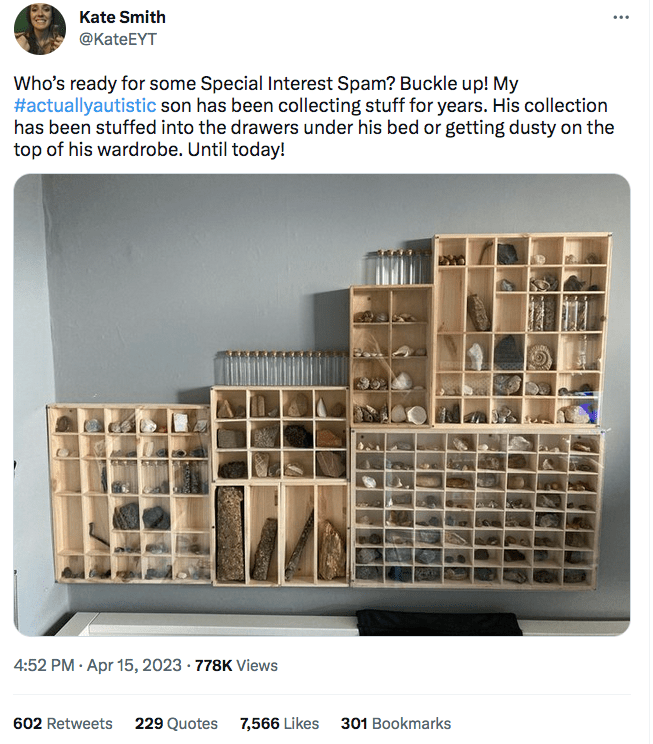
On Twitter recently Kate Smith (@KateEYT) posted a photo of some collections that she had helped her son, who is autistic, put together. I was touched by the way that she valued and supported his way of experiencing the world, and it reminded me of my own childhood collections, and the way that collecting developed into an important part of my practice as an artist. It got me thinking about collecting as an artist, and as an autistic person, and seems an interesting thread to pursue as part of my Neuroqueer Ecologies research.
Screen capture of Kate’s tweet
So why do I collect? In the past I’ve shared images of collections that I’ve made, and had people comment that I might be encouraging others to cause damage to ecosystems, for example by gathering a few shells from the beach. I can understand why protected landscapes such as nature reserves ask people not to take pebbles or plant cuttings away with them, and the positive intention of the often used phrase ‘Take ony memories, leave only footprints’, to encourage people to leave a place as they found it. I am also aware that different people learn in different ways, and need different kinds of sensory experiences.
Residency at MK GalleryResidency at MK Gallery
At the same time I know that my collecting serves an important purpose for me, and Kate’s son. I’m glad that the collecting of bird eggs is illegal, and that the Victorian practice of killing every rare bird in sight to stuff and put it in a museum is largely over. And I think we need to distinguish between a kind of collecting that strips a place of rare plants or birds eggs, and the gathering of a few small elements to draw or to learn, that can support our understanding of and connection with it.
Urban Rural Exchange – a walk from Canary WharfDrawing a dead Chaffinch found on my walkA group of Walking Bundles
If I’m working with a group, I’m very clear that we don’t pick anything that’s growing, unless for example there’s a load of it and we can gather one or two flowers without negatively impacting on an ecosystem. Similarly if I collect shells on a beach, I’m making sure that there’s nothing alive inside them, and that I’m taking a few select objects rather than a big bag full.
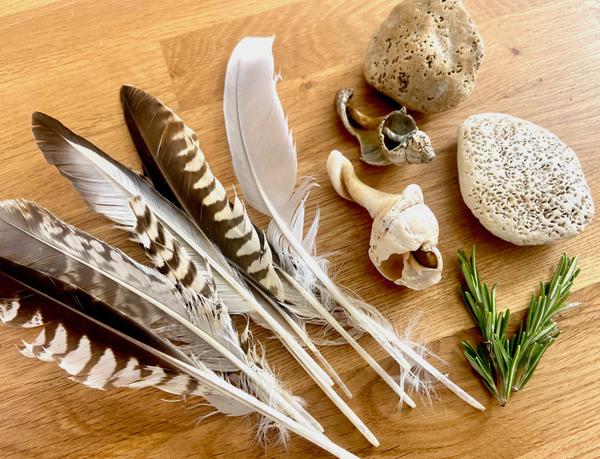
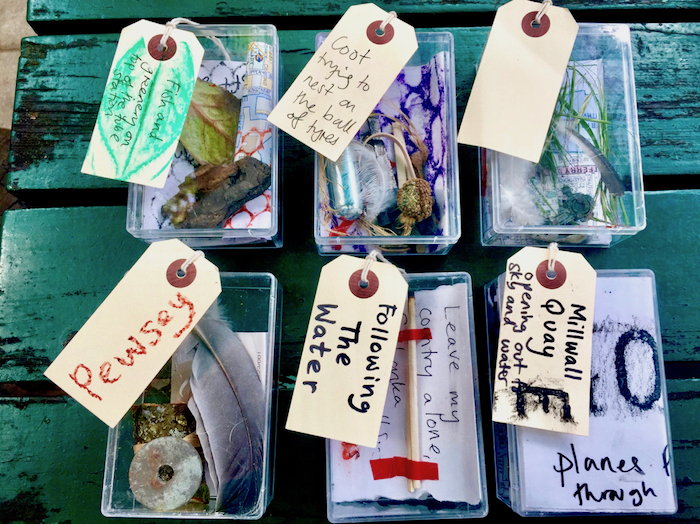
For me, collecting gives me a chance to look more closely, to take an object away so that I can spend more time with it. At home I can look at its details, feel its textures, and then share it with others. Small scale collecting documents an experience and keeps it with me in a lasting way, giving me more time with that place through the pieces that I’ve gathered together. My collections often end up travelling around with me, to my Noticing Nature sessions with older people for example, who may not be able to get out and about as easily, and who often won’t have handled a buzzard feather or a deer skull.
Noticing Nature SessionExploring the school field in a workshop
It’s often said that autistic people are limited in their attention, that we get ‘stuck’ on a subject or a way of engaging with the world. Dinah Murray came up with the idea of Monotropism to describe the singular attention that autistic people can apply to a subject. As with everything about autistic people, this is generally seen as a lack, a disordered inability to spread attention over a wider arrange of things.
I see my fascination with the natural world, and the time that I spend exploring its details as an incredible gift. I wouldn’t be me without it, and think that the world needs more of us to stop and focus on the details as well as the bigger picture. Especially when that bigger picture often seems based on an outdated idea from the past rather than an observed reality of where we are right now.
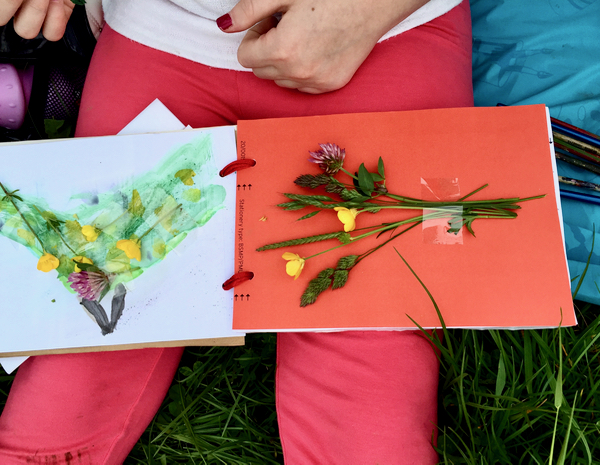
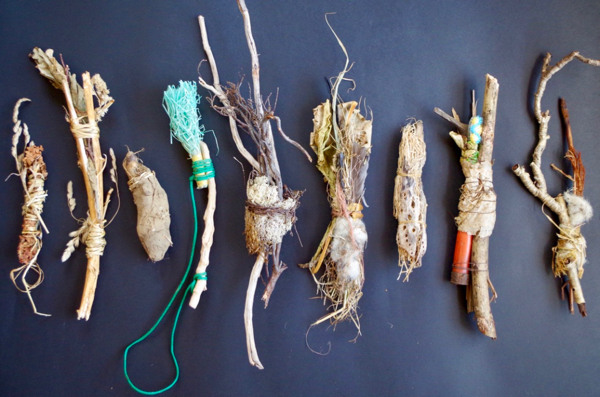
When I make Walking Bundles, Walking Pages, or document a walk using a jar, a bag, some photographs or drawings, I gather together the physical elements of a place, at the same time as I gather together and process sensory information. The artwork evolves in my hand and my awareness of the make-up of my environment evolves within me.
It’s no wonder that I have spent years working with museums and heritage organisations, galleries and environmental charities, using collections to help people learn about where they live and work, and the details that often go unnoticed.
Work in progress at Andover Museum – Residency with CAS Andover
So the research question that I’m holding lightly as I do this work now is, what if we valued what neurodivergent perspectives can offer the rest of the world (especially in relationship to ecology and the earth crisis)? What if we recognised for instance that the majority of people are so caught up in the busyness of moden life that they can miss the important details, the insects that are dsappearing from around us, vital to the ecosystems on which we all depend, the everyday beauty of the world that can lift our spirits, and help us to carry on in difficult times?
Collecting helps me to learn that the world is a network of interlinked parts. It keeps me feeling connected and grounded. I don’t miss the bigger picture, I just don’t make assumptions about it, but prefer to construct that bigger picture from the details that I discover.
Thank you to Leigh Chalmers, Heritage Inclusion Manager from Wessex Archaeology, for sharing Kate’s tweet with me and sparking all sorts of thoughts/ideas.
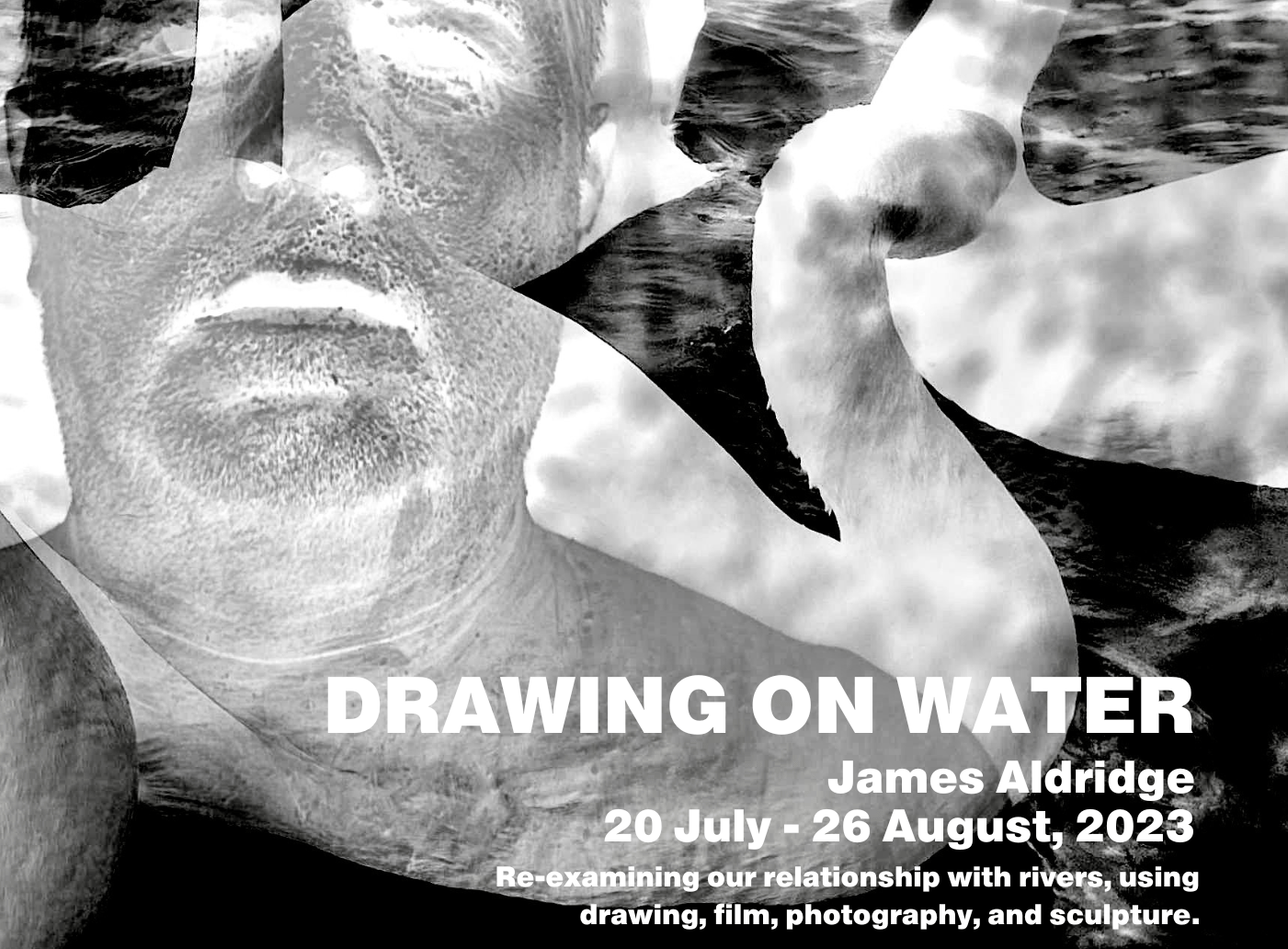
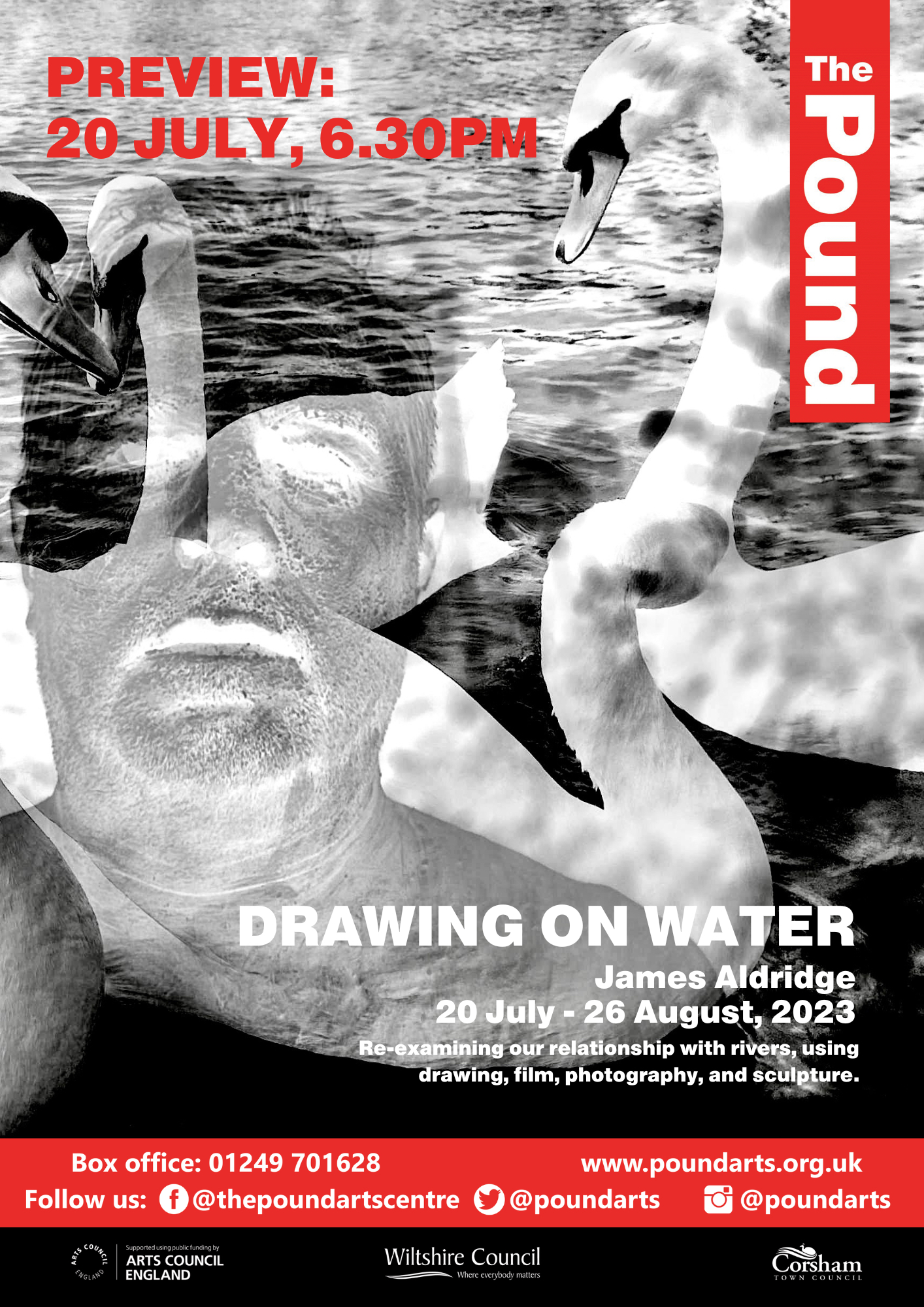
A bit of advanced notice that from 20th July to 26th August, my solo exhibition, Drawing on Water will be available to visit at The Pound Arts Centre in Corsham, Wiltshire.
The Exhibition
The exhibition will bring together work that I’ve been making as a result of the Queer River project, in particular pieces that draw on embodied ways of knowing my two local rivers, the Wiltshire Avons.
Please see the information below the poster for associated events.
‘This exhibition brings together work in a variety of media, created by James through his Queer River research project (visitwww.queerriver.com). Drawings, photographs and films reflect on the process of coming to know rivers and other wetlands, through collaborative, creative and embodied practices, to understand what they need from us, and what we can gain in return.‘
Associated Events
The exhibition preview of Drawing on Water will take…
I decided to call this post Swan Folk, after researching the relationship of people and swans in art and folklore of various kinds. Then I realised there’s already a book called Swanfolk which I think I’m going to have to read (and which I’m pretty sure someone on Twitter recommended to me a while back). So, here’s Swan People, with a taste of what I’ve been learning about and making in the last month or so.
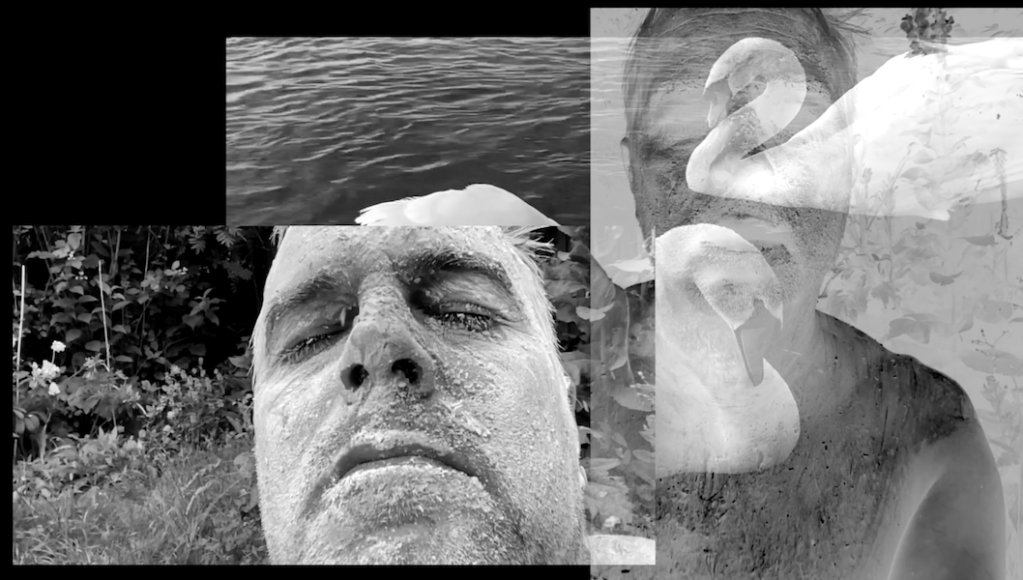
Screenshot from short film (work in progress)
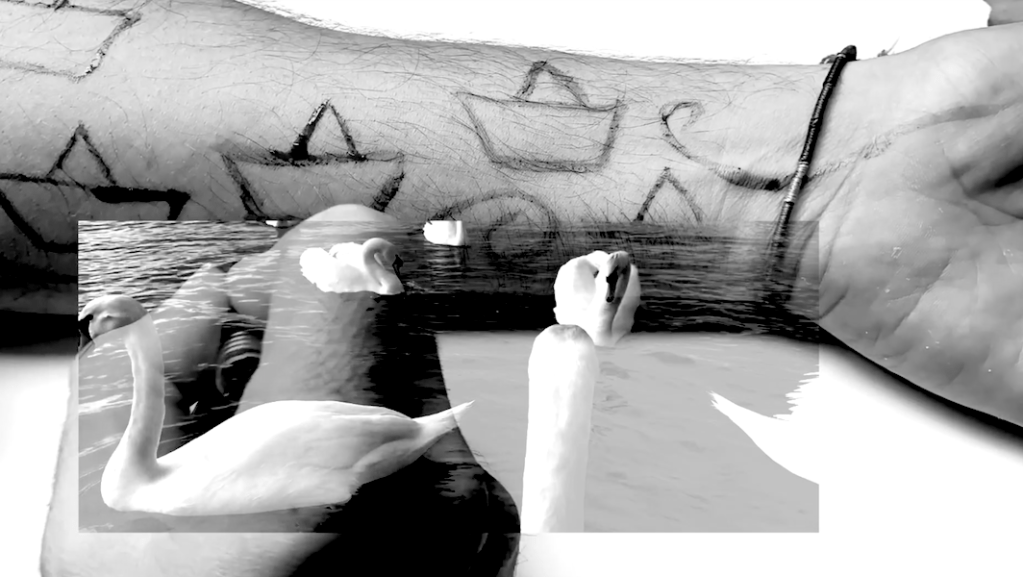
One of the reasons I’ve been researching swans is that I’ve been making a short film for my upcoming exhibition at Pound Arts in Corsham this Summer, which combines imagery of chalk, water, my own body and swans as a response to my experience of my local chalkstream, the River Avon.
My exhibition Drawing on Water will run from 20th July to 26th August and consist of video, photographs, drawings and objects that have emerged out of my Queer River Research. Not so much actual documentation of walks, although there will be an element of that, but artwork that I’ve made afterwards as I reflect on my experiences.
Screenshot from a short film (work in progress)
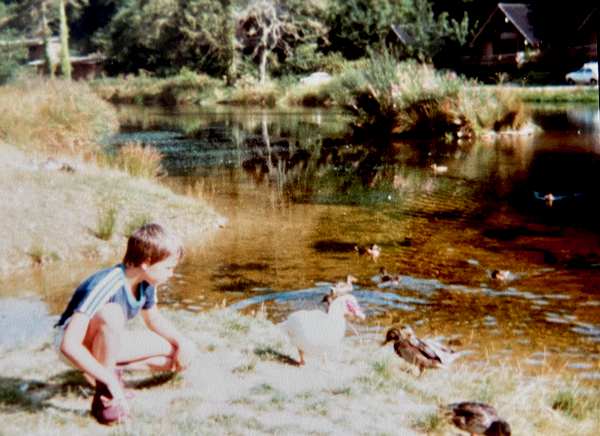
Why have I become so interested in swans? I’ve always felt a connection with water birds, and felt the power of birds that are all white or all black too. White swans, black corvids, tall almost human-like cranes and storks, walking through rushy swamps and wild places, stalking the edges and the boundaries. When I was a child and my Dad lived in Gloucestershire, I’d nag him to take us to Slimbridge, to watch wild birds from hides and gather pink feathers from the captive flocks of flamingos, whilst on holiday I’d be on the lookout for ducks or geese to feed.
Feeding the ducks at a campsite in Devon – c 1980Feeding a dove on holiday in Greece – late 1980s
When I was young I also saw a film about a boy who made friends with a pelican (Storm Boy, 1976 – I’ve not watched the 2019 remake yet), and a documentary about a Chinese man who reared orphaned Siberian Cranes and danced with them. I’ve always been drawn to stories where the line between the human and the bird blurs (or mammal in the case of Grizzly Adams, another childhood favourite).
Some of my favourite childhood photos are of me with animals that I’ve befriended (I reared orphaned pigeons, cared for various injured birds, and kept caterpillars and stick insects alongside what was effectively my own natural history museum).
So for this new film I’ve been spending time with the Mute Swans that live on the Avon, experimenting with filming them underwater, and layering footage of them with the whiteness of local chalk, and their bodies with my body.
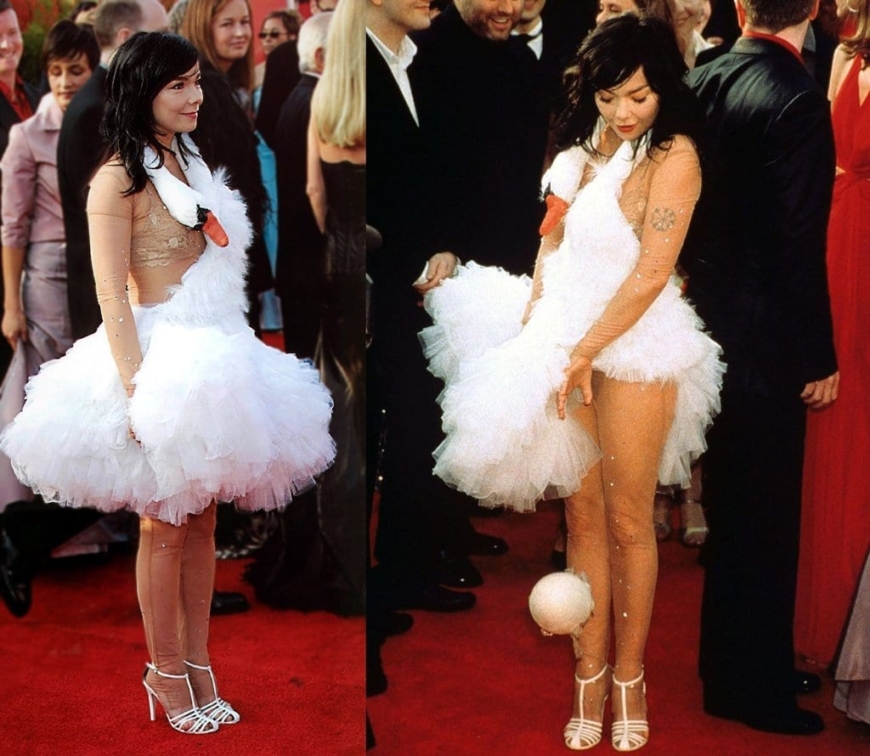
Bjork laying an egg at the Oscars (www.foreignpolicyyi.org)
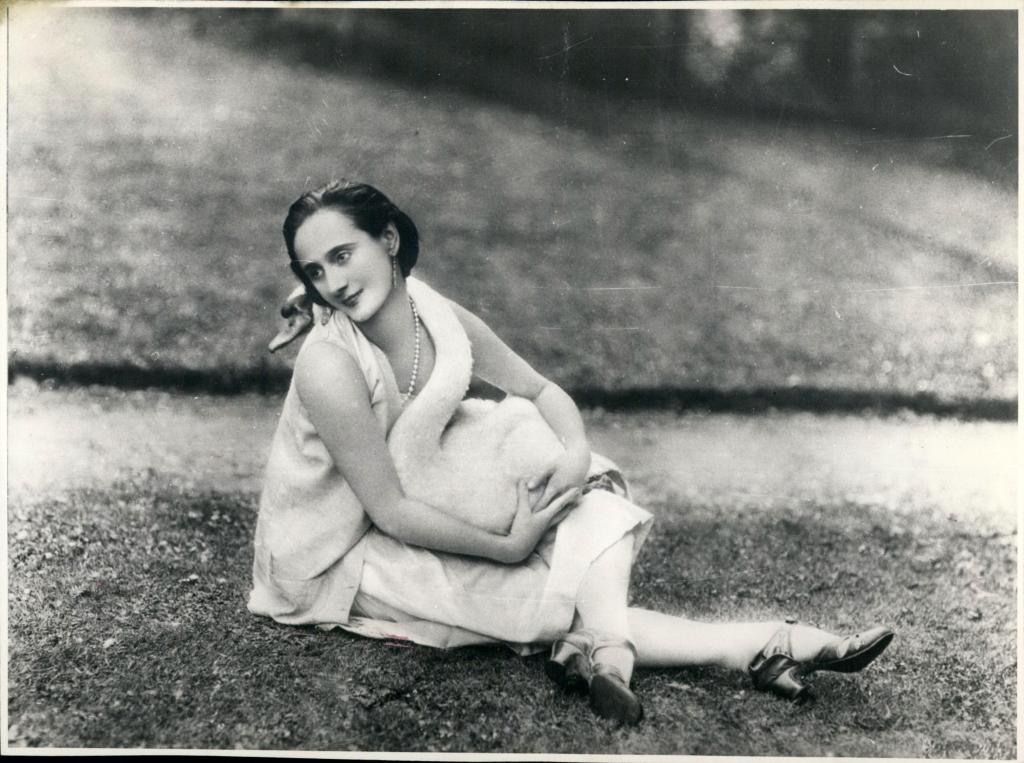
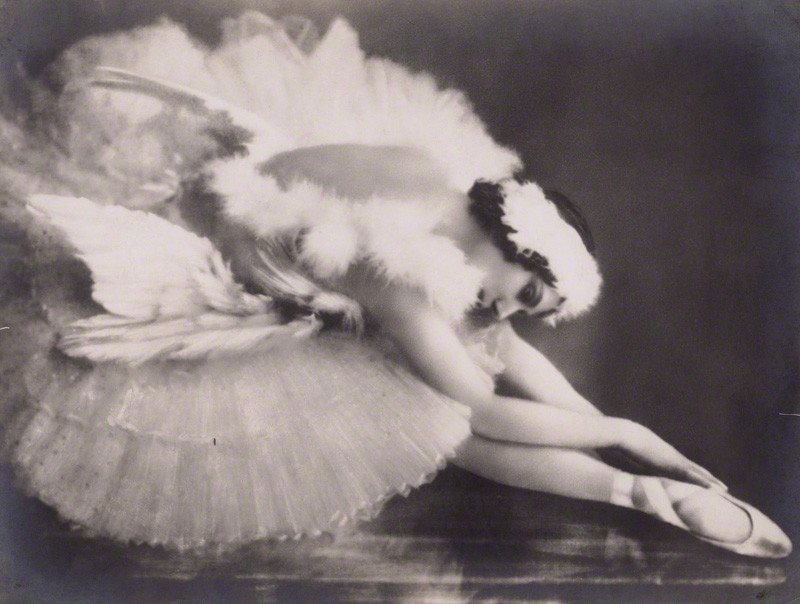
Thank you to everyone who rsponded to my request for examples of swan people. My research has unearthed photos of ballerina Anna Pavlova with her pet swan Jack, Bjork in her swan dress laying eggs on the Oscars red carpet, and stories of various (mainly female) shape shifting (therianthropic) swan people. These include the Brothers Grimm tale The 6 Swans, Irish fable The Children of Lir, the classical stories of Leda and the Swan and Cyncus (son of Poseidon who turned into a swan after death and was sometimes said to have ‘womanly’ white hair and skin), Old Norse poem Volundarkvida and some queer retellings of older stories.
Anna Pavlova with JackAnna Pavlova in Swan Lake
My film(s) for the Drawing on the Water exhibition (#DrawingOnWater2023) are very much works in progress, and I’d encourage you to get the dates in your diary and come along in the Summer if you can, but for now here’s a clip of some of my underwater footage, along with the couple of screenshots that I’ve included in the post above.
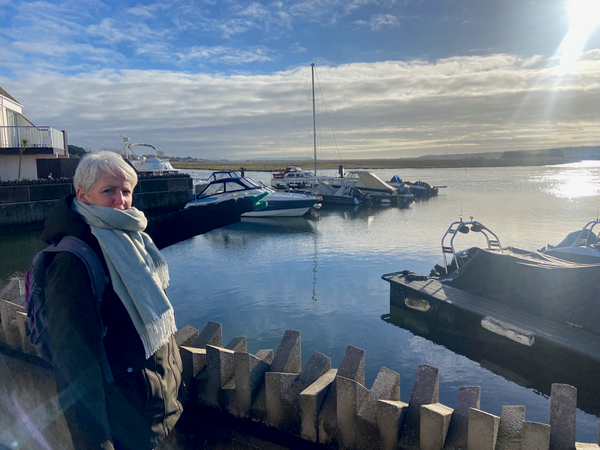
Last week I drove down to Christchurch with my friend and colleague Leigh Chalmers from Wessex Archaeology, with whom I’ve been working on the Ripple Effect project in Salisbury. I’ve been planning on going and seeing where my river (the Salisbury or Hampshire Avon) meets the sea for ages, both to inform my Queer River work, and to start planning a visit for the Ripple Effect group later this year.
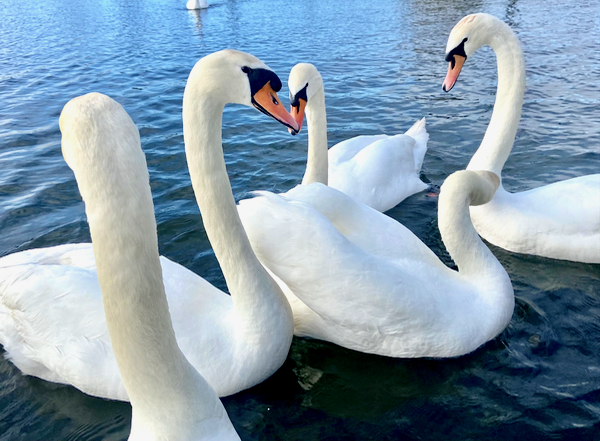
Leigh near the point where the Avon and Stour meetMute Swans
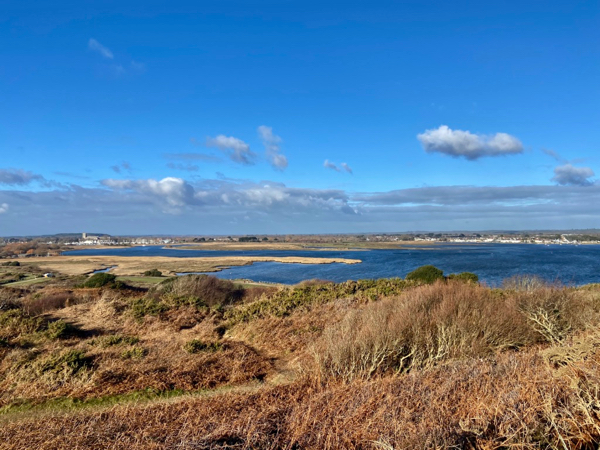
We spent some time by the rivers in Christchurch itself (where the Avon joins the Stour), visiting the Redhouse Museum near the harbour and filming some of the Mute Swans, and then moved on to Hengistbury Head and the visitor centre there, walking up to look around us and take in the bigger picture of the two rivers becoming one, flowing out past a spit of land and into the English Channel.
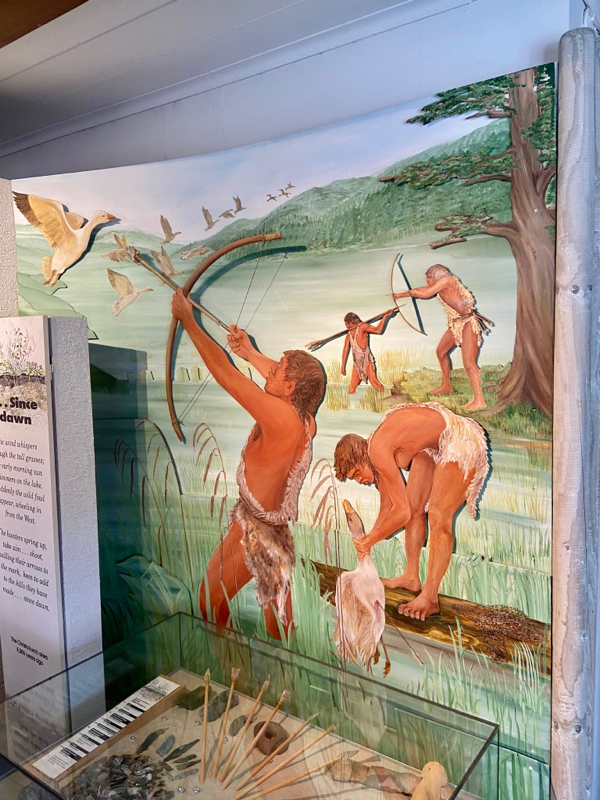
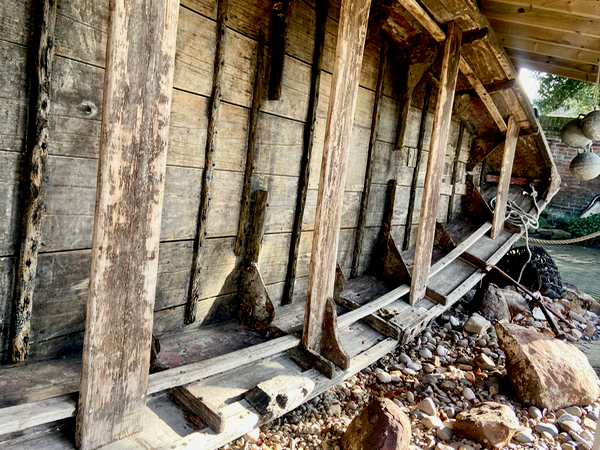
Redhouse Museum DisplaySalmon Punt
From Hengistbury Head we could see back down the estuary to Christchurch, across to The Needles on the Isle of Wight to the south east, and westwards along the coast to Bournemouth and Poole.
Looking back towards ChristchurchLooking west towards Bournemouth
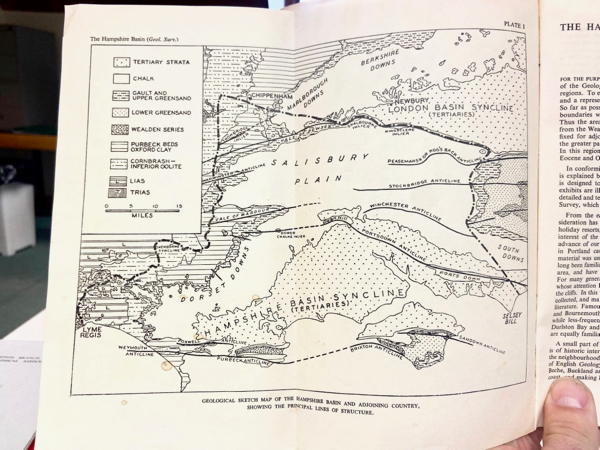
On a recent visit to the New Forest Heritage Centre Archive with the PaC (Practicing Artists Commoning) Artists’ Group, I’d spent some time looking at old maps of the local rivers and their relationship with the sea. One map that grabbed my attention was a sketch of how the rivers Avon, Stour and Solent might have looked back when the Isle of Wight was still a part of the mainland.
Maps at the New Forest Heritage CentreMaps at the New Forest Heritage Centre
My time with Wessex Archaeology has helped inform my understanding of the processes that have shaped the River Avon over millions of years; its relationship with local people, the land and the sea. Research with PaC has helped fill in the gaps in my knowledge as the Avon moves down through Hampshire along the Western edge of the New Forest. My research into chalkstreams as part of Living by the Ash Tree Waters has sparked a fascination with the way that chalk, flint and other rocks were formed, and the interplay between geology and river systems.
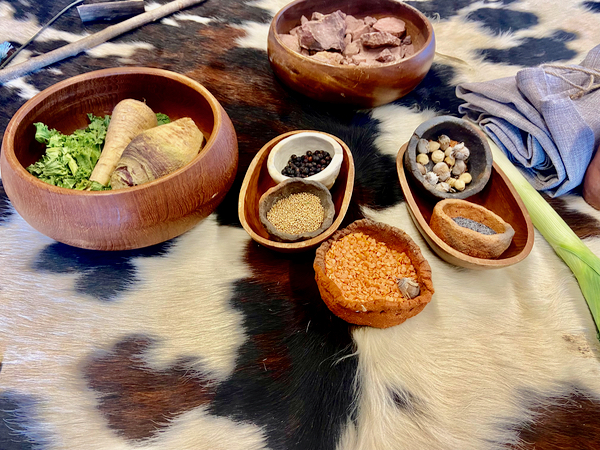
The Heritage Centre helped provide us with so many different threads that we could take up and share with the Ripple Effect group, from the trade routes that linked the Iron Age port at Hengistbury with the Mediterranean, to the migratory bird and butterfly species that visit the area each year, the plants used in glass-making along with local sand, and the ironstones that led to quarrying in Victorian times and threatened the foundations of the Head.
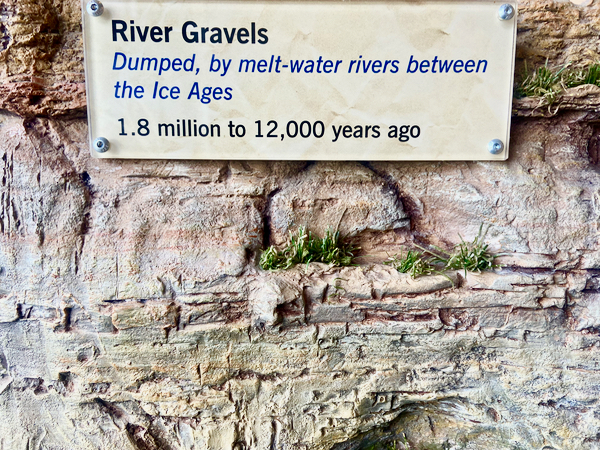
Heritage Centre geological displayHeritage Centre Ancient Crafts
I sometimes get a little self conscious about Queer River. I wonder if through working on a succession of river focused projects I’ll start to be seen as a bit of a one trick pony, but the subject of rivers is so vast, even when following the story of just one river, and the possibiities for journeys through place and time so rich, that I keep on exploring and learning.
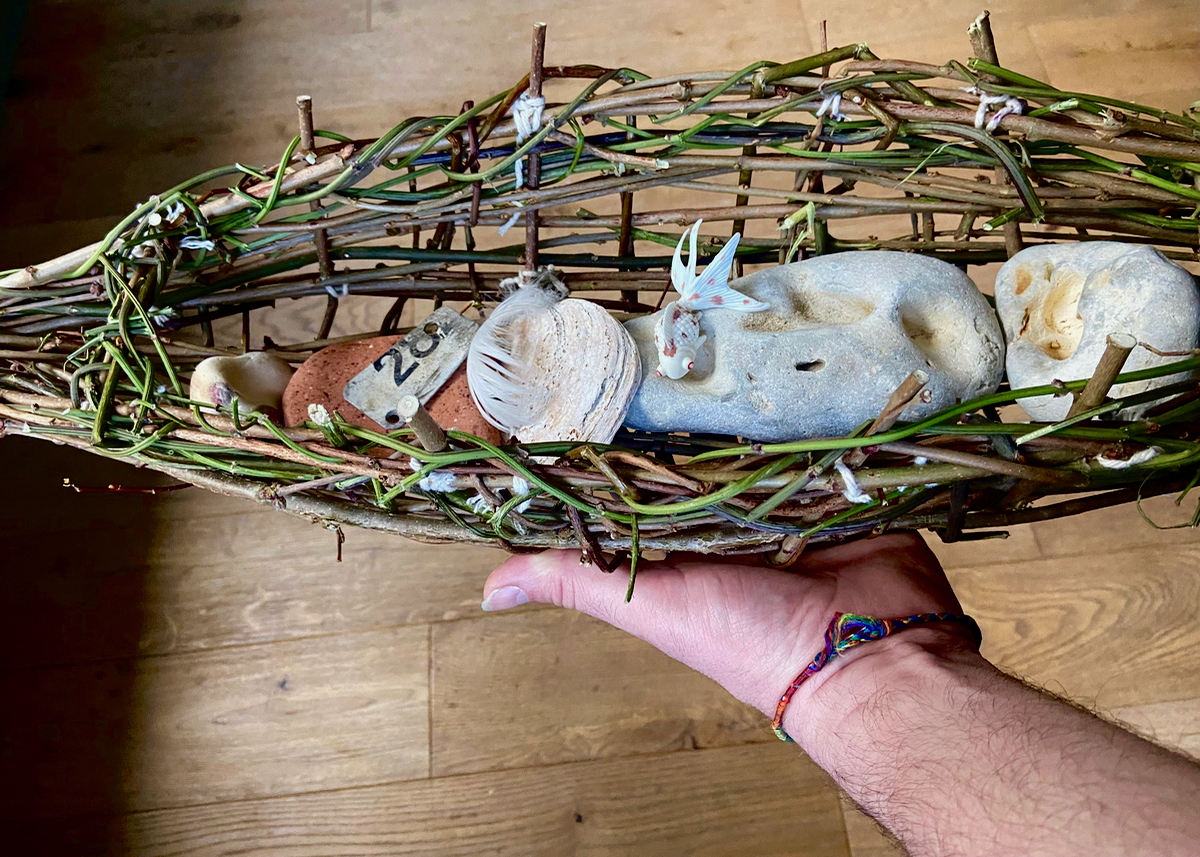
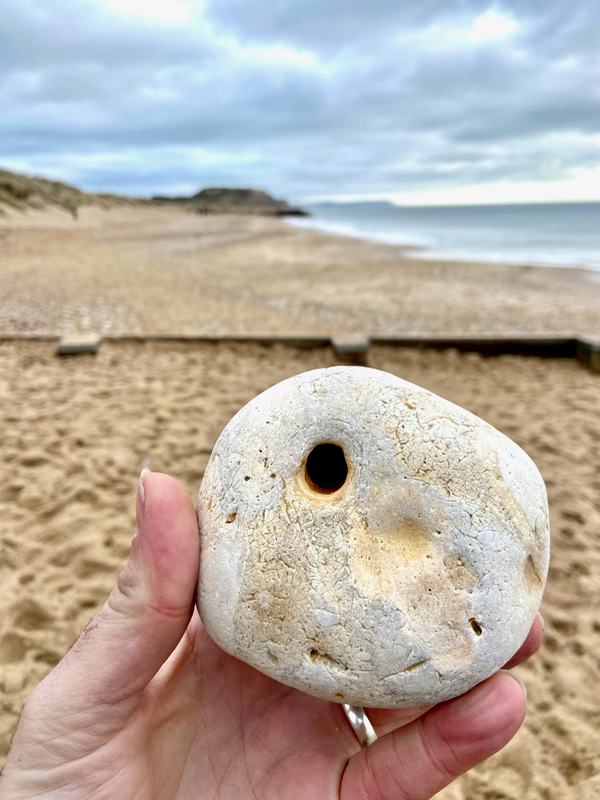
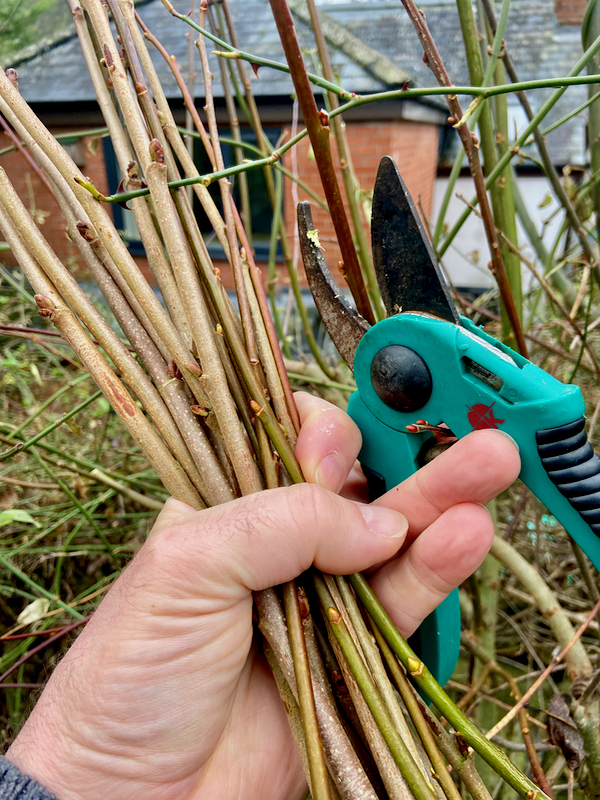
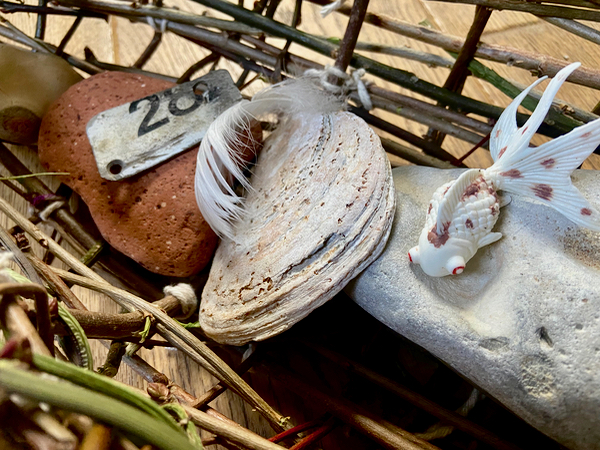
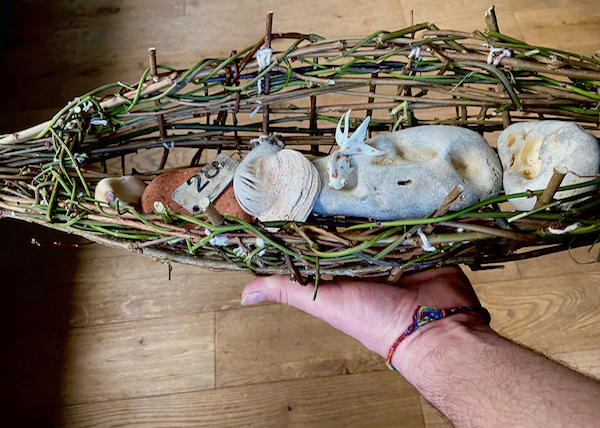
On our walk around the Head, we stopped to play with small paper boats that I had made as part of the Well City Salisbury Earthworks 2 project, turning slowly in the breeze on dark woodland pools. Whilst at the beach I gathered a few finds (stone, metal and plastic) to add to a new boat that I’ve been building at home, woven from plants that grow in my garden (itself only half a mile or so from the beginnngs of the Avon).
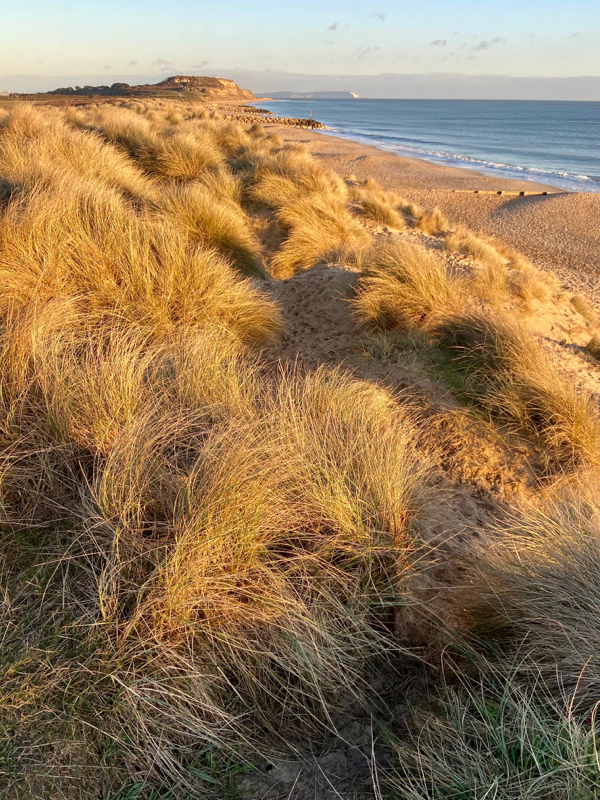
Looking towards Hengistbury HeadSand Dunes near Hengistbury Head
I’ll be having an exhibition this Summer at Pound Arts Centre in Corsham, Wiltshire, drawing on my work with rivers, which will combine artwork made to document my Queer River journeys, with drawings and films made since, and other new pieces made specifically for the exhibition. I imagine that my woven boat and others like it wil be included in some way. I’ll add more details here as they’re confirmed.
The drawing in progress in the featured image is one I made to reflect on the misty day that Gemma Gore and I experienced on our walk at Blashford Lakes, where the air was filled with fine water droplets, reflecting the light and filling the space above the water.
Breathing in the Mist (drawing in progress)
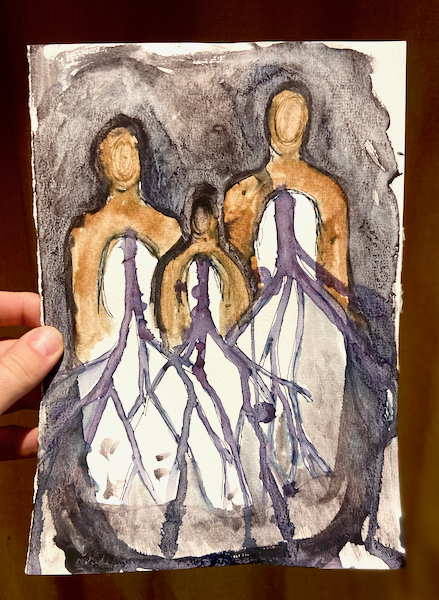
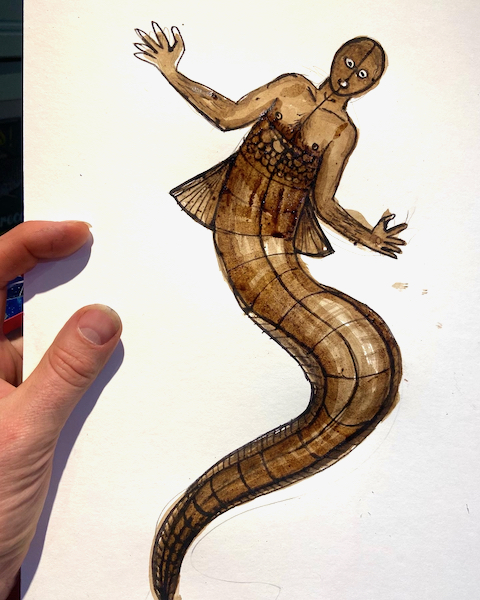
I’ve included some other recent drawings here too. One draws on the connections between my family (me, my husband and our son), the second continues to look at watery human-animal hybrids by combining eel and human bodies (see Mermen, Otters and Bears), and a third looks ahead to an exhibition I’ll be having in the Summer, in which I plan to include some sculptural pieces.
As before (see earlier posts Chalkstream Drawings and Drawing on Water) these drawings use botanical inks that I made in 2022, from plants that grow near my local stretch of the Salisbury Avon.





























 Queer River