The Body of the Forest

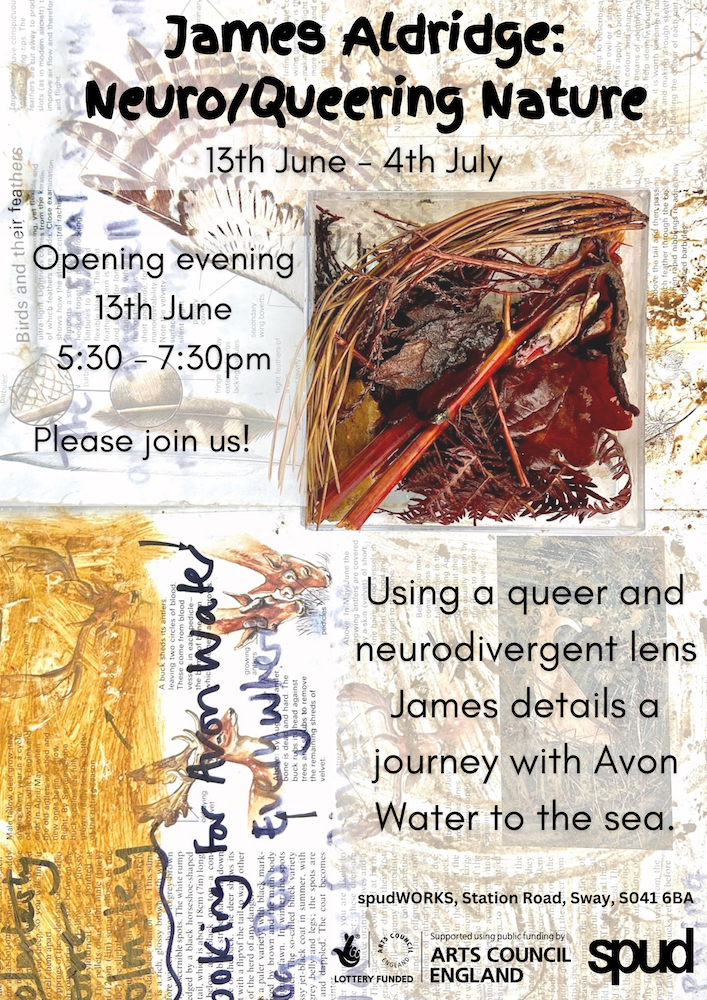
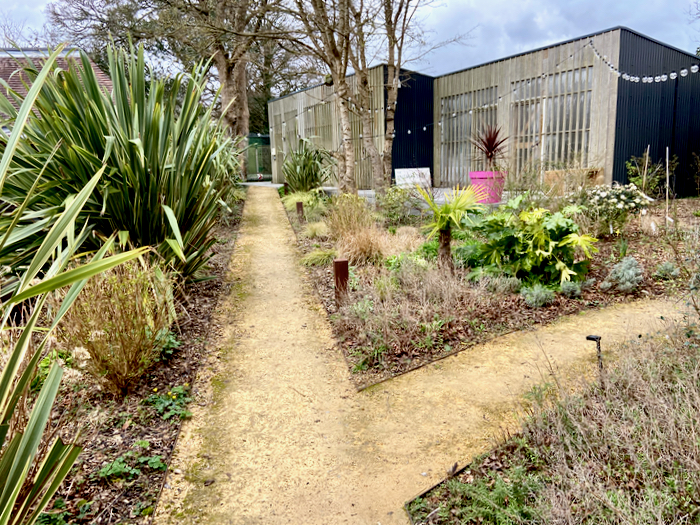
I came home yesterday after a week at SPUDworks in the New Forest, the first week of a part-time residency that will culminate with an exhibition in June.

I’ve called the residency Neuro/Queering Nature. I had the idea that I would draw from my lived experiences of the Forest, as a queer, autistic artist, piecing together a model of the Forest in my mind and body, through walking, talking (with others that live and work there), and making.

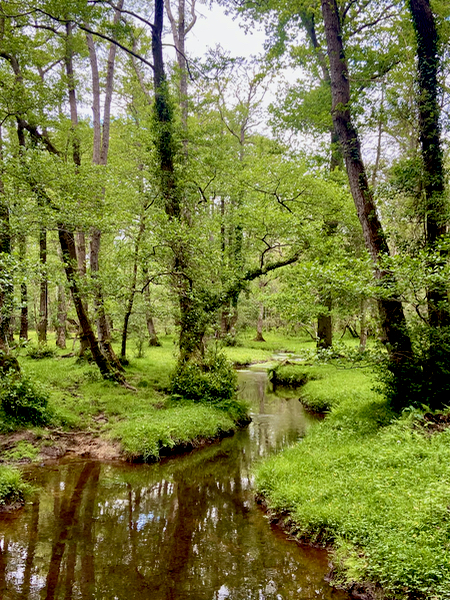
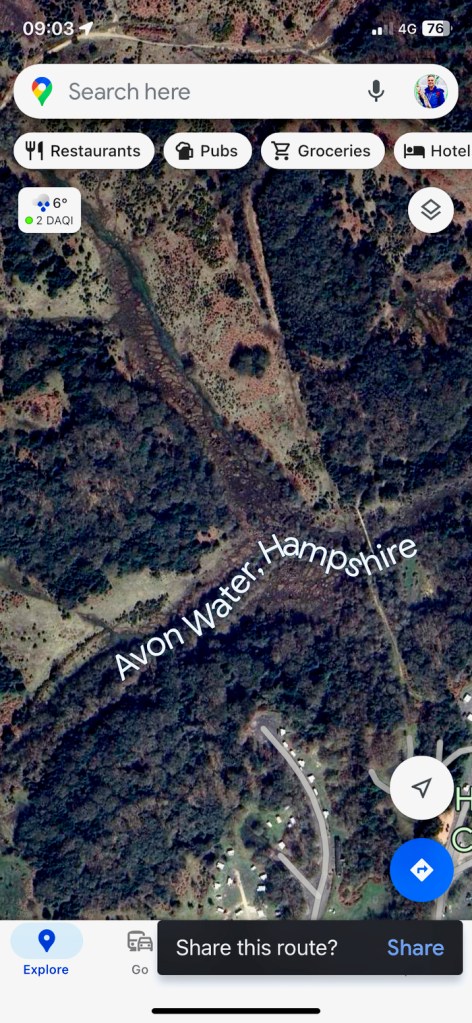
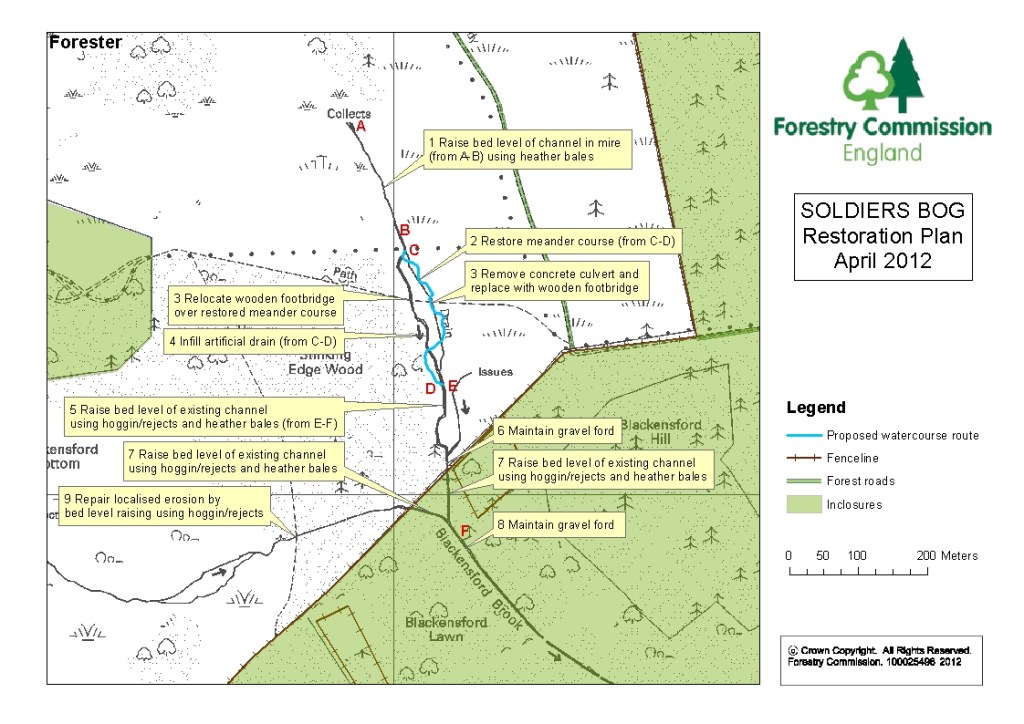
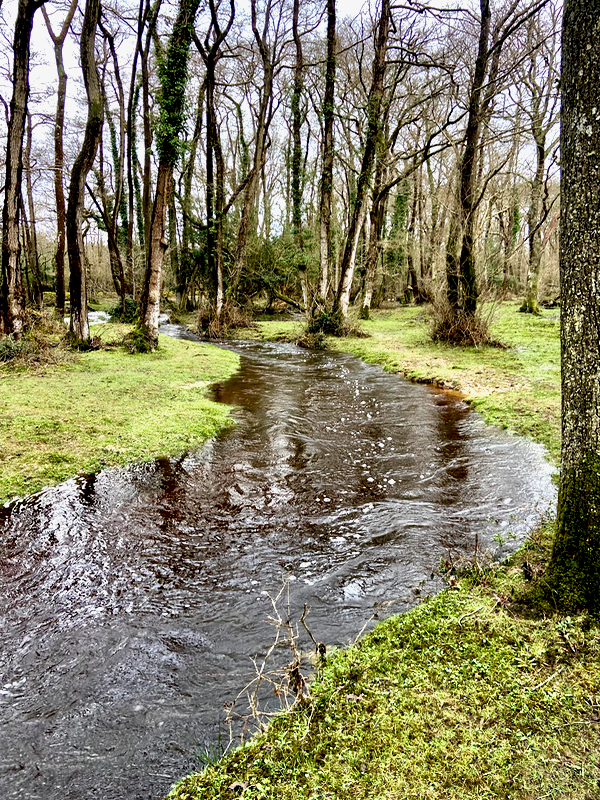
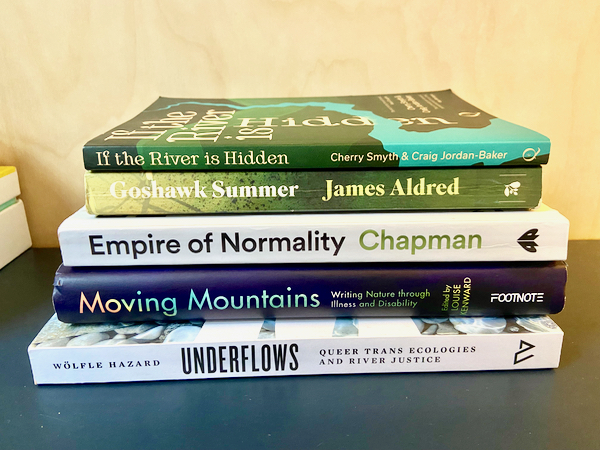
Once in the Forest I visited Avon Water, the nearest river to Sway where I was staying, and researched the way that the river has been re-wiggled along certain sections, as well as the rarity of such riverine woodland nationally. I also spent time seeking out the mires that capture water and feed the rivers across the forest, and read up on mire restoration at places like Soldiers Bog, inspired by reading Goshawk Summer by James Aldred.

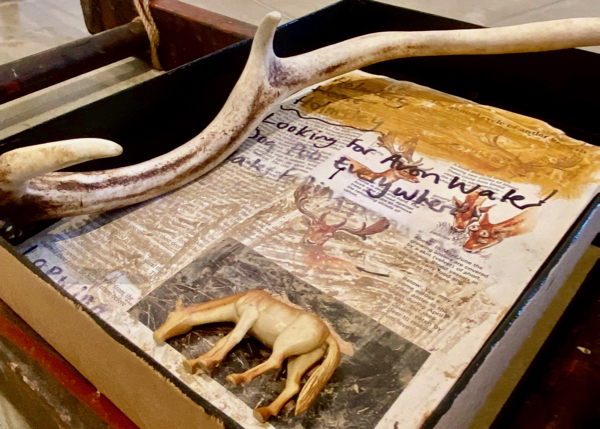
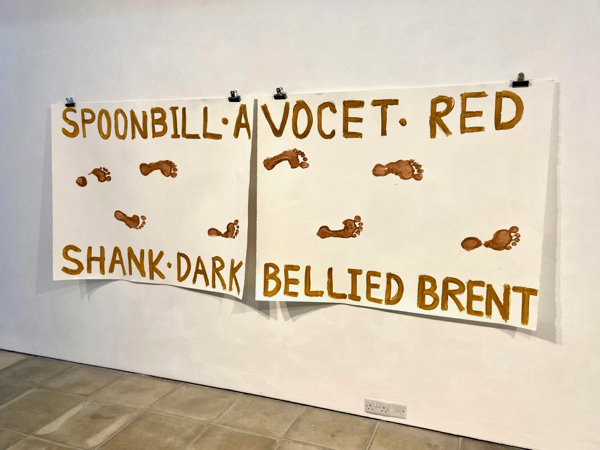
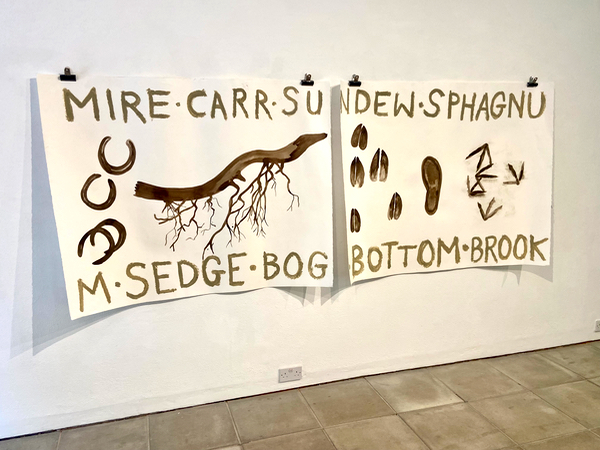
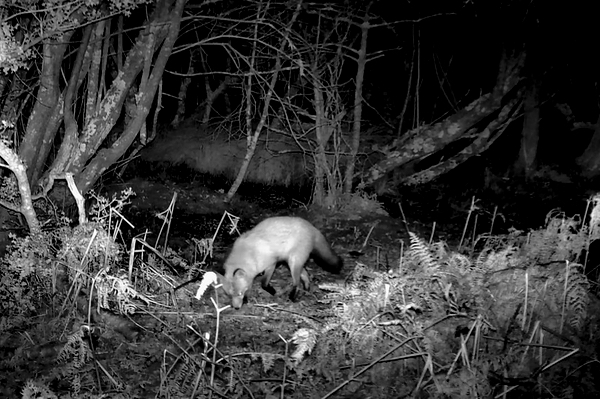
While at the restored stretch of river near Wootton Bridge, I recorded animal tracks onto pages from charity shop botany books, and set up my camera trap to find out what had been feeding on spawning frogs. The image below is taken from the resulting footage of a munching fox.

Still from Camera Trap Footage

I didn’t have a definite plan of what I wanted to cover or where I wanted to visit, because I want to piece together a body of work that emerges out of coming to know the Forest, rather than pre-empt what that might look like. I feel like I am neuroqueering natural history, because I’m documenting what I notice and how I notice it, creating artwork that pays attention to the relationships between the different elements that make up that land, rather than organising them according to a pre-existing, scientifically approved system.

Obviously I can’t claim to represent every neurodivergent person, or even autistic experiences as a whole, because we are all different, but I can start with my own sensory experiences of the Forest’s watery places, and gradually build a sense of the wider Forest ecosystem from there.

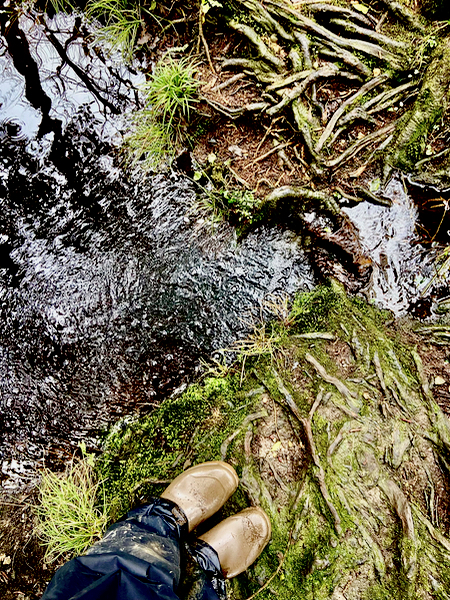
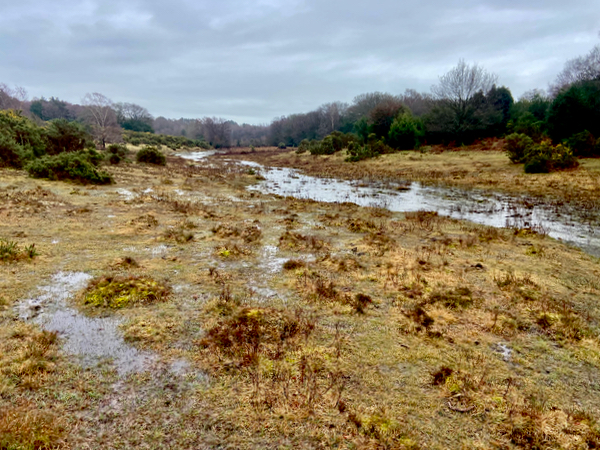
I didn’t plan to work with wetlands again, but as the days went on I started to recognise the way that the Forest’s wetlands link all the other elements together, as mire feeds brook, and flows through bog, down into river and on towards the coastal marshes. If the Forest is a body, as I am sensing it to be, then the wetlands are key elements of its anatomy, and the water that moves through them its lifeblood (This sense of the bodily nature of the Forest has been informed by reading an inspirational book during my time at SPUD – Underflows: Queer Trans Ecologies and River Justice by Chloe Wolfle Hazard).

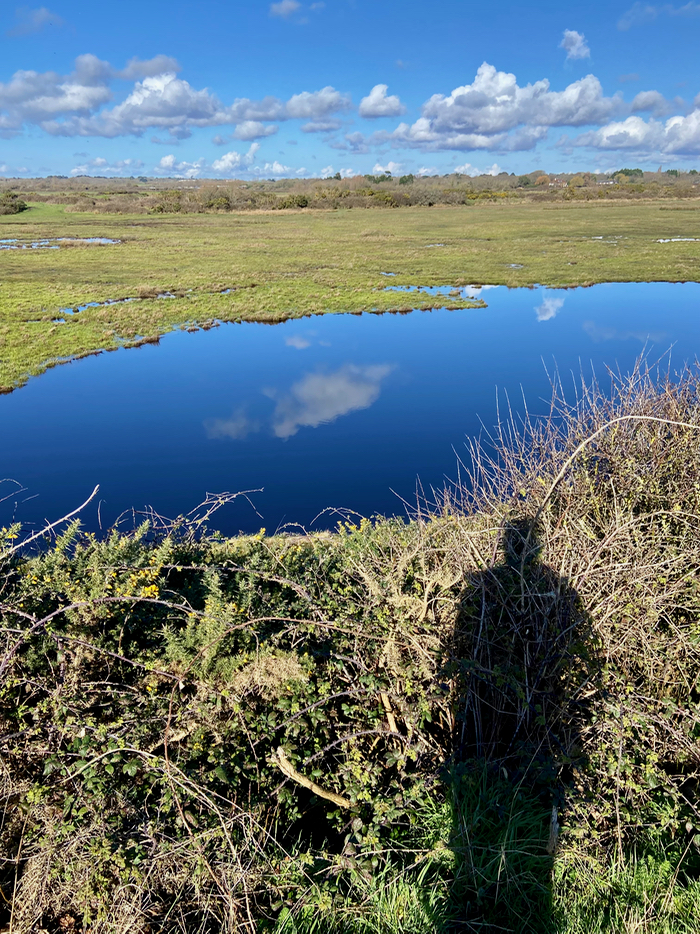
Thank you to Robbie (@WovenTreeTrailTales on Instagram) who showed me around his local patch and introduced me to areas of river that I wouldn’t have otherwise discovered, and thank you to Pete Durnell from the Hampshire Countryside Service, who shared his extensive knowledge of the Lymington and Keyhaven Marshes, after I followed Avon Water down to the coast at Keyhaven. I was particularly taken by the wide range of birds that visit this place where the sea meets the land, either for the winter or to breed, and particularly by their names and calls. Listen here to Pete talking more about the marshland wildlife.

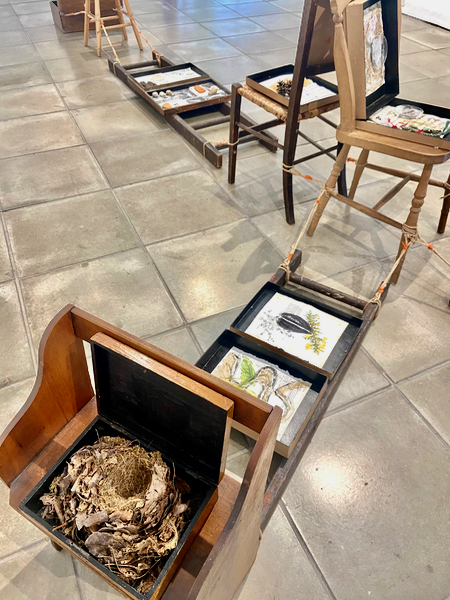
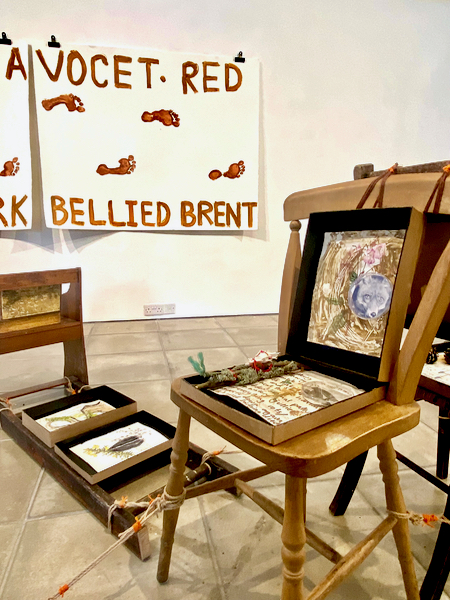
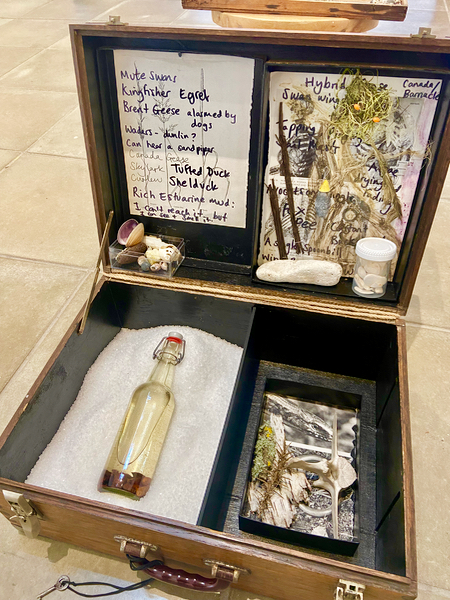
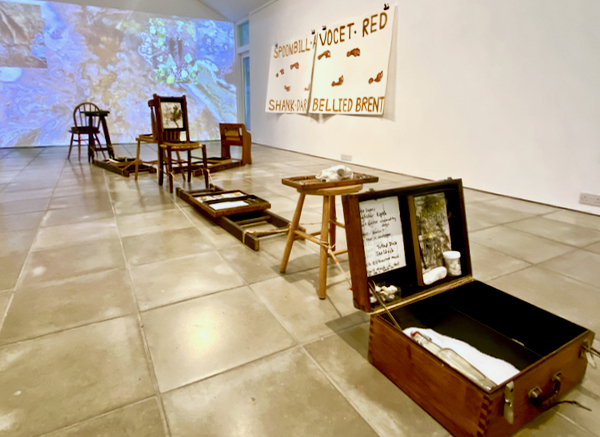
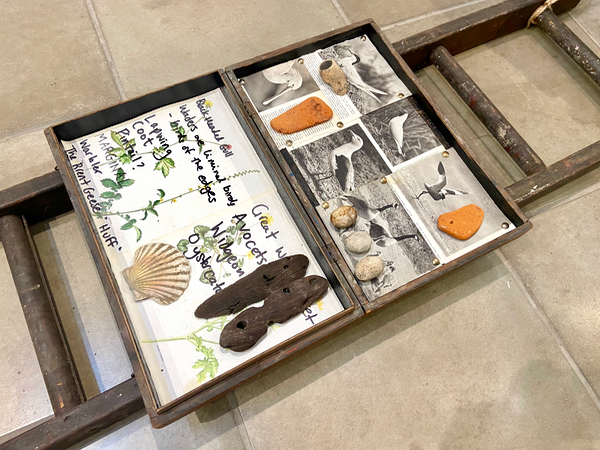
So far I’ve collected objects, taken photographs, made lists of wading birds, used burned gorse and river clay to write/draw, and recorded the flowing water with a lot of video. Now I’m home I’ll take some time to look through what I’ve gathered, and follow up on particular pieces of information. I’ll make more drawings, find maps, and look for new places to visit that fit into this emerging model of the New Forest’s watery body.

As I do I’ll share more on here, and the SPUD instagram page, and start to develop ideas for my exhibition and the sessions I’ll be running with SPUD’s Together LGBTQAI+ group, a group of young artists faciitated by Hannah Buckingham, with whom I’ll be working in April.

So thank you to SPUD, and to the community of life that makes up the Forest, to whom I’ll be returning very soon.

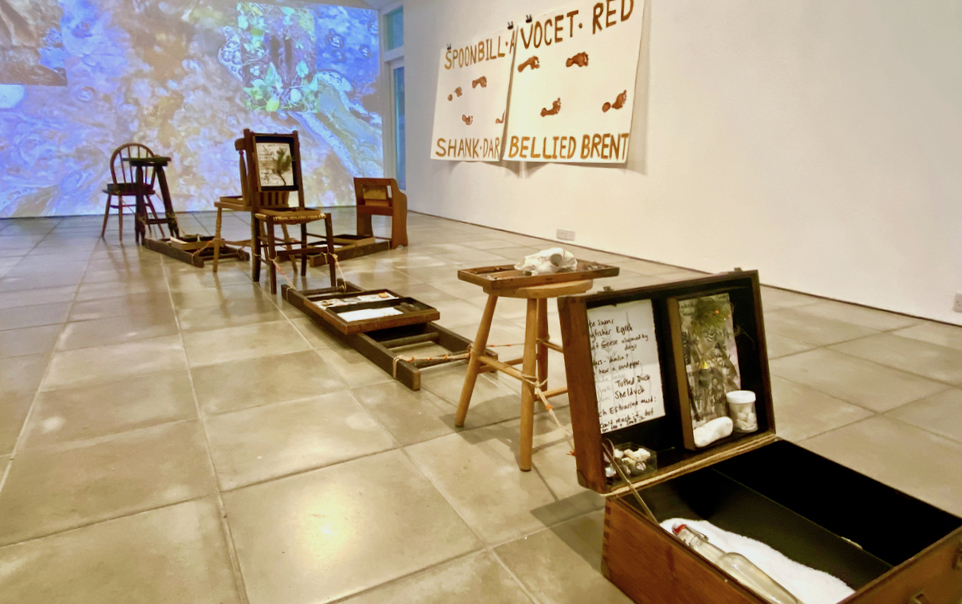
Neuro/Queering Nature at spudWORKS

On Friday 1st March I’m beginning a residency with SPUD in the New Forest. With the title Neuro/Queering Nature, I’m going to be looking at the perspectives of LGBTQAI+ and Neurodivergent people on ecologies of place.

I’ll be blurring the boundaries between humans and other animals, and thinking about the sensory and systemising differences that being autistic or adhd can bring to broader understandings of our place within what we’ve come to call ‘Nature’.

‘A radical politics of neurodivergent conservation is also consistent with a radical politics of environmental conservation. After all, it has been the same logics, the same system, that has ravaged the biodiversity of the planet as has sought to eliminate the neurological diversity of humanity..’

Empire of Normality, Robert Chapman

I will be primarily focusing on my own direct experiences of the Forest, allowing my existing Neuroqueer Ecologies thread of research, and what I’ve learned so far with Queer River, to weave its way into the studio at SPUD, and the work I make with the surrounding heathland, woods and mires. I also want to think about how natural history classification can be Neuro/Queered, as I have started to explore at Found Outdoors.

For anyone that’s new to my work, I’m fascinated by what we each bring to our perception and understanding of places, and the fact that LGBTQAI+ and Neurodivergent people’s sensory experiences and interpretations of place, can often be at odds with heteronormative and neuronormative ideas of human-Nature relationships.

My time at SPUD will be explorative and playful. I want to record the signs of animal life through tracks and camera traps, and to spend time with Avon Water as it winds itself through the area on its way to the sea.

‘The outdoor community should prioritize neurodiversity in its efforts to make the outdoors more accessible, by pro-viding sensory-friendly accommodations, supporting neuroqueer voices, and recognizing neuroqueer individuals as leaders and advocates. These efforts aim to break down barriers to accessing the outdoors and to create a more inclusive and equitable outdoor community for all.’

Neurodivergence is also an LGBTQ+ topic: Making space for “neuroqueering” in the outdoors, Tarah Loy-Ash

I’m planning on building on this initial residency period by returning to work with SPUD artist(s) and local LGBTQAI+ young people during April, inviting them to respond in ways that make sense to them, and in June I’ll return to SPUD for another week to develop and install an exhibition that will open to the public from 13th June to 4th July. I’ll add more info on this participatory element, the exhibition and associated events as/when they are all confirmed.

I’m thankful for SPUD for being flexible enough to accomodate my needs, and those of my family, through an extended, part-time residency, and am really excited to be getting started!

Pre-recorded Talk for Engage’s Going Green Week

I’ve recorded a short talk (approx 20 minutes) on Queer River and The Ripple Effect for Engage, the National Association for Education in Art and Design.

You’ll need a ticket but they are free, and my talk is one of three that you can watch in Going Green Week (follow link for information on all the events and booking details), which starts on Monday 4th March 2024.

Sodden

It’s been a while since I’ve been on a Queer River walk, although like the river itself, my Queer Rver research doesn’t stick within the boundaries that I originally used to define it. Instead they evolve as the work progresses, with the words that I use to describe it changing to fit with what I’ve learned.

After originally starting out working with my local section of the River Avon in Wiltshire (the western arm of the upper reaches of the Hampshire Avon), my river related work eventually spread out to Glasgow, Hampshire, Norfolk, Reading and via online events and exhibitions, connecting with rivers and their people nationally and internationally, as well as forming the foundations of my work on The Ripple Effect in Salisbury.

I later shared that I was setting up a sister project, Neuroqueer Ecologies, the research from which has now informed the planning of residencies with Spud in the New Forest (beginning March 2024) and Found Outdoors (research and funding application underway to start April 2024).

I’ve described Neuroqueer Ecologies as a project, but see it as more than that, as an approach which underpins all of of my practice whether I’m explicit about that or not, and which in time will see me collaborating specifically with other autistic and otherwise neurodivergent people.

As with Queer River, the boundaries of this Neuroqueer Ecologies approach are permeable, and flow thoughout my work and my life. I am queer, I am neurodivergent, the ways that I relate to the world are informed by that, so it will always be more than a neatly tied up project.

It can be hard to describe and communicate the nature of approaches that seek to allow things to be as they are in reality, sharing their fluidly and queerly connected systems of relationship rather than simplifying and abstracting them.

And what now for Queer River, with a New Year begun, and boundaries between projects continually dissolving and shifting? Now that The Ripple Effect has come to an end, I’m thinking again about where to take my Queer River research. I visited Groundwork Gallery in Kings Lynn last month to start to plan a short residency working with Kings Lynn’s rivers, which I’m excited about, and will share more as details are confirmed.

I’m also still developing plans to deepen my work with the Bristol Avon, and to consider the relationship between river and canal restoration, following a really interesting conversation with Professor Jodie Matthews in the Autumn, author of The British Industrial Canal – Reading the Waterways from the Eighteenth Century to the Anthropocene.

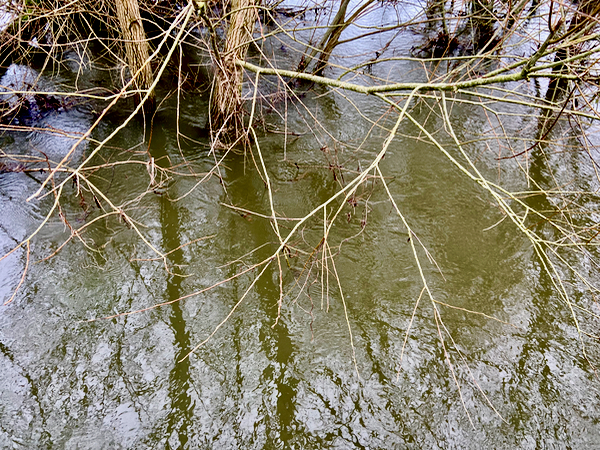
Right now though, my mind is on flooding. Outside my home I’ve been watching the rain come down constantly for weeks. There’s no doubt in my mind that the increased rainfall and the saturated ground, flooding the fields as the Avon breaches its banks, are due to the effects of climate breakdown.

Everywhere the ground is sodden (I love that word). Temporary streams run from fields, carrying away the precious soil, or the darker stained water of piled up pig manure, to run into roadside ditches that lead on to the river itself.

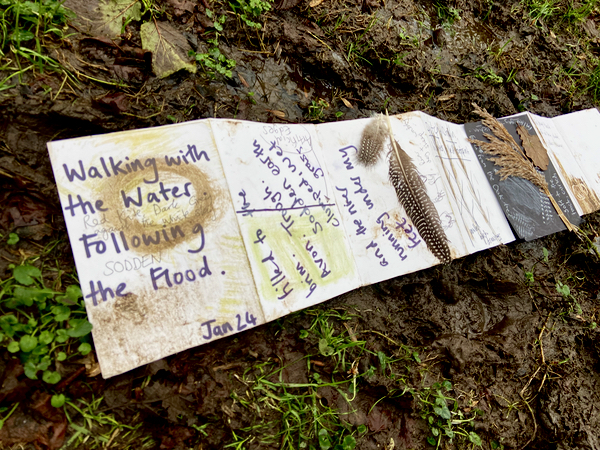
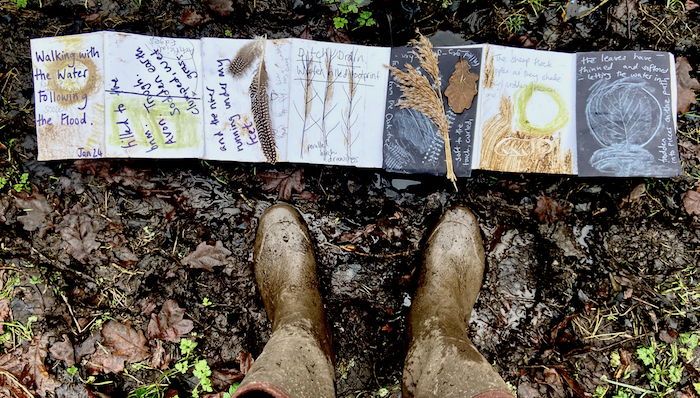
Earlier today I went back to my local stretch of river where Queer River began, to see the flooded fields, and witness the shifting relationship between land and water. I took some blank walking pages and black/white mark-making materials, to match the starkness of the raw, wet, bare branches and barren fields that dominate the landscape right now..

I’ve included a few photos and short video clip here to give a taste of the walk and the resulting Walking Pages..

Nearing the end of our walk

Drawings available to buy from the ‘Drawing on Water’ exhibition

Please follow the link below, to view a list of artworks available from the Drawing on Water exhibition held earlier this year, and instructions on how to buy them.

If you have any questions please do get in touch.

The Ripple Effect – Project Film

At the preview of The Ripple Effect exhibition last night at The Young Gallery in Salisbury (open now until 16th December) , we also launched the project film, created by Wessex Archaeology Videographer and Photographer Tom Westhead. The film is around 30 minutes long and tells the story of this two year project through the voices of the participants themselves.

Please have a watch and let us know what you think. I reckon Tom has done a wonderful job, and feel very proud of what the whole team have achieved, on this art and wellbeing project focused on the past and future of the Salisbury Avon.

Drawing on Water – Virtual Tour

I’ve put together a short virtual tour/talk, sharing the Drawing on Water exhibition at The Pound Arts Centre in Corsham from Summer 2023, for thse people who weren’t able to make it in person.

Thanks again to Visual Arts Coordinator Claire Todd and Deputy Director Jonathan Mansfield for all their help with the show.

The Ripple Effect Exhibition

Running from Friday 3rd November to Saturday 16th December at The Young Gallery at Salisbury Library, The Ripple Effect exhibition marks the end of this two year creative wellbeing project, with Wessex Archaeology and the Environment Agency,

The exhibition will share documentation from project sessions, artwork made by participants, and river-themed activities for exhibition visitors, as well as launching the project film, the link to which I’ll add here when it’s available.

If you make it along we’d love to know what you think. You can email me here or share your experiences on social media using the #RippleEffectSalisbury hashtag.

Conversations in the Mud

I’ve always been interested in animal tracks and signs, as a way of getting a glimpse into the lives of other animals. I feel like they give us a chance to communicate with other beings, if we are prepared to slow down, and notice/listen.

Human, dog, Roe and Muntjac Deer footprints

Back in 2014 I wrote a piece about my relationship with our previous dog Moshi and what we each noticed on shared walks for Dark Mountain issue 5:

Here in or between fields, guided by signs, my perception colludes with the farmer’s machinery as I follow mown lines and peer through fences. Here the constant ‘show and tell-er’ of what can pass across these lines is Moshi – hearing sounds and smelling smells I can only imagine – pointing out pathways in the verges and up under the hedge that I have learnt to recognize as a badger or fox, but which to her must be so much more.

To Patney and Round

I also wrote a blog post a while back abut the importance of slowing down in a time of crisis. Listening to what the more than human world has to tell us, rather than rushing about acting from a position of assumed understanding/superiority – Slowing Down, Going Deeper.

This last few weeks I’ve been spending a lot of time with our son and dog. Once my exhibition was up and running, there was a bit of work here and there and a week’s holiday in North Norfolk with my husband, but apart from that, I’ve been trying to find ways to meet the needs of a 12 year old boy and a 50 year old man (me) at the same time.

I’ve made small collections (see Collecting to Connect) while he practices tricks on his scooter, gathered material for making inks whilst on dog walks, and managed to visit the odd exhibition here and there, including The Ground Beneath our Feet at Groundwork Gallery, Kings Lynn.

It’s reminded me a bit of when we first adopted our boy, and then again in lockdown, when my arts practice shrunk to fit the spaces that we inhabited, keeping a kitchen sketchbook where I used what I could find in the spare minutes between meals and playing, or taking photos of the toys that found their way into bed and baths and onto cafe tables.

Today I made another small collection, focusing on colour (for about 5 minutes) whilst sat on the kerb at the end of our road. While I gathered together the few small finds and quickly arranged them, I started to think about these arrangements as equations.

To me a collection has mathematics in it, and seeks to find some kind of balance through the relationship of its parts. I can’t say much more than that at the moment as it’s a new realisation, but it’s similar to the way that I read animal tracks and footprints as a written language, a conversation in the mud.

Today’s very quick collection on the kerb

I’ve always felt a deep connection with animals, and growing up would often be found with horses, ducks, woodlice or tadpoles, or laying on the floor with the dogs. Now I’m thinking about interspecies relationships/communication and their relationship with Neurodivergence.

I’m planning on carrying out some experiments in the coming weeks/months (as the school term starts) as part of my Neuroqueer Ecologies research. These will build on The Ash Looks Back series (made with camera traps hung on Ash trees). I’m not sure exactly what these will look like yet, in the past I’ve left half finished artwork in my compost bin and pond, for the organisms there to complete, and I imagine there will be a similar combination of my making and theirs.

My exhibition Drawing on Water at Pound Arts has just come down, so I also need to leave time and space to process all that has come out of that (I’m hope to edit together a short video tour of the exhibition for anyone that wasn’t able to make it).

Detail of ‘Other Animals’ – Walking Pages at Drawing on Water exhibition

Whether everyone else will see these interactions as conversations and collaborations I’m unsure, I’m expecting most people to see my offerings and recordings as more one-sided than that, but I want to continue to research what happens when we leave open the possibility that other beings are speaking to/with us.

Perhaps, as Peter Reason writes, if we open ourselves to that possibility, and really listen, we could receive insights that would otherwise be missing from our understanding of the world:

What would it be like to live in a world of sentient beings rather than inert objects? How would we relate to such a world? And what, then, would art and creativity be like? This a world of communication and interaction of which we can be a part, in which trees, crows, and rivers may grace us with a response to our attention and our call. Of course, we do live in such a world, although modern culture tragically fails to acknowledge thisIf we open ourselves, if we call, the world will respond. The place of art is to foreground this perspective.

Peter Reason – On Sentience, with Sarah Gillespie

Drawing on Water – Meet the Artist Event, Saturday 5th August

For those people that aren’t able to make the opening of my Drawing on Water exhibition at The Pound Arts Centre on 20th July, or the Creative River Walk I’m leading on Wednesday August 9th (see here for information on both), we have now added another event.

Although The Pound (and so my exhibition) will be open from Monday to Saturday in July, and Monday to Friday in August, it will be closed on Saturdays 12th, 19th and 26th August.

So if you fancy dropping in and saying hello, I’ll be at The Pound from 10.00 a.m to 1.00 pm on Saturday 5th August, and would be very happy to see you then.

For information on how to get to The Pound, take a look at their website here.