Titled Neuroqueer Ecologies: Noticing Differently, our walk will see us travelling as a group from Black-E to the Queen’s Wharf on the River Mersey, noticing and creatively recording how water passes through the city, informed by my research into the value of sensory and processing differences (see Neuroqueer Ecologies).
‘ A sensory walking workshop down to Queens Wharf led by artist James Aldridge, exploring ways of seeing and being with river ecosystems.
Informed by James’s Queer River research project, including ongoing research into the value that sensory and processing differences bring to ecological awareness, this walk will encourage us to pay attention to our senses, to notice and record how water moves through the city.
The total length of the walk will be approx 1.5 miles, with regular pauses for conversation and reflection. ‘
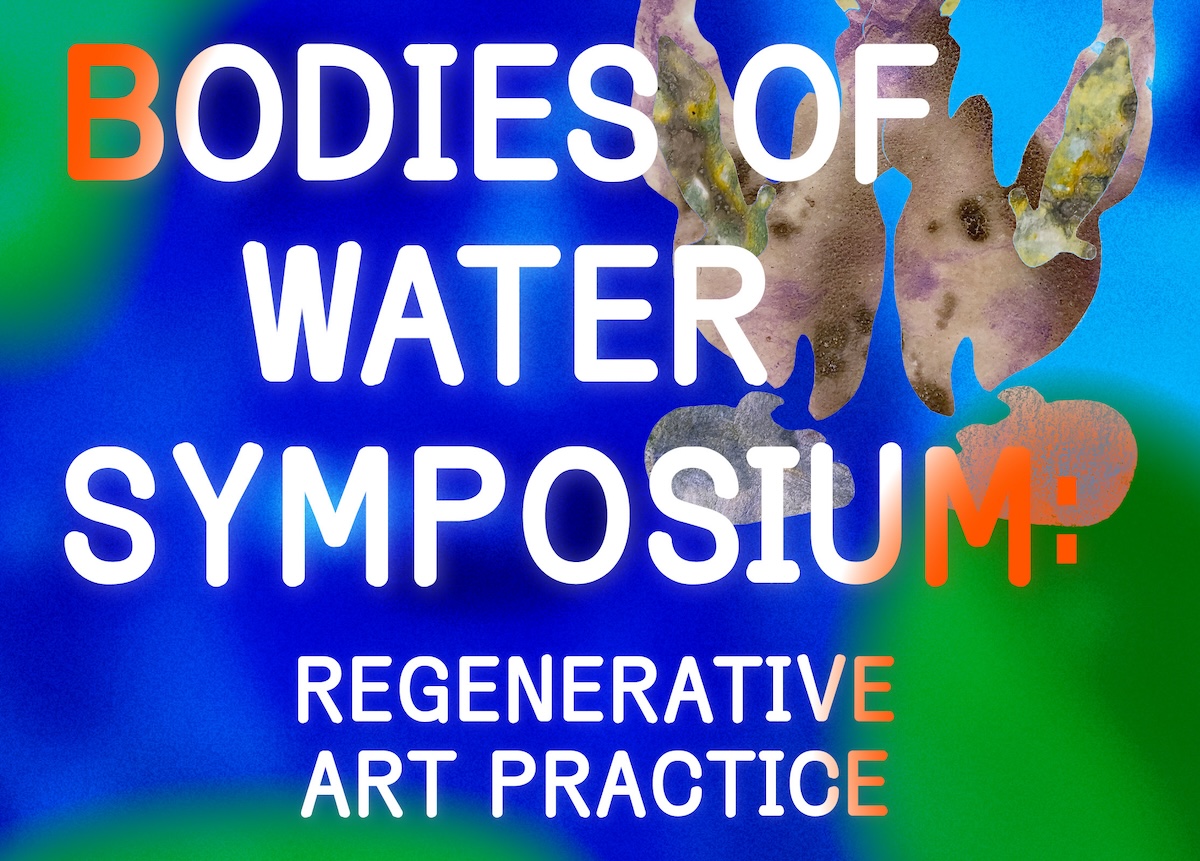
Curated by Up Projects and guest curator Justine Boussard (a fellow Associate at Climate Museum UK), the symposium brings together artists, curators, and environmentalists to discuss how public art can respond to the climate and biodiversity crises.
The symposium aims to raise the ambition for what it means to be environmentally responsible both technically and culturally as well as share learnings from UP Projects’ Bodies of Water commissions by artist Ann Dun Hee Jordan.
The symposium will take place at The Black-E, 1 Great George Street, Liverpool L1 5EW from 12:30 – 18:30pm.
You can book your place here, and will be able to select my walk as your breakout session nearer the time. The walk will be limited to a maximum of 20 participants.
It’s shaping up to be a brilliant event – let me know if you’re coming!
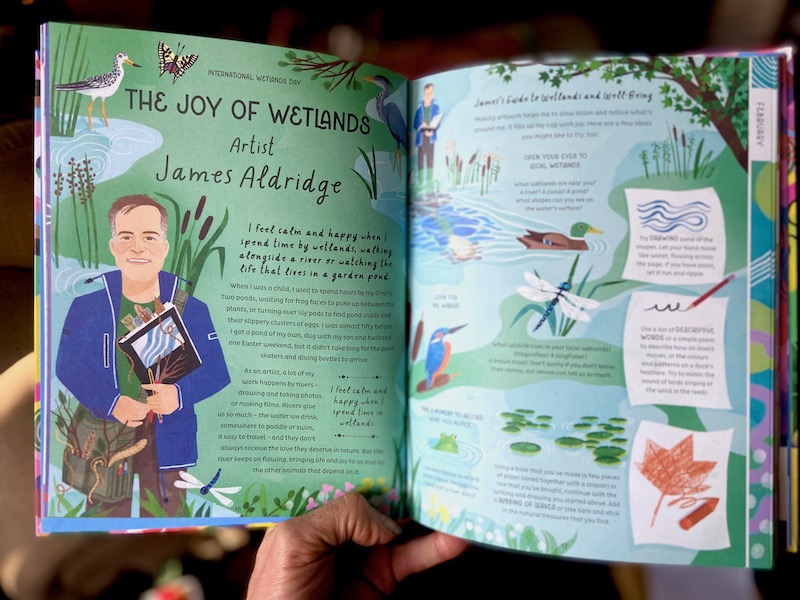
I set up Queer River five years ago in 2020, as we emerged from lockdown, as a way to walk, talk and make with my local river, the Hampshire Avon, which begins its journey near my home in the Vale of Pewsey in mid Wiltshire.
The original intention was to pay attention to the river on my doorstep, to slow down and really notice, and to experience the river through other people’s eyes, queering my sense of what a river is by holding a space for multiple, intersecting perspectives. I couldn’t find ways to fund the research that I wanted to do, so I set up Queer River as an independent, arts-based research project.
The River Avon a short walk from my house in Wiltshire
My time with the Hampshire Avon soon expanded to include my other local river, the Bristol Avon, whose tributaries pass near to where I live. As I walked with others, made and exhibited new artwork, and wrote about our experiences for the Queer River blog, I was invited to travel to work with other rivers and their communities across the UK (including Glasgow,Great Yarmouth and The New Forest ) .
Community engagement projects developed from my research in partnership with environmental and heritage organisations, I was commissioned to speak about my research, to write about it, and to make new artwork for exhibitions relating to watery themes, and the place of queerness within rurality and ecology.
Blue Health, the interrelationship of human and river health, and emotional wellbeing have emerged as key themes, and seen me share my research as case studies with Bristol Medical School among others. With an exploration of my neurodivergence also came a new element. Neuroqueer Ecologies now weaves itself through Queer River, researching the value that sensory and processing differences, among others, can have when sensing and experiencing connection with ecosystems.
All of these areas have multiple blog posts published here, as an archive of the work that has come before. Queer River began as a single flowing channel of work and has expanded to become multiple channels of interconnecting themes and practices. It’s not easy to explain what Queer River is, as it deliberately aims to go beyond disciplinary boundaries, beyond individuals, and to create a space for knowing rivers that it also about knowing ourselves, and facing an uncertain future.
Some people don’t yet understand the value of queer perspectives to a wider environmental movement, and see it as a niche area, something just for LGBTQIA+ people. The queer community and our relationship to climate justice has an important place within my work (see previous writing on the relationship between the AIDS crisis and Climate Crisis for example), and it also goes way beyond that. Queer River questions how we have come to the situation that we find ourselves in, environmentally, socially and culturally, whose voices and experiences are missing from the environmental movement, and what arts-based, dialogical research and community engagement can bring to an understanding of what rivers need from us in a future impacted by these multiple crises.
5 years later
This year has had some really exciting elements (including new beaver-related research, a residency with John Hansard Gallery focused on the River Itchen (image below and featured image by Nosa Malcolm), projects with Wiltshire Wildlife Trust and Well City Salisbury and talks for a range of organisations). At the same time, the arts and many artists are in a very difficult place financially. I’ve spent a lot of time and energy this year on funding, residency and commission applications, whilst politically and culturally the world has felt a much more volatile and threatening place for queer and neurodivergent people.
I felt the need to write this post as a way of gathering previous threads together, grounding myself and my practice, and re-introducing Queer River. A kind of re-launch, in a soft and gentle way.
One thing that events this year have confirmed for me, after 25 years of working within creative community engagement of various forms, is the amount of experience that I have to bring to different sectors, who are starting to realise the place of arts-based community engagement.
For example, this month I visited the Flood and Coast conference with Wessex Archaeology to share learning from The Ripple Effect project with Leigh Chalmers, and support conference delegates to envision the role that creative engagement can play in flood mitigation projects. I also contributed to a panel at Into the Light for Heal Rewilding in Somerset, sharing a little about the place of art, queerness and neurodivergence within rewilding.
What next?
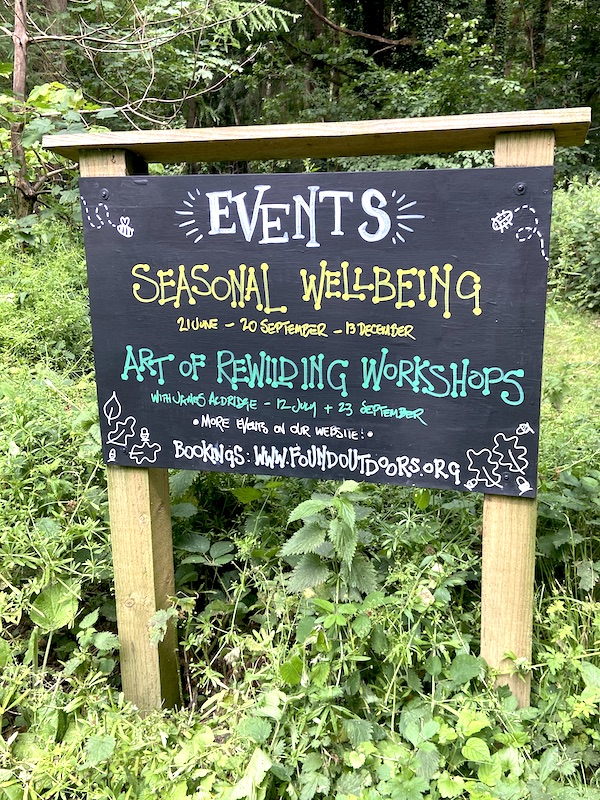
I’m going to continue to work across art, climate/biodiversity and learning/wellbeing, with new projects in development, and upcoming events including leading a walk at the Bodies of Water symposium with Up Projects as part of the Liverpool Biennial, and the second Art of Rewilding event at Found Outdoors, both in September.
At the same time I want to make space for 1:1 and group walks, like my walk with Groundwork Gallery and the Norfolk Rivers Trust, or a recent walk as part of Wiltshire Museum’s Queer in Wiltshire project, and write more ‘Walking with… ‘ posts. This is how I started Queer River, and it’s a way to learn from others whilst anchoring myself and my practice in my locality.
Ultimately, I’m particularly excited about the potential for the arts and environment sectors to work together, in developing regenerative practices that value diverse experiences and perspectives on place, and I’d be happy to discuss how I can support the development and delivery of rewilding, species reintroduction and other related projects.
So, for those of you looking at Queer River for the first time, I hope this post gives a bit of insight into what it is and where its value lies. If you’d like to explore ways of working (or walking) together, please do get in touch, I’d be really pleased to hear from you.
Over the last year or so I developed a PhD proposal and then applied for a studentship to fund my research. The proposal focuses on my Neuroqueer Ecologies research and applies that to human/beaver relationships, in the re-making of rivers, and within the context of climate and biodiversity crises. Put very simply, Neuroqueer Ecologies is all about the value that sensory and other differences bring to understandings of ecosystems. What we notice about different places depends on how our body-mind interacts with those places, and the beings we share them with. Neurodivergence brings value to an exploration of ecosystems (amongst other things) through noticing differently.
As part of this, and following on from my time in Norfolk last year with GroundWork Gallery and the Norfolk Rivers Trust, I have been taking a deep dive into the subject of beaver reintroduction in the UK, and the gradual recolonisation by beavers of my two local river systems, the Hampshire and Bristol Avons.
I heard yesterday that I wasn’t successful in my SWWDTP studentship application, which is a obviously a blow after so much time and energy spent researching and planning, but I still really believe in the need for this research, so I thought I’d share a little of what I’ve been up to on here, rather than keep it all to myself.
My PhD research would be practice-based, using my arts practice to map different beaver sites. I’m especially interested in the relationship between human and beaver infrastructure. How humans have altered rivers through history, and how beavers, on returning to these rivers after being hunted to extinction, are adding to, adapting or deconstructing these modifications.
As an artist and maker, who believes in the value of embodied approaches to knowing self and place, I’m interested in beavers as makers, as they use their bodies to shape riverine ecosystems. I’m also keen to draw on evidence from a past where people and beavers lived interconnected lives (e.g. through the work of archaeologists such as Bryony Coles), and crucially to learn from indigenous perspectives on multi-species, wetland communities, in an effort to decolonise the way that we relate to and restore our rivers.
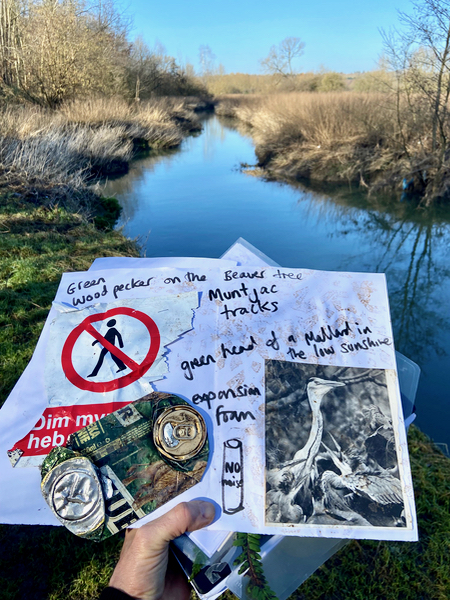
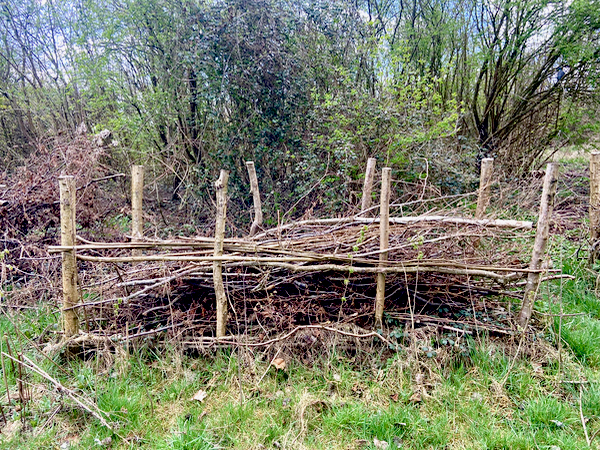
I’m not going to go into details on the specific locations where I found or heard of evidence of beavers in Wiltshire, as I don’t want to risk them being disturbed. So for this post I’m sharing some artwork I made along the River Biss in the Trowbridge area (a tributary of the Bristol Avon), and combining that with photographs of beaver signs from other Wiltshire locations.
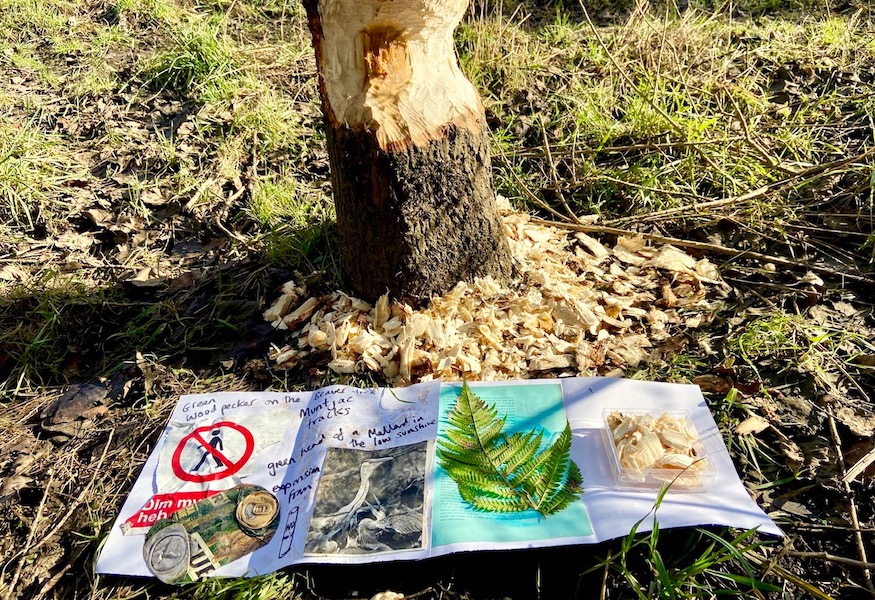
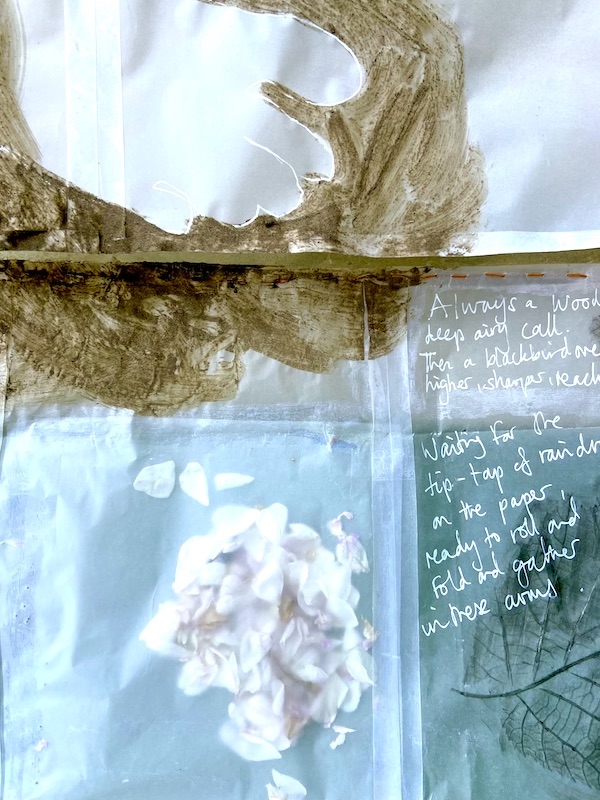
The three sets of Walking Pages shown here document three different walks with the River Biss, between December 2024 and March 2025. These are starting points really, ways of letting the place speak to me, and noticing my response. They layer text that records what I notice in the moment, with drawings and rubbings of riverside walls/signs/manholes etc, found imagery, and objects offered up by the river.
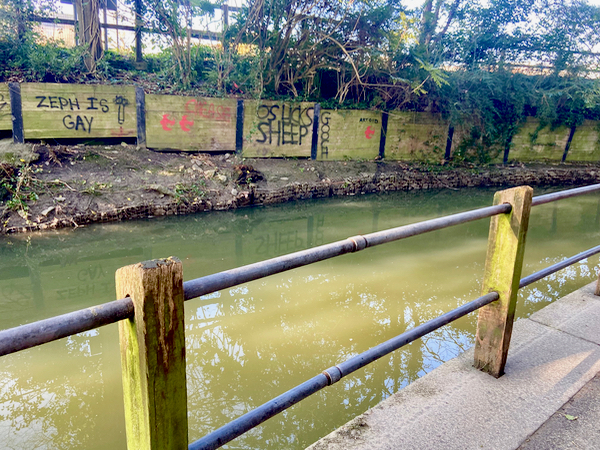
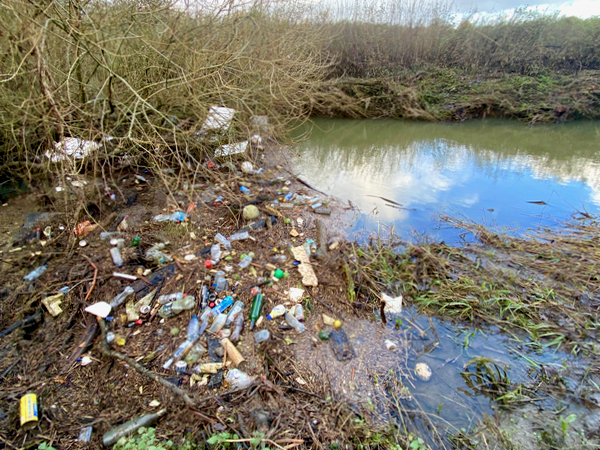
It feels important to say here just how shocked I was by the sad state of sections of the River Biss, and the huge amounts of plastic rubbish and sanitary products left behind after recent storms, especially through the town centre and downstream where the Biss meets the Bristol Avon. I was there to look for signs of the animals that we share these watery places with, but often what I was noticing were the dark, straight sided concrete channels, the piles of plastic left on the banks after high rainfall, and sanitary towels hanging from branches. I know that Wiltshire Wildlife Trust have plans for new work along the Biss, and that the Friends of Biss Meadows Country Park do a lot of good work upstream, so there are people who care and are actively seeking to change the condition of the river.
Thank you to everyone that has offered advice and support as I put my proposal together, particularly Dr Kai Syng Tan at Winchester School of Art, Dr Laura Smith and Dr Roger Auster, at Exeter University, Ecologist Gareth Harris, Dr Catherine Lamont-Robinson at Bristol University, Artist/Researcher Emily Wilkinson and the PaC Artist Network. I will be exploring other funding options over the coming months. As with Queer River, which itself grew out of writing proposals for a series of unsuccessful funding applications, I’ve started this work now, I just need the funds to make it sustainable.
Please see the post below on my Art, Ecology and Learning blog, about an exciting series of events that I’m running with the Wiltshire rewilding organisation Found Outdoors this year.
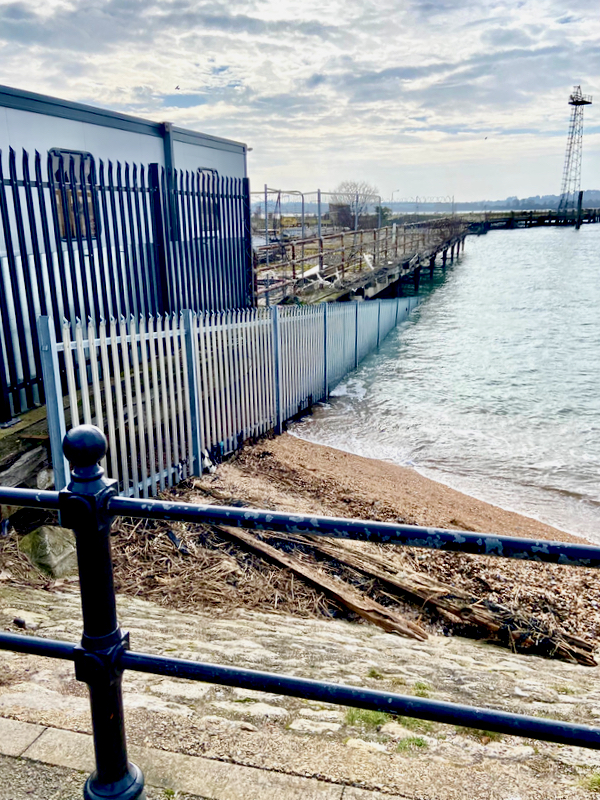
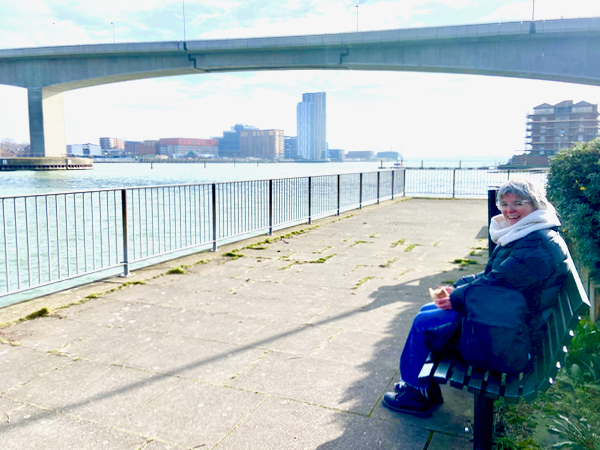
Ahead of my residency, on a recent visit to the gallery and Emma’s exhibition, I took a walk to some of the more easily accessible waterside areas, with Southampton-based Artist Alys Scott-Hawkins as my guide. Having only been to Southampton city centre, Alys offered to share some of her insight into what is sometimes described as a Sea City, including why for a city surrounded on 3 sides by water (chalkstreams the River Itchen and River Test, and Southampton Water), access to these blue spaces on foot is fairly limited.
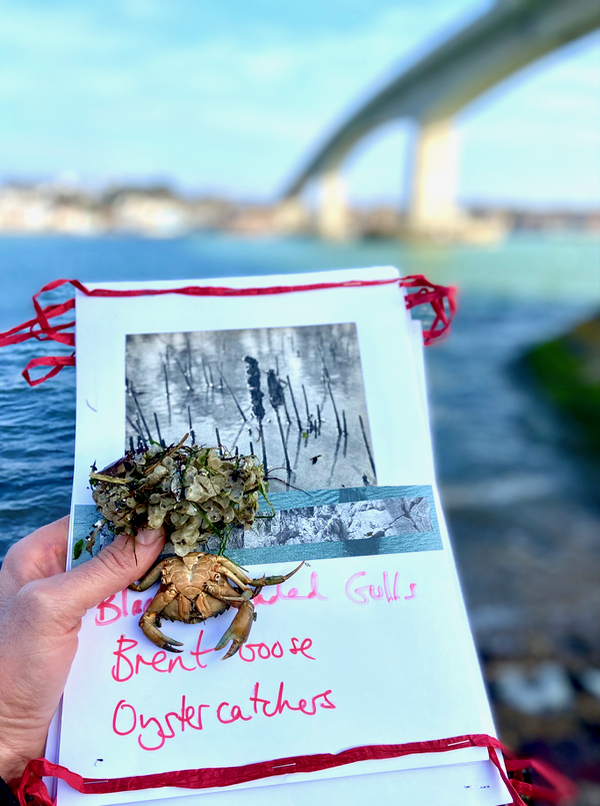
On my way I carried with me some Walking Pages that consisted of black and white photographs of wetland and marine wildlife and waterside buildings, connected with red paper tape in a way that reminded me of flags. As I walked, I recorded the names of the animals that I noticed in red pen, both alive and dead. The walk with Alys, and the making of these pages have helped me to form ideas for the work that I’ll be carrying out at the gallery, both individually and with the public.
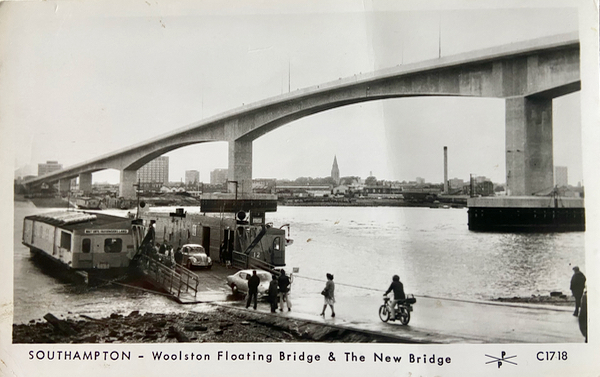
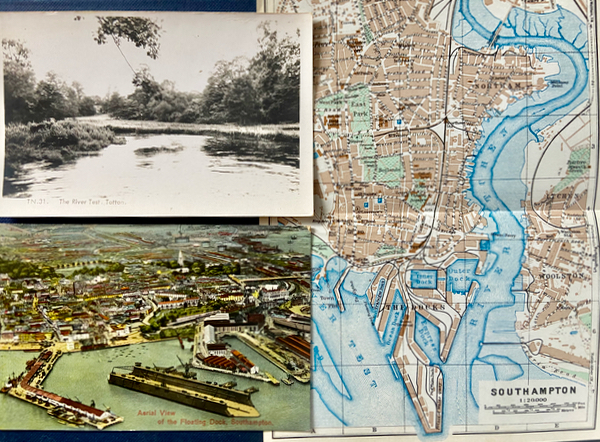
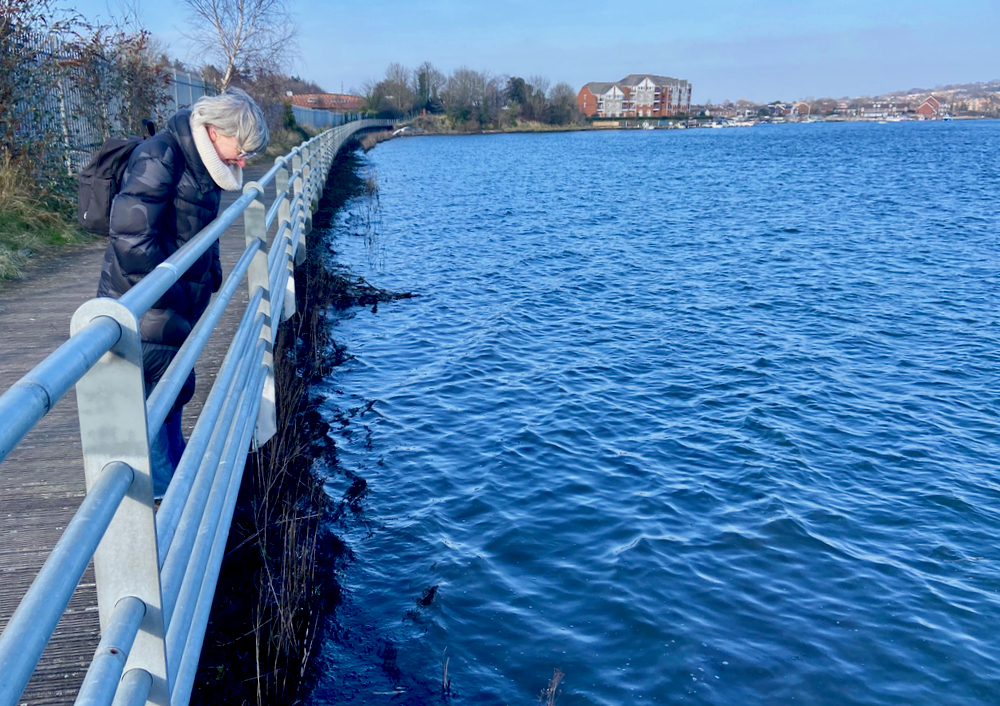
What quickly struck me as we walked, as well as the restricted access to the waterside, and the way that industry dominates the city, was a lack of the liminal, in-between spaces that I’d usually expect at the coast or alongside a river. In the places that I visited, water meets the straight edges of urban development. No beaches, marshes or gradual evolution from land into water, but an abrupt and artificial ending. As Alys pointed out, much of Southampton’s waterside is still very active industrially, in contrast to other cities where post-industrial areas have been repurposed or regenerated for leisure or as cultural venues. Since our walk I’ve been sourcing old photos and maps of the city that relate to its rivers and waterfront, and tell a little of their story.
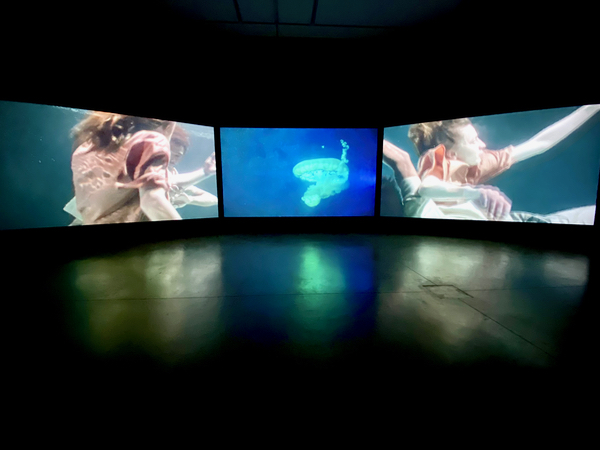
I recognise a relative detachment and distance from local rivers and marine environments in Southampton (unless you have access to a boat) that reminds me of my Queer River experiences of other towns and cities, and connects with the distance I’m sure many of us feel from the deep sea. In my work I prioritise embodied ways of knowing wetlands to cut across boundaries and binaries of human/nature and land/water, and offer experiences of connection and belonging, and I see something similar in the fluid choreography and the movement of deep sea creatures captured in Emma’s installation, a bridge between our bodies and spaces, and theirs.
Emma’s exhibition explores the subject of the deep sea and the threats from mining. It’s a beautiful, powerful and much needed exhibition, and one that I’m looking forward to spending more time with over the next couple of weeks. I see connections between Emma’s interdisciplinary research, community enggement and focus on embodied ways of knowing, and my own Queer River research.
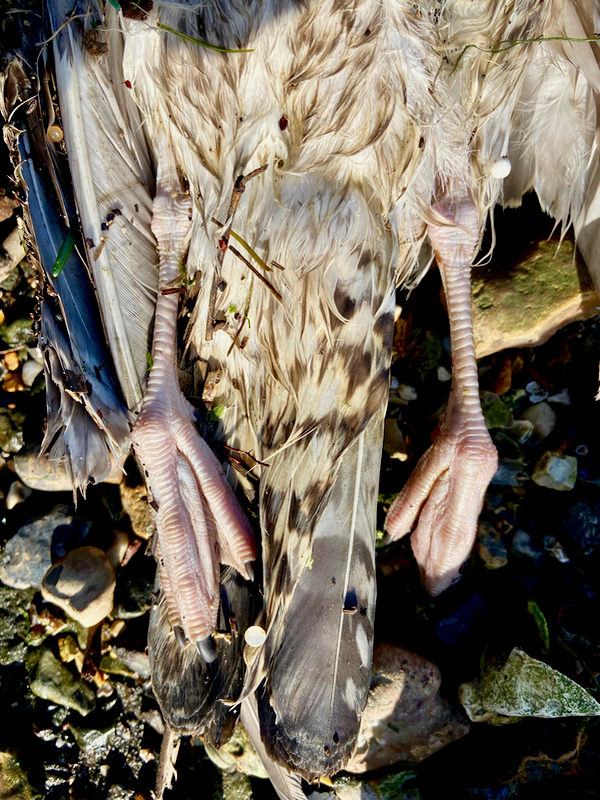
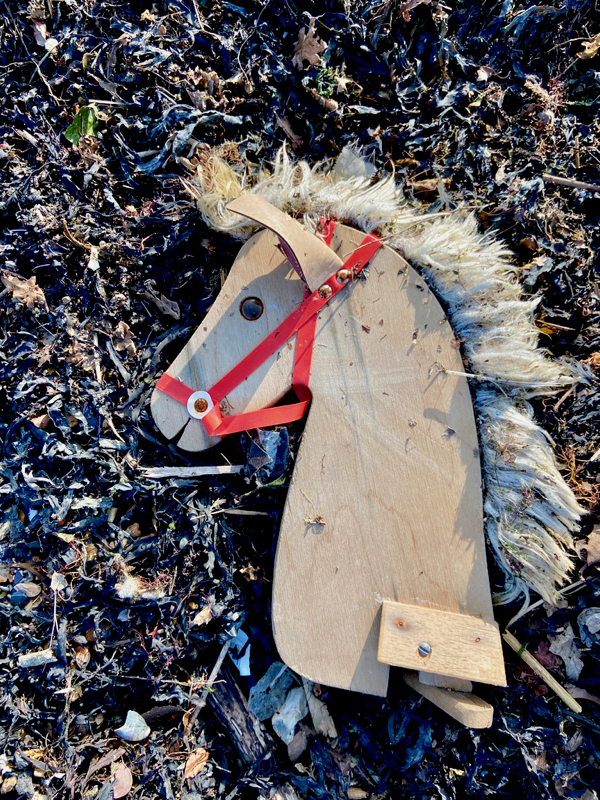
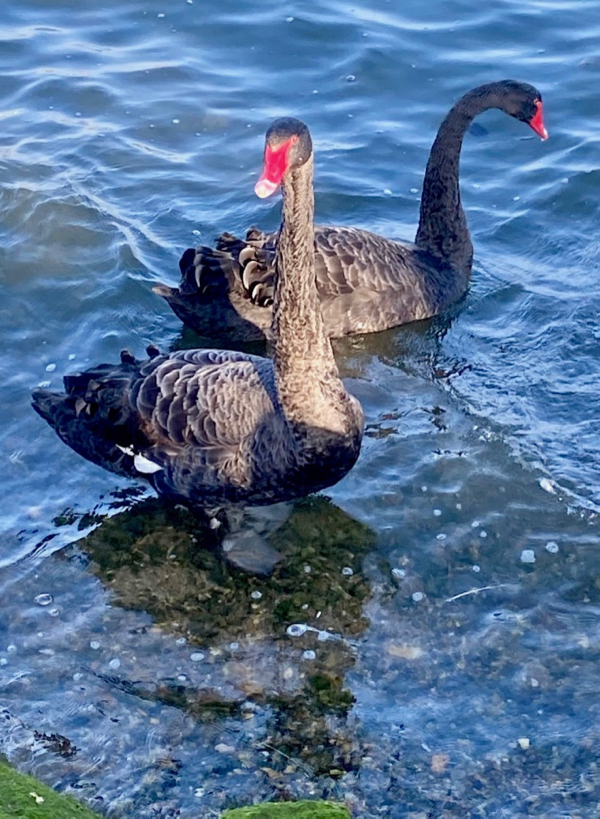
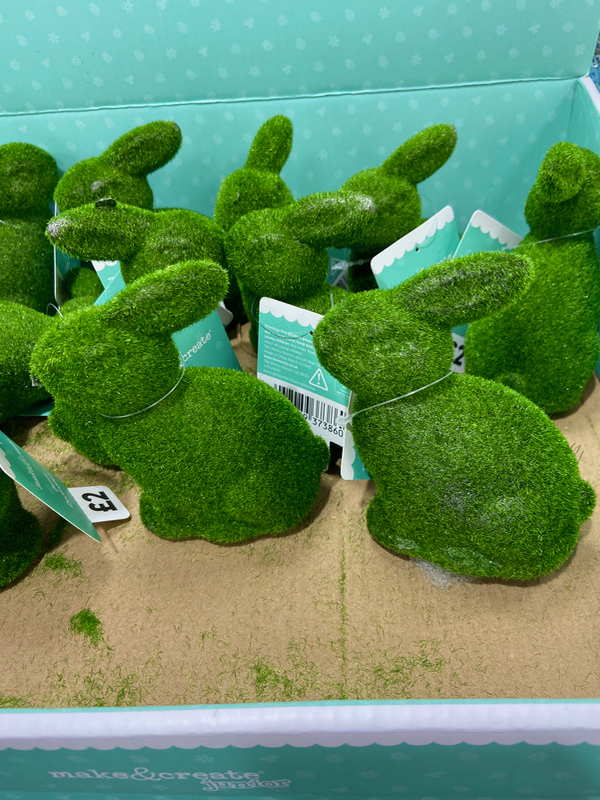
On my walk with Alys I noticed Black Headed and Herring Gulls, a dead crab and a swimming Dark Bellied Brent Goose, a species that overwinters in the UK. Brent Geese like the kind of intertidal enironments that are missing from central Southampton, but available in the form of marshland just along the coast near Lymington (as I discovered in my residency with Spud lasy year). I also found a lot of Oyster and Mussel shells, and noticed a few Cormorants and Swans. I was surprised to find four Black Swans (native to Australia) alongside the Mute Swans, but understand from Alys that they are resident here and breed upriver. I also spotted animals in and on shop windows on my way from the gallery to the water, from a Red Deer Stag to green velvet rabbits, and recorded those too.
Because I am a visitor to Southampton, I am asking local people (and other visitors) to share their experiences of local blue spaces and of animals that live in and around them with me. Alys brought me coffee and a bun (I’m not expecting everyone to do that but it was much appreciated!), and she shared her lived experience of the area and knowledge of how the city’s industry has altered its watery edges. As a result I have photographs that I have taken of the Itchen, and the animals I found on my way there, and I’ll be collecting objects that have been washed up next week, to incorporate into my artwork.
Walking Pages in progress
My residency at the John Hansard Gallery is intended to be open and conversational, and I’ll be in the Active Space on the 14th, 18th, 19th and 22nd March, if you fancy popping in to say hello. The space will also be open on other days when I’m not working, for you to see what I’ve been up to. Here’s a map showing the location of the gallery and opening times. I’d really recommend a visit to Emma’s exhibition (below, left), and to Kathy Prendergast’s show Stasis Field (below, right) downstairs too, which includes some lovely sculptural and map-based work.
Thank you to Alys for sharing her knowledge, company and refreshments. You can find out more about Alys’s artwork and research by visiting her website https://alysscotthawkins.co.uk, and read about the support she offers to artists and creatives here https://artistsupport.org.uk.
It’s been quite a while since I’ve written one of these posts about a one-to-one walk and talk, two years in fact, the last one being with Artist Gemma Gore in December 2024. Others have featured collaborators such as Botanist Mark Spencer, writer Peter Reason, medical humanities researcher Catherine Lamont Robinson, and seasonal streams researcher/ecologist Tim Sykes.
With Fiona by the River Tone
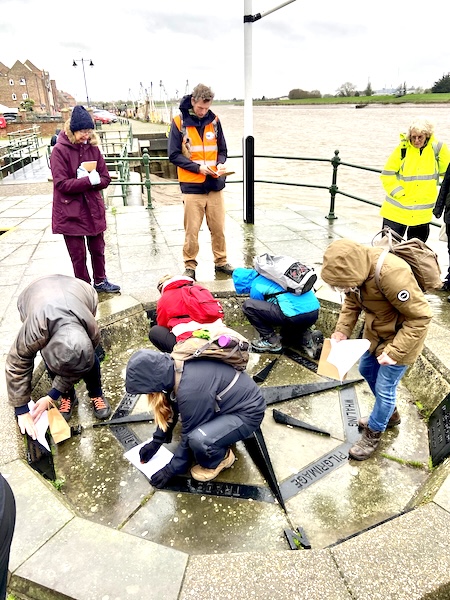
Since I wrote that post about my and Gemma’s walk, Queer River has been showing up in other ways. I’ve developed plans for further Neuroqueer Ecologies research ( more to come on that soon hopefully), taken solo walks to experiment with new ways of documenting, carried out residencies in the New Forest and Norfolk, and taken my river-based practices out to work with different communities including in Salisbury through The Ripple Effect, and more recently in Kings Lynn with Groundwork Gallery and the Norfolk Rivers Trust (photos below).
I’m keen to continue and to develop these one-to-one walks and talks, as they feed me and connect me with others through dialogue with each other and local wetland communities. So I was pleased to be invited by Fiona MacDonald, working as Feral Practice, to visit her local river in Somerset, and to walk and talk together about Queer River. Our conversation was ecorded by Fiona as part of a new piece of work that she is developing through a bursary from Ginkgo Projects and Somerset Council, with the FCDI (Firepool Centre for Cultural Innovation):
‘Wellington-based artist Fiona MacDonald works with humans and nonhumans as Feral Practice to expand imaginative and cultural connection across species boundaries. Often people set up a divide between human and nonhuman beings, and between different categories of knowledge and understanding. Feral Practice works and converses across these barriers.’
I’ve been aware of (and felt a kinship to) the work of Feral Practice for many years (see here for some of her work with Wood Ants, and here with foxes) and we had been in touch online, but hadn’t actually face to face met until last year.
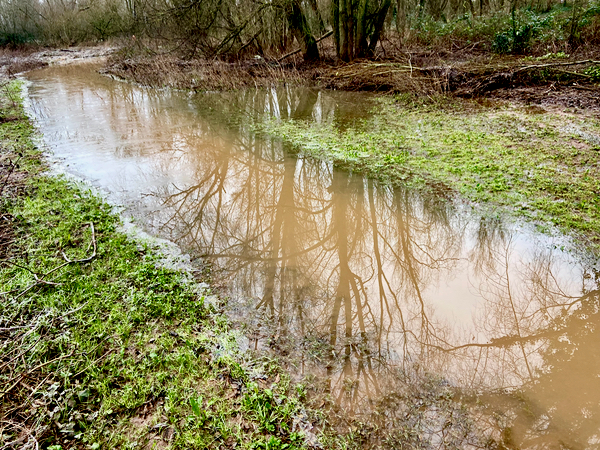
Our walk yesterday responded to the River Tone as we followed it westwards away from Taunton, past railway lines and main roads and along the edge of farmer’s fields, with debris left hanging in bushes and leaving tidelines on the ground from recent flooding. On our way Fiona asked me questions about a whole range of subjects relating to my practice with rivers, queerness, neurodivergence, flooding, my research with beavers, and the conversation flowed between us.
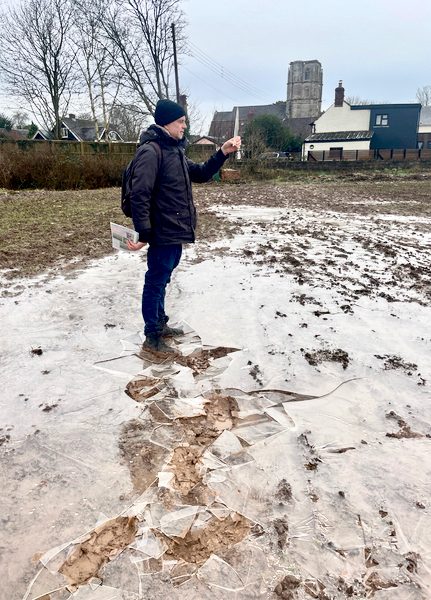
We crunched through ice, skirted around floods, rescued tiny fish fry stranded in a puddle, saw egrets and cormorants, listened to Teal, and shared our passions for learning from non-humans. We talked about indigeneity in animals and humans, tried to work out what had been eating the bark of fallen branches (Muntjac?) and noticed the similarities and differences between the land around Taunton, Fiona’s old home patch in Kent, and where I live in Wiltshire (both chalky)
I brought along various ways of recording our walk, just in case I needed them, but happily most of our time was spent engaged in conversation. One of my collecting pots was useful for rescuing the fish fry though, and I made good use of my time on the train down to make some notes on the place of bridges within my work. I also gathered a few of the pieces of plastic rubbish left on the riverbank, that piqued my interest and may well feed into some new artwork..
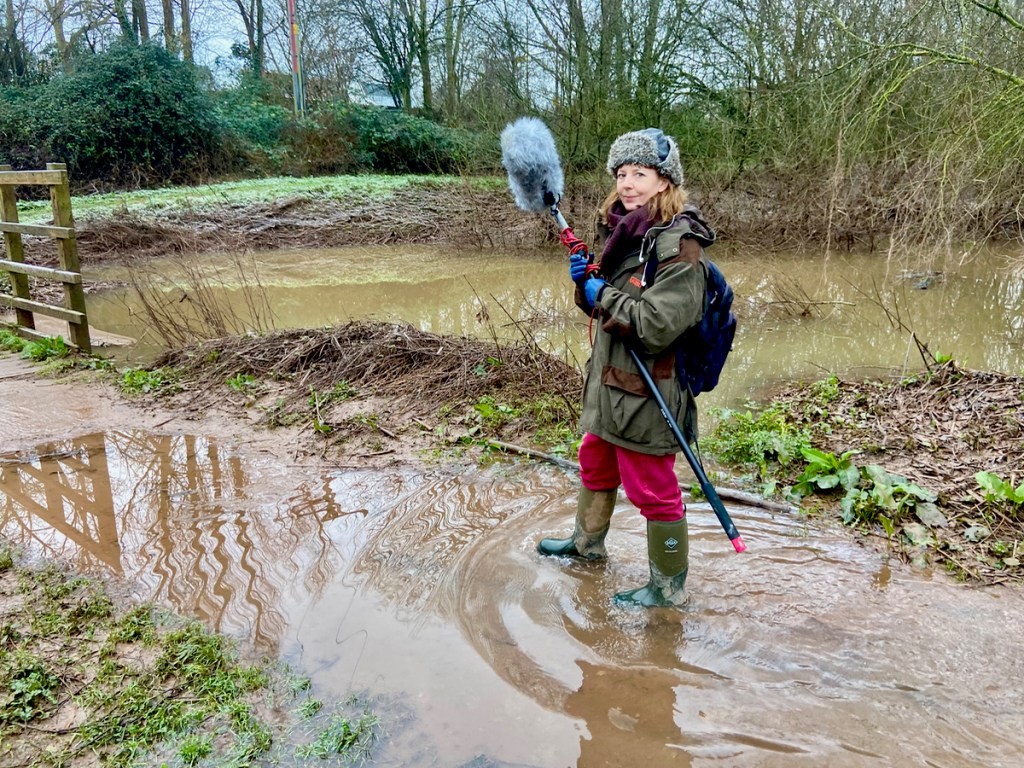
Our conversation, recorded as we walked, will now contribute to a sound artwork about the River Tone that Feral Practice is developing:
‘Tonal will (poetically and factually) explore the river, the lives of its creaturely inhabitants and visitors, how it connects to people locally and to ideas around rivers and water more broadly.’
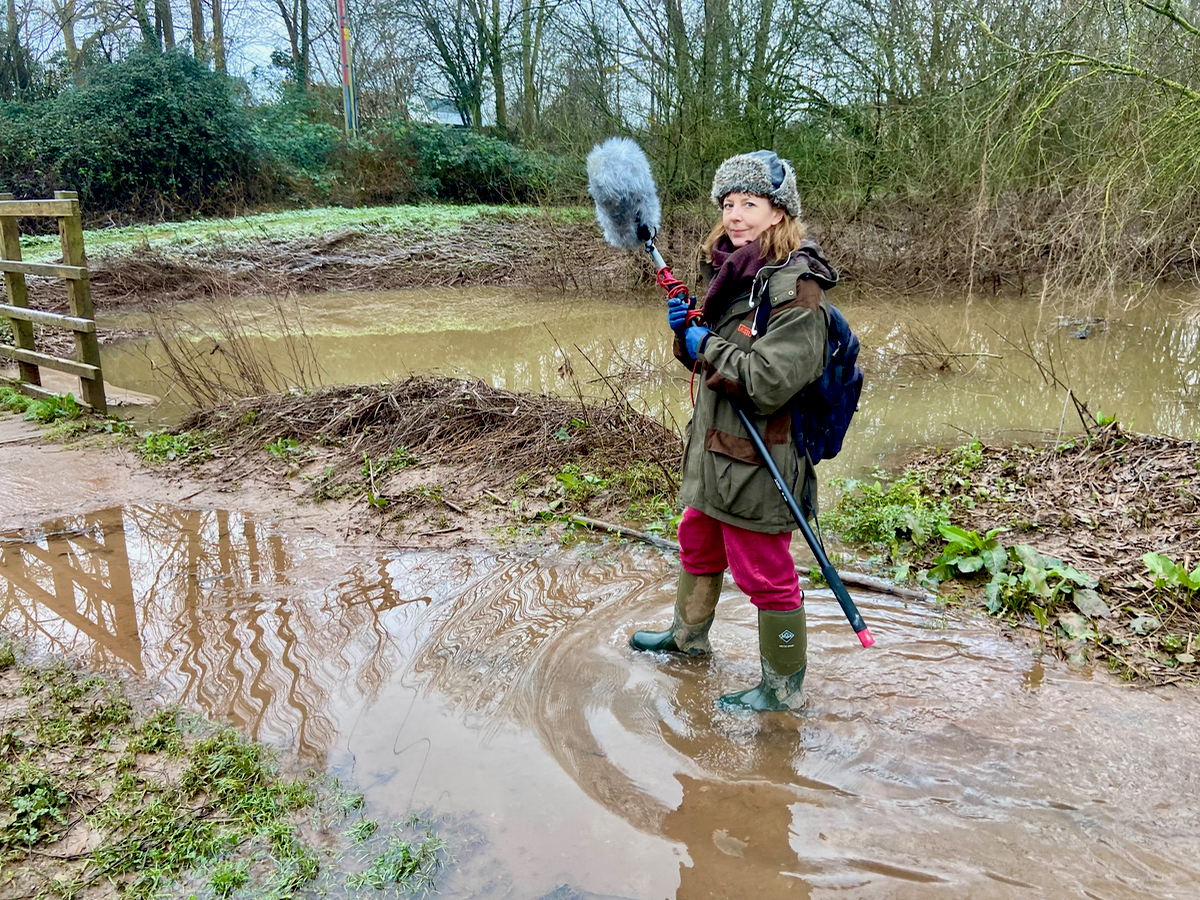
Thank you to Fiona and the River Tone for making me feel so welcome (and for the photos of me in this post). You can read more about Feral Practice here: www.feralpractice.com.
The walk is open to adults (16+) and older accompanied children (13+), and costs just £2.50 a ticket to cover the cost of materials.
We will start and finish our walk at the Ground Up Exhibition at the Groundwork Gallery in Purfleet, Kings Lynn, visiting the rivers Great Ouse, Nar and Gaywood. Together we will learn about their history and ecology, and record what we notice using a range of media, inspired by my artwork in the exhibition.
After carrying out an extraction-themed residency this summer with Groundwork Gallery in Kings Lynn, Norfolk, focusing on wetlands and building on my Queer River research, I’m excited to be able to invite you along to Ground Up, the resulting exhibition.
With 20 artists involved in this Summer’s residency, Ground Up will be the first of two exhibitions, with Ground Water, the second show, following next Summer.
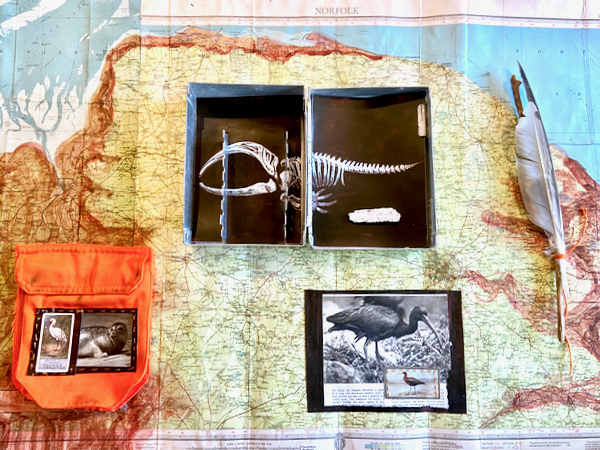
I’ll be showing a wall-based installation titled ‘The Beaver and The Whale’ which documents the research that I carried out while in Norfolk, including visits to the Wild Ken Hill and Norfolk Rivers Trust beaver encosures, and focuses in particular on the impact of the extraction of animal bodies from wetland ecosystems (detail of work in progress in the header image and below).
Detail of wall-based installation (work in progress)
The launch eventfor Ground Up will take place on Friday 11th October from 5.30 to 7.30 pm, and all are welcome. The exhibition will then run until 14th December, and be open from Wednesday to Saturday 11.00 to 4.00 pm.
In addition to the exhibition, Groundwork Gallery will be convening a conference exploring the themes of the residency. The conference will take place on Friday 15th and Saturday 16th November: at Thoresby College, Queen Street, King’s Lynn, 5 minutes walk from the gallery. This is a wonderful early 16th century great hall overlooking the Great Ouse River and owned by the King’s Lynn Preservation Trust.
The Keynote will be given by Charlie Gardner, interdisciplinary researcher, conservationist and activist with a particular interest in societal responses to the climate and biodiversity emergencies.
I will contribute to the first session of four, which will take place over the two days of the conference – Rivers, banks and moist environments – care and contamination. This session will focus on protecting and maintaining the diversity of riverine environments
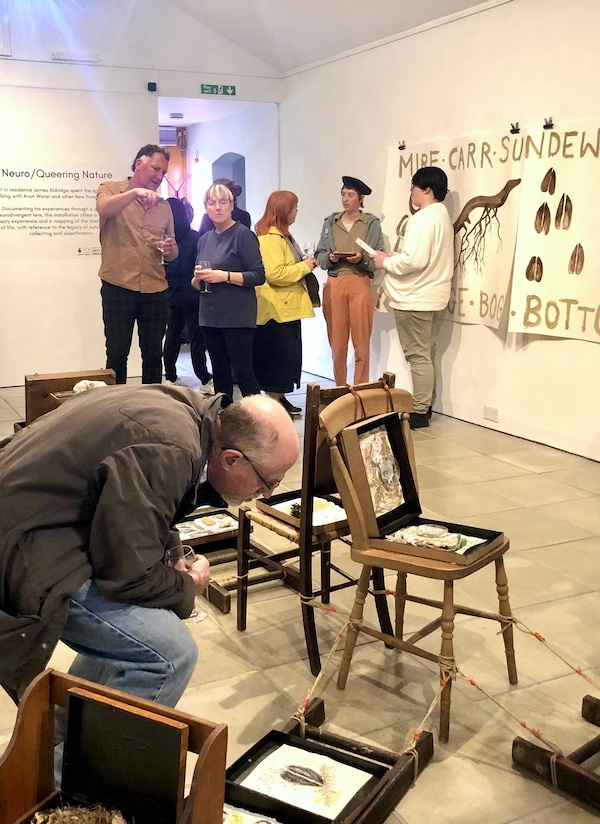
Now that my Neuro/Queering Nature residency and exhibition at Spud in the New Forest has ended, I’ve put together a short (3 1/2 minutes) video tour of the show, for anyone that couldn’t make it along.
It will be the last event of my residency – a celebration before the exhibition closes on Thursday 4th – and my first chance to meet and chat with gallery visitors after missing the opening due to Covid.
The event is free and open to all. The gallery is a short walk from Sway railway station, which is on the South West mainline from London Waterloo to Weymouth (connections to Winchester, Southampton etc) and there is plenty of parking in the village.
We (me and the Spud team) would love to see you there!































 Queer River