Walking with… The WWT Water Team

The second in my series of my Queer River walks and talks was with Nick Wilson, Project Officer at the Wiltshire Wildlife Trust’s Water Team.
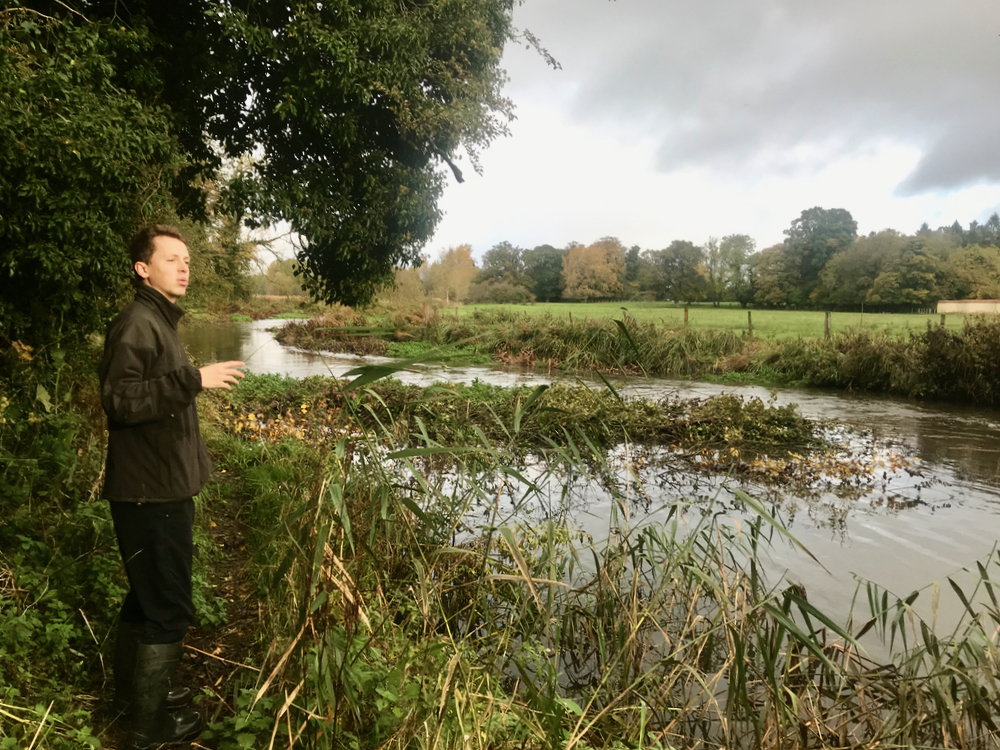
Nick and I met up near Netheravon in Wiltshire and visited three different sites along the River Avon, steadily moving up the river towards Upavon. The 3 sites had been restored by The Water Team at different point in the past, from 3 weeks to 3 years ago, with corresponding levels of growth in vegetation and adaptation by the river. Nick described the aim of the work as being to undo the damage that had been done to the river previously, and to work with the river’s natural processes.

My conversation with Nick mainly consisted of his showing me the sites that had been restored, and of me asking him a lot of questions. The language and the techniques of river restoration fascinate me, and I can see that as this research project develops, the connections between the different ways of seeing and talking about the same river are going to develop in my mind and my artwork, into an excitingly entangled web.

My next walk willI be with Artist Jonathan Mansfield. Jonathan describes his work as follows:

My work focuses on colour, surface and pattern, and I like to represent the physical environment as energised by using lines and marks that show themselves to me during my ‘mindful walking’ and quiet meditation before I begin to paint... I grew up in Wiltshire surrounded by the undulating chalk downs, forests and wide open skies that make this county special. I have always felt it to be a mysterious place, where ancient ancestors appear to emerge from the hills, stones and trees to join me as I walk through the landscape.’

Jonathan also happens to be my husband, which is pretty handy as we are now in lockdown again, and some of the other partners/collaborators won’t be able to join me for a while.

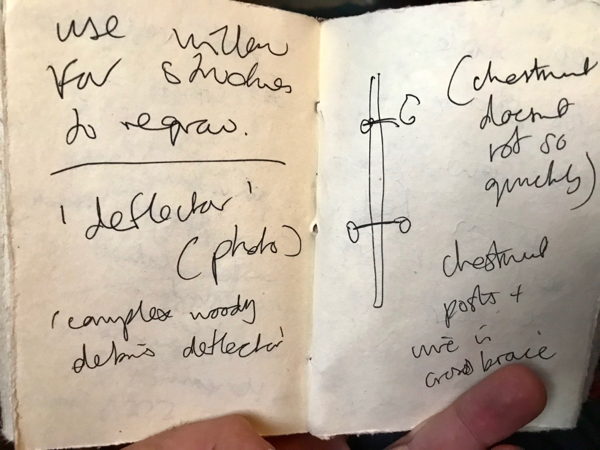
I will come back to my experience with Nick as the project continues, but for now wanted to share some of the language and terminology that he used:

Hinge Cut – cutting a tree at the river’s edge part of the way through its trunk, so that it both lays in the water and is still attached to its roots.

Bed level raising – adding gravel to a river bed to raise it back up to were it would have been before dredging

Habitat enhancement (as opposed to Rewilding) – due to the small scale

Deflector – structure that sticks out in the river and deflects the current

Meander – returning meanders to a river by use of deflectors
We also discussed…

Rising water temperatures – due to climate breakdown

River fly sampling – measuring the health of a chalk stream by the level of/number of fly larvae living in it

Too wide, too deep, too slow – this is what the work is intended to counteract, a river that has been straightened, widened and dredged

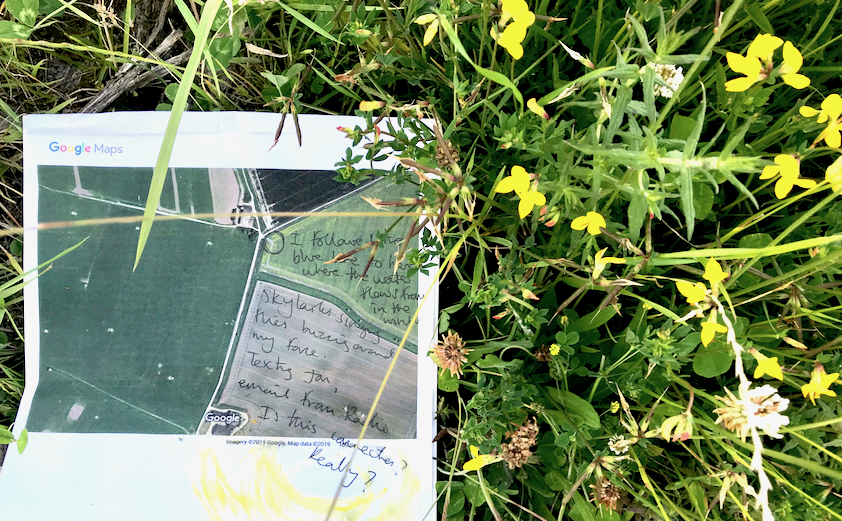
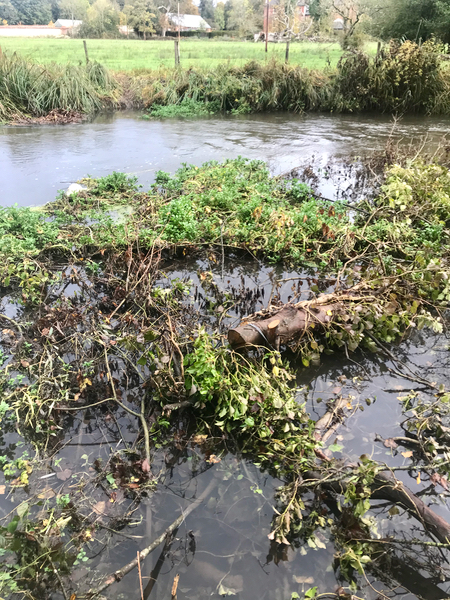
Online and Offline ponds – ponds dug on the path of the river, or to the side but within the floodplain (see the third image).

Some of the animals we saw on our walks – Red Kites, Roe Deer, Mallards, Heron
Walking with… Wessex Archaeology

Throughout the Queer River research project I’m going to be taking a series of walks with others along the Hampshire Avon. The first of these took place a couple of weeks ago in Salisbury, as part of the Wessex Archaeology project Ebb and Flow.

This first walk was a wonderful way for me to begin Queer River, with the structure of the Ebb and Flow walk echoing the methodology that I have developed for Queer River walks. Namely that I will walk, talk and make with key people (human and non-human) along different stretches of the Hampshire Avon, as a form of exchange between my place-based practice and their own perceptions/experiences of the River.

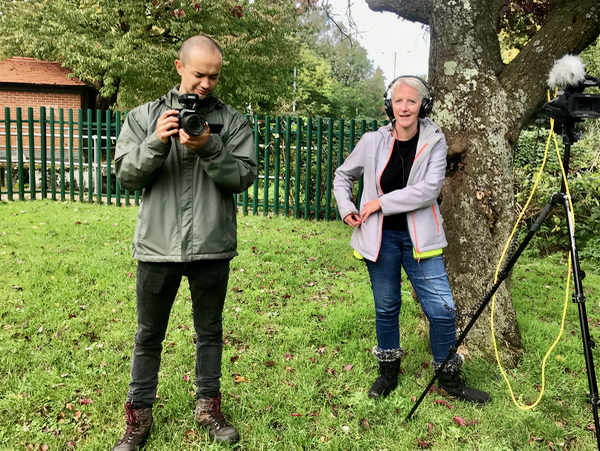
For Ebb and Flow I walked with Geoarchaeologist Dr Claire Mellett, supported by Leigh Chalmers, Wessex Achaeology’s Heritage Inclusion Specialist, and filmed by Photographer and Videographer Tom Westhead.

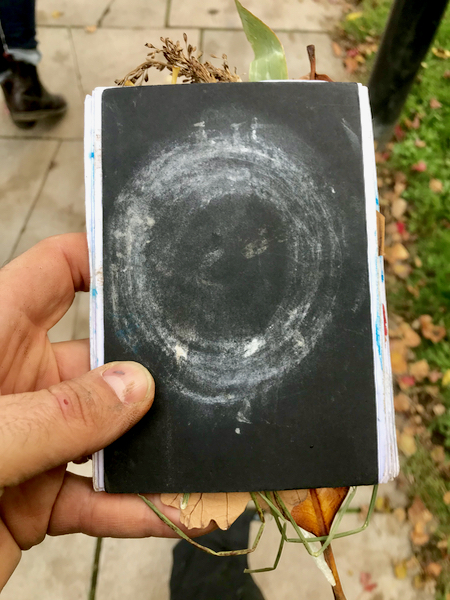
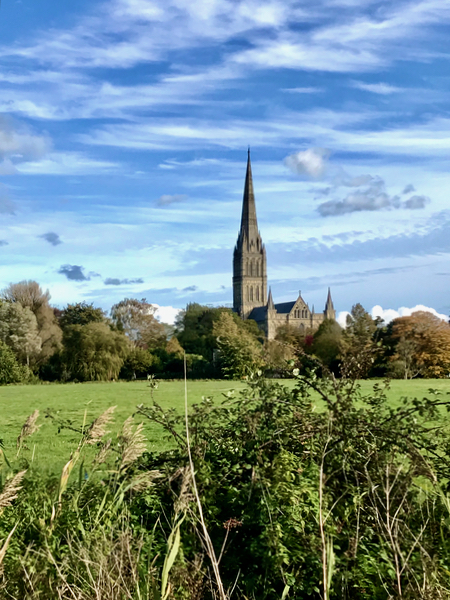
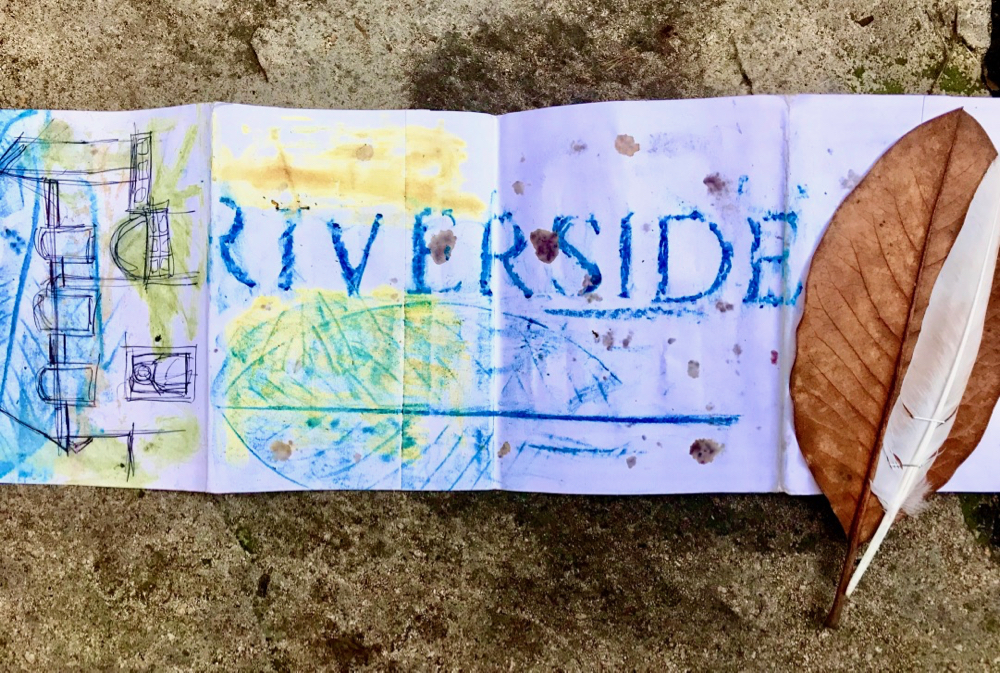
I made Claire and myself a simple fold out sketchbook to map our experiences of our walk, whilst she shared with me her knowledge of how rivers and landscapes change over time. We began our walk at the Avon Valley Nature Reserve to the North East of Salisbury and walked through the city centre to the Harnham Water Meadows.

The Ebb and Flow project was developed by Leigh Chalmers as part of the Festival of Archaeology, whose theme this year is Climate and Environment. The film made by Tom to document our walk will be premiered on the Festival’s YouTube channel on Saturday 24th at 11.00am, with a live Q&A afterwards with Claire and myself.

We hope that the film will inspire people to get out and explore their own local river, and experience the benefit to their wellbeing.

I was also filmed suggesting some creative activities that viewers of the main film can try out. These short clips will be released one at a time during Half Term week.

I’m not going to go into more detail on the film and the content of my conversations with Claire, as I’d really love you to watch it and let us know what you think. But I did want to mention that it was a fascinating experience for me, in that I felt like our different perspectives on the river, coming as we do from different backgrounds and subject areas, were really complementary, especially in relationship to the subject of climate change.

If you watch the Ebb and Flow film and end up outside exploring your local river, please do share images with us on social media, using the #EbbAndFlow2020 hashtag.

Tomorrow I’m going to be visiting a stretch of the River Avon above Salisbury towards Figheldean, with Nick Wilson from the Wiltshire Wildlife Trust’s Water Team, to look together at some of the restoration work they’ve carried out there. I’ll be posting on here about that soon.

Introducing River

Before this all gets too confusing, I should say that this River is our new dog, named after we spent a holiday by/in the River Dart in Devon.

I wrote a post on my general blog in July, which shared how my dog Moshi had passed on after 16 years of being a much loved famiy pet and walking companion. I’ve missed having a canine collaborator and am looking forward to River being able to join me on my Queer River walks.

At the moment she’s only 10 weeks old, so we have 3 more weeks of her being carried rather than walking, but before long we will be exploring new stretches of the River Avon together.

Finding The Source

As I start this new research project drawing on my experiences of the Hampshire Avon, both walking alone and with others, I am also drawing on previous work carried out in collaboration with US based artist Kathy Skerritt.

Please take a look at this earlier post from my general arts blog, ‘Finding The Source’, written about a walk that I took as part of my ongoing collaboration with Kathy, with the intention of finding the source of the River Avon, and my gradual realisation that there was/is no fixed beginning or end.

‘How to Queer Ecology…’

How to Queer Ecology: One Goose at a Time by Alex Johnson

‘Where is the line between what is Nature and what is Human? Do I spend equal times in the parking lot and the forest? Can I really say the parking lot is separate from the forest? What if I end up staying in the parking lot the whole time? What if it has been a long drive and I really have to pee?

The problem is, the Nature/Human split is not a split. It is a dualism. It is false.

I propose messing it up. I propose queering Nature…

A queer ecology is a liberatory ecology. It is the acknowledgment of the numberless relations between all things alive, once alive, and alive once again. No man can categorize those relations without lying. Categories offer us a way of organizing our world. They are tools. They are power.’

Why Queer?

In my naming of this piece of research, it’s not so much that I am calling the river itself Queer, but my orientation towards it:

‘To queer something is to take a look at its foundations and question them…’

Charlie Glickman- Queer is a Verb

I want to explore how we can alter our perceptions of and relationship to rivers, through dialogical, visual arts practice. By walking with the river, including the organisms that live within it and the people that live and work along it, I aim to inform my understanding of the role that we can play (both humans and non-humans) within the riverine ecosystems of the future.

My thinking about and relationship to the word Queer is further explored in a recent article that I wrote for the Climate Cultures blog. Please follow the link below the quote to read the full article:

‘What I have come to realise is that being Queer is not about being defined by others as Other, but refusing to be colonised or domesticated. It is about being yourself in spite of the restrictions you may face, a self that you discover through relationship with others. In this way I see it as closely related to (Re)wilding, whereby if the right conditions are put in place, the land begins to heal itself, bringing health to it and to us.’

A Queer Path to Wellbeing – James Aldridge, July 2020