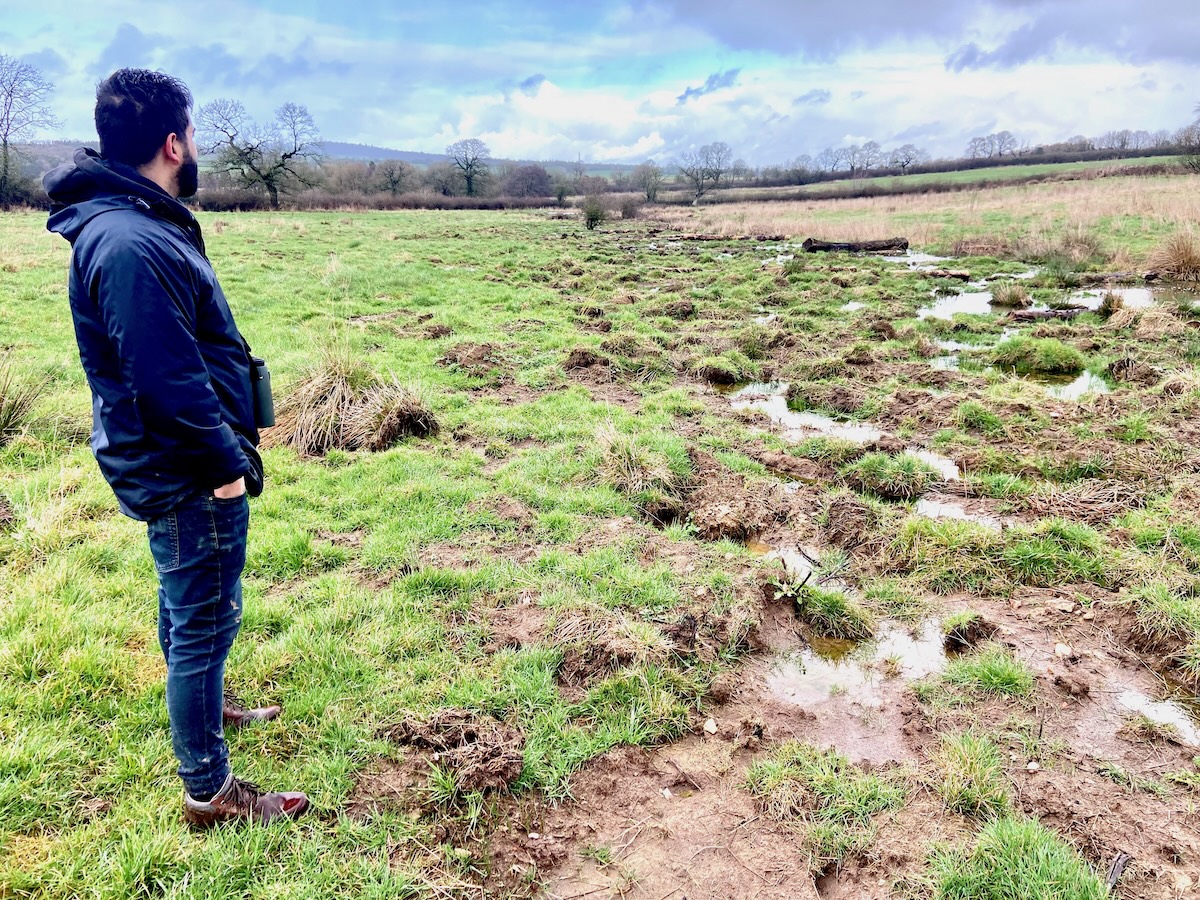
Last week I returned to Heal Somerset to meet Wildlife Guide, birder, and ex nature reserve warden Nick Patel (@WilderSkies on Instagram). Nick and I first met at Heal’s Into the Wild event last Summer, when I was part of a panel on diversity in rewilding and also sharing a little on the place of art within the rewilding movement. Nick runs regular events at Heal, and at a number of other Somerset locations through his organisation Wilder Skies.
At Wilder Skies, our aim isn’t just to show you the best wildlife the South-West has to offer, but to help you engage with it on a deeper level, leaving you with a stronger passion for the Biodiversity we share this land with… A ‘Wilder‘ connection you might say…
Nick and I were keen to continue a conversation on diversity and inclusion within rewilding and the environmental sector more generally, and as is usually with Queer River walk and talks, whatever else came up on a wander around the site at Heal.
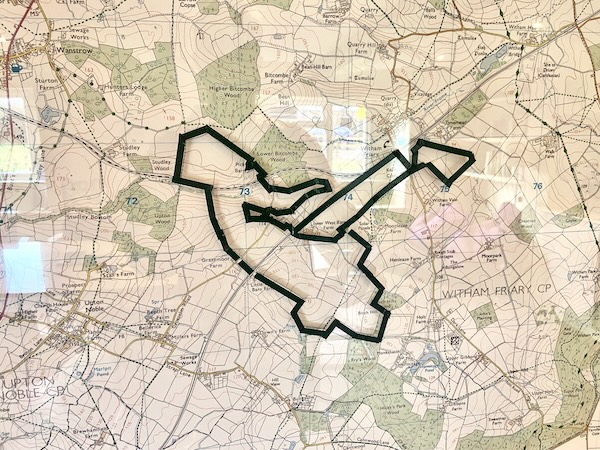
Heal Somerset is the foundation site of nature charity Heal Rewilding. It spans 460 acres of rolling countryside, set on land that once operated as a dairy farm. Our mission is to revive healthy, resilient ecosystems by giving nature the freedom it needs to recover. This means creating space for trees, plants and wildflowers to regenerate naturally, enabling wildlife to move and thrive, and supporting the comeback of species under pressure.
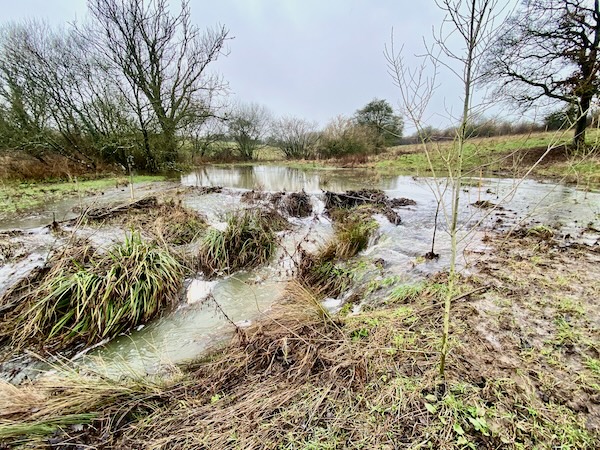
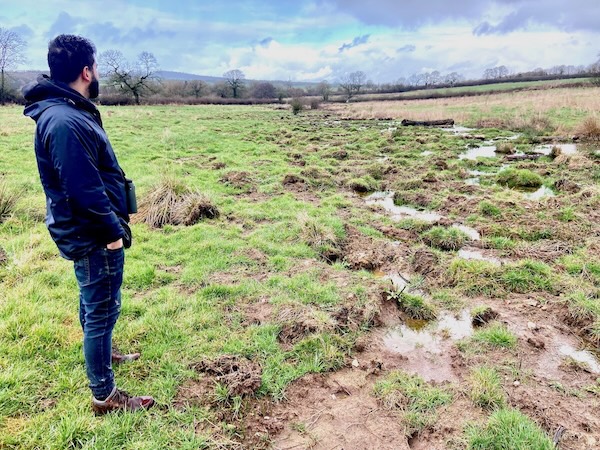
I’d not been back to Heal since last Summer, and was particularly keen to see the changes made to the site’s hydrology, by both beavers and people. We started with the beaver wetland, which has developed from a small, tidy dam across a little stream (a tributary of the River Frome) to a series of dams and a growing beaver pond, doing its best to hold back some of the water that has fallen in these last few weeks, of what has felt like constant rain.
Nick has previously worked on a number of nature reserves, primarily wetland sites, including on the River Exe ( a nice link with my last Walking with… post there, with Exmouth based artist Ann-Marie Culhane). and has a particular passion for birds, butterflies, orchids, and dynamic, evolving wildlife habitats.
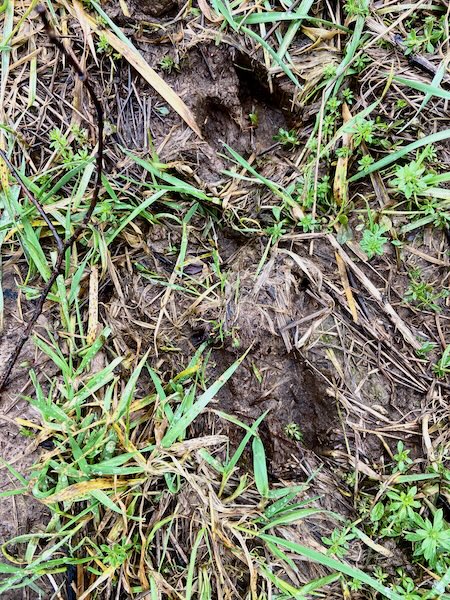
As we left the beaver wetland to walk uphill, I noticed the tracks left behind by the free roaming Tamworth pigs, and the little micro-ponds created around the site as they rootle and flip the turf. The actions of the pigs exposes bare ground for a wider range of plants to take root amongst the heavy matt of dominant grasses, which in time will attract more insects, which will feed a wider range and increased abundance of birds, and so on. The limited diversity of plants is itself a legacy of management for grazing by dairy cattle, and the application of slurry and/or fertilisers.
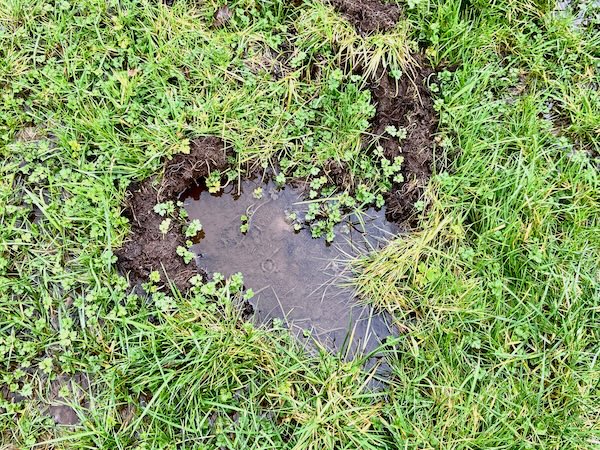
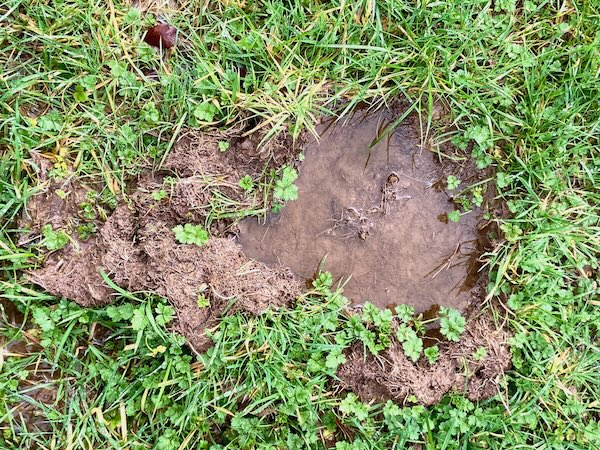
As we walked, and Nick caught the call of a Redwing, or spotted a Fieldfare in the upper branches of an oak tree, our conversation turned to the subject of race and racism in rural places. Nick was born and brought up In Preston, Lancashire to a white Mum and a Dad of Kenyan Asian heritage, and shared with me his experience of living and working in the countryside as a person of mixed-heritage.
‘I’ve never felt welcome in the countryside ever… casual racism is constant, and with everything going on recently, it’s gone back up again… I want to regain the idea of my Britishness, but in a different way, to re-find that identity and be proud of it. British nature is the way for me to do that.’
Nick talked about the complexity that being dual heritage brings, ‘sometimes I feel really brown and asian and other times white’ and I shared the responsibility that I and my husband feel, as a white couple with a mixed heritage son, bringing him up in a very rural, predominantly white area.
I’m used to anticipating homophobia, of making the choice when and when not to ‘come out’ on a daily basis, depending on where I am and who I’m talking to, but if your racial heritage is different to the majority of your local community, you don’t always have the option of passing beneath the radar, in the same way, even if you wanted to. Nick hopes that his presence within the environmental sector takes inclusion beyond tokenism and encourages others to follow a similar path if that’s where their passions lie, ‘I want other people to see that it’s a very normal thing to work in the countryside…’
As we carried on walking, we passed our conversation to listen to a couple of skylarks that had flown up from the top of the hill and were singing their hearts out. It was a really joyful moment amongst the all the grey wetness of recent weeks, a sign of Spring and of hope, and so different to watching skylarks singing over heavily managed and sprayed farmland, where their young may stand little chance of finding enough insects to eat. As Nick said ‘(Heal) is a sanctuary’
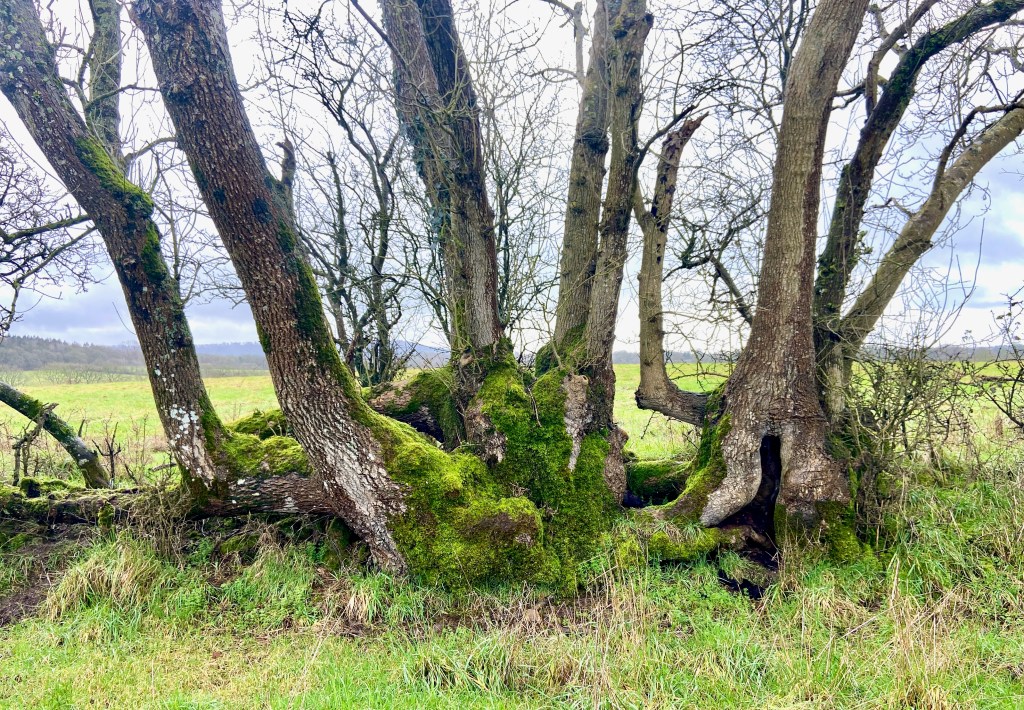
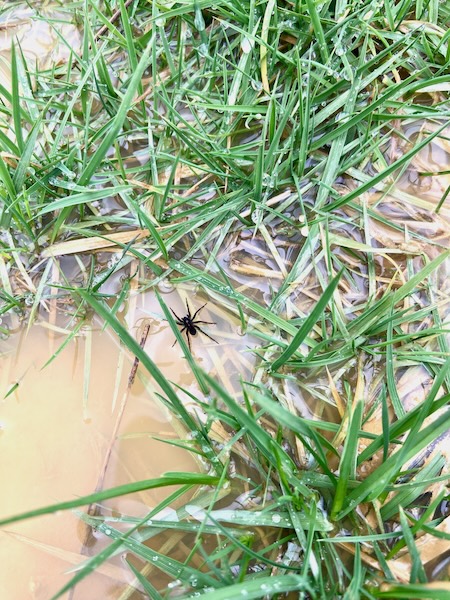
Heal isn’t just an island sanctuary though, one of the many positive aspects to the site is the role that it plays in linking up with patches of woodland and nature friendly farming, acting as a wildlife corridor, with species from the woodland at the nearby Stourhead Estate for example, moving onto and across the land as it becomes more rich and tangled.
Nick shared with me that his work as a wildlife guide extends into urban spaces too, with an equal passion for helping people to notice what’s on their doorstep, ‘…trying to get people to notice what is growing in the pavement, what is living in their local park.’
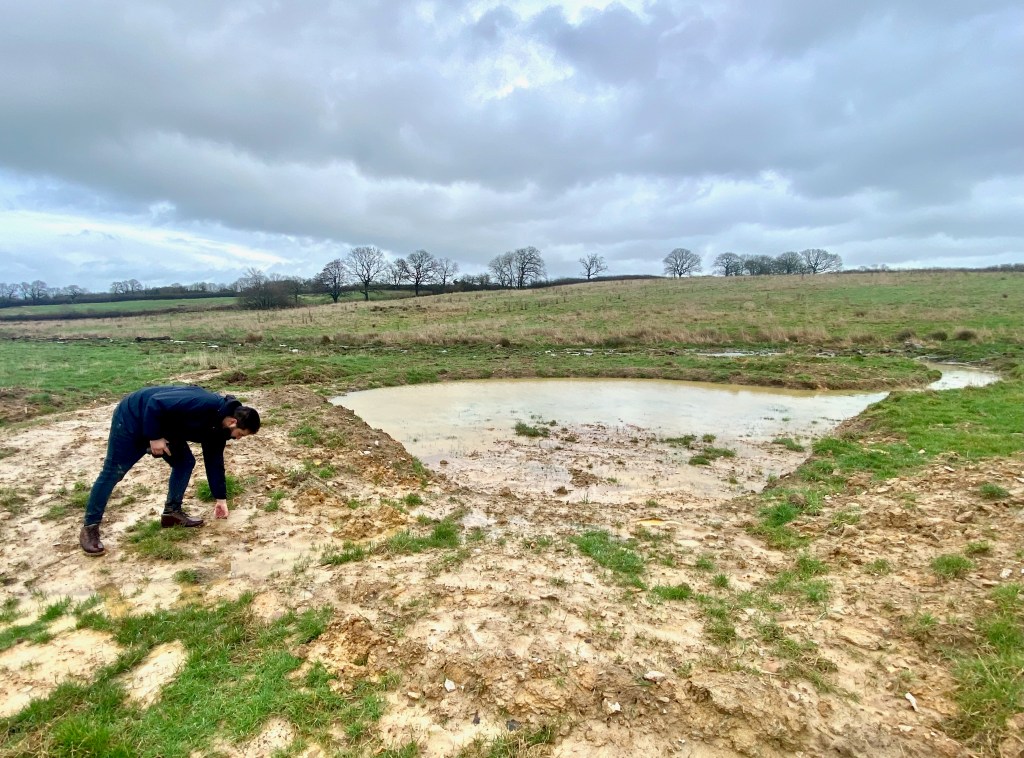
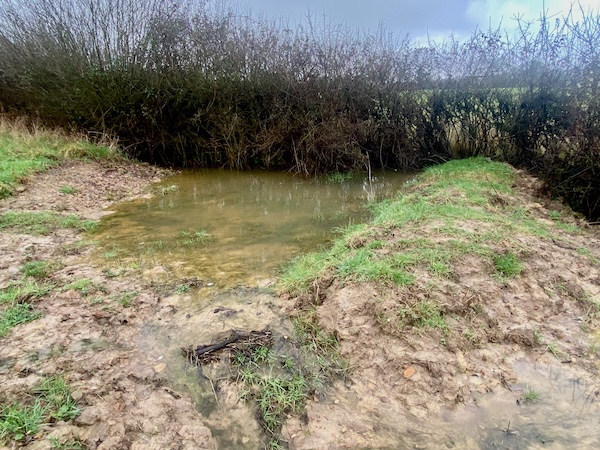
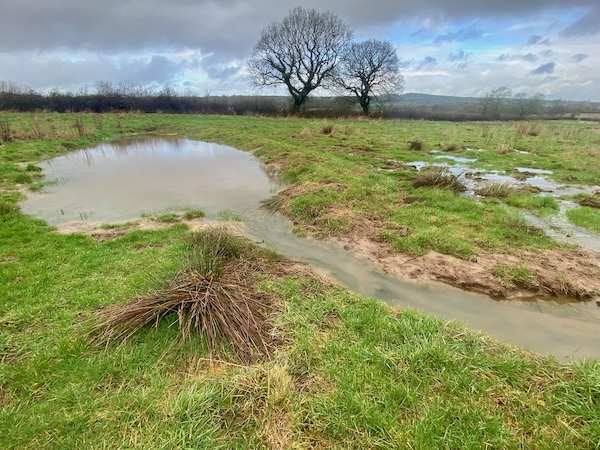
As we looped around and started to head back down the hill to the house and barns where we had parked, we took a closer look at the recent work that has been carried out to block ditches, daylight streams, and generally bring water out onto the land again. I haven’t yet had a chance for a proper chat with Heal’s Rewilding Ranger Daniel Hill but I try to keep up with the work that he and Josh Ashbee (river and peatland restoration specialist) have been sharing on social media, and it was brilliant to see how all the recent rainwater was interacting with their interventions. Obviously, with all my river related work, and a passion for river restoration and rewilding this is right up my street.
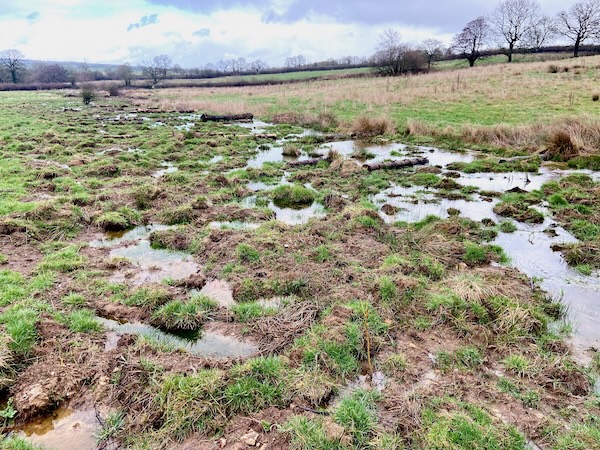
Clay bunds blocking ditches, streams feeding scrapes and pools, and water running across open ground, hitting and rerouting around woody debris. It’s going to be really exciting to see how the plant and animal life with grow and evolve around all of these changes through 2026 and beyond.
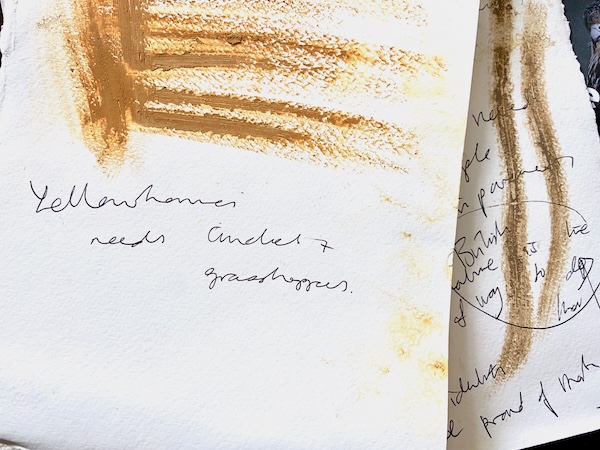
I asked Nick what he was hoping for in terms of species that might return to the site, or become more common (I’m a massive fan of wetland birds, so cranes hopping across from the Somerset Levels would be amazing). and he explained how a lot of the changes will be good for crickets and grasshoppers, which in turn should bring in Yellowhammers, and that he’d love to see Brown Hairstreak Butterflies turning up again (as well as Lapwings and a host of other birds).. At this point the drizzle turned torrential and so we headed to Heal Somerset HQ for shelter and a coffee.
I set up Queer River as a way to learn from dialogue with a range of voices on rivers and wetlands more broadly, it’s an important part of my practice as an artist, but it’s also a way to resist making myself smaller in the face of prejudice, and to be more bold in my exploration of what a Queer and Neuroqueer identity brings to an understanding of the world. I wrote in a recent post ‘Re-Making Rivers: Learning From Different Perspectives‘ how as a country ‘…we seem to fall back so readily into foregrounding the experience of white, male, probably straight naturalists/writers/explorers.’ and that I was conscious that the majority of my Queer River ‘Walking with…” posts have shared the experiences of white people.
I’m really grateful to Nick for taking the time to show me around Heal Somerset and for being so open about his experiences, thoughts and feelings. I love his passion for both wildlife and for people, and it was a real pleasure to geek out a little together. I would really encourage you to visit his website and sign up to one of his upcoming events (and I’m not on commission, honest).
This coming Sunday 21st February sees Nick linking up with Blue Lias Kitchen to run a Water Kefir Workshop and Wild Winter Wander, tickets available here
Into the Light, Heal’s ‘Two-Day Rewilding Gathering’ returns to Heal Somerset this Summer with a watery theme and I’m happy to say that I’m returning as a contributor too. Take a look at their events page for more information and to book your tickets.
 Queer River