Yesterday I made my way through the rain to Taunton in Somerset, to meet Ann-Marie Culhane. We have shared connections and values, and have been talking about meeting for a walk for a number of years. Ann-Marie’s practice draws on permaculture design, and projects are long-term, ‘based on the cycles and patterns found in nature.’ A way of working that goes against the short-termism of many arts projects and funding schemes.
‘I feel very strongly that we need to start to view time differently and work towards funding deepening, longer cyclical models of practice’
This year we finally made a plan to meet in the middle, between her home on the Exe Estuary in Devon and mine in the headwaters of the Salisbury Avon near Devizes, in Wiltshire, and to walk together along the River Tone.
On my way to Taunton I noticed how the land changed in character, from Westbury where I caught my train, into Somerset via Castle Cary. Small, hedged fields with winding streams that ran alongside the track, full to the brim and spilling over, changed to a wide open landscape as we entered the Levels, with long straight ditches and rhynes, banked rivers and pumping stations, keeping the water from the land.
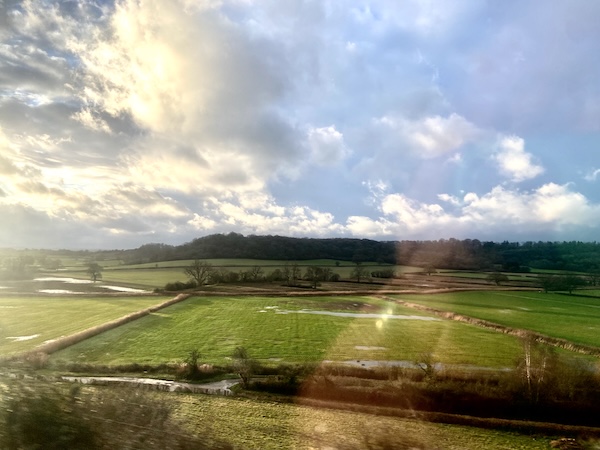
Despite drainage efforts, there was plenty of standing water, with pairs Mute Swans standing out bright white against the muddy greens, and a group of grey Cranes alongside scattered gulls. Seeing the Cranes was really exciting for me. I’ve long been drawn to wetland birds, as well as researching species reintroductions more generally, and followed their return to Somerset through The Great Crane Project, including joining one of the Crane Safaris that were running back then.
As an ‘outsider’ the hydrology of Somerset intrigues me, and my work has been taking me there more and more recently, from walking with Feral Practice, working at Heal Somerset, visiting beavers at Longleat with Head of Research and Conservation Dr Tom Lewis, and leading a walk down to the River Brue from Hauser and Wirth. It feels very different to the chalk downland and chalk streams of my home patch.
I keep thinking about how the lower lying areas of Somerset will change/adapt to the extreme weather and sea rises of the future, and whether we can learn from their past (a time/place of wooden trackways and marsh living peoples, where humans learned and borrowed from beavers). We obviously need to rethink our relationship with the multi-species communities that form our river ecosystems (that’s what Queer River is all about) and consider what benefits more deliberate re-wetting and rewilding can bring (see Heal Somerset and Somerset Wildlands).
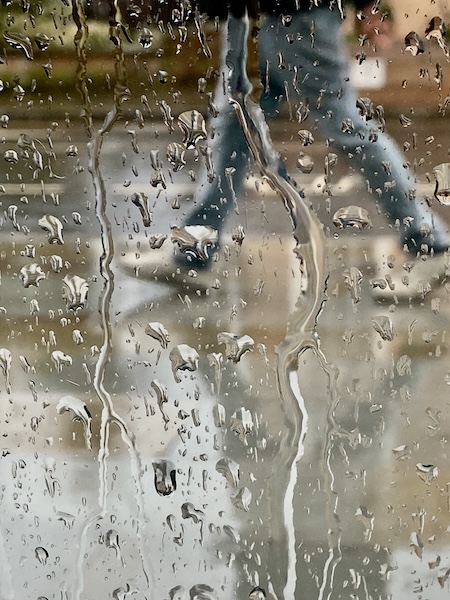
Arriving at Taunton I sat in the waiting area in my waterproofs, checked the forecast, and waited for Ann-Marie’s train the arrive, whilst watching the water running down the plate glass windows.
‘From 1994, I have been initiating, catalysing, designing creative and eco-arts projects, events and performances and working as an artist, activist and educator…My work takes place mostly in outdoor spaces: orchards, community centres, parks, farms, the street, by or on rivers… I aim to work with others to reduce the harm we are inflicting on our planet; to increase understanding of our place in the family of things and to bring alive positive and life-sustaining visions at a time of deepening environmental and social justice crises.’
Ann-Marie’s work has spanned a range of subject matter over the years and involved collaboration with different communities, both human and non-human, but I guess what connects with me most is her work with more watery places. Living as she does by both the river and the sea, and being drawn to focus her practice on her local area, much of Ann-Marie’s recent work has focused on the River Exe watershed and coastal communities, through Tidelines CIC:
‘We work with people of all ages creating ways to come together in collaboration to celebrate and care for the Exe estuary and coast, and to find ways to adapt and respond collectively to the changes caused by climate change and the catastrophic loss of biodiversity that is impacting the place we live.’
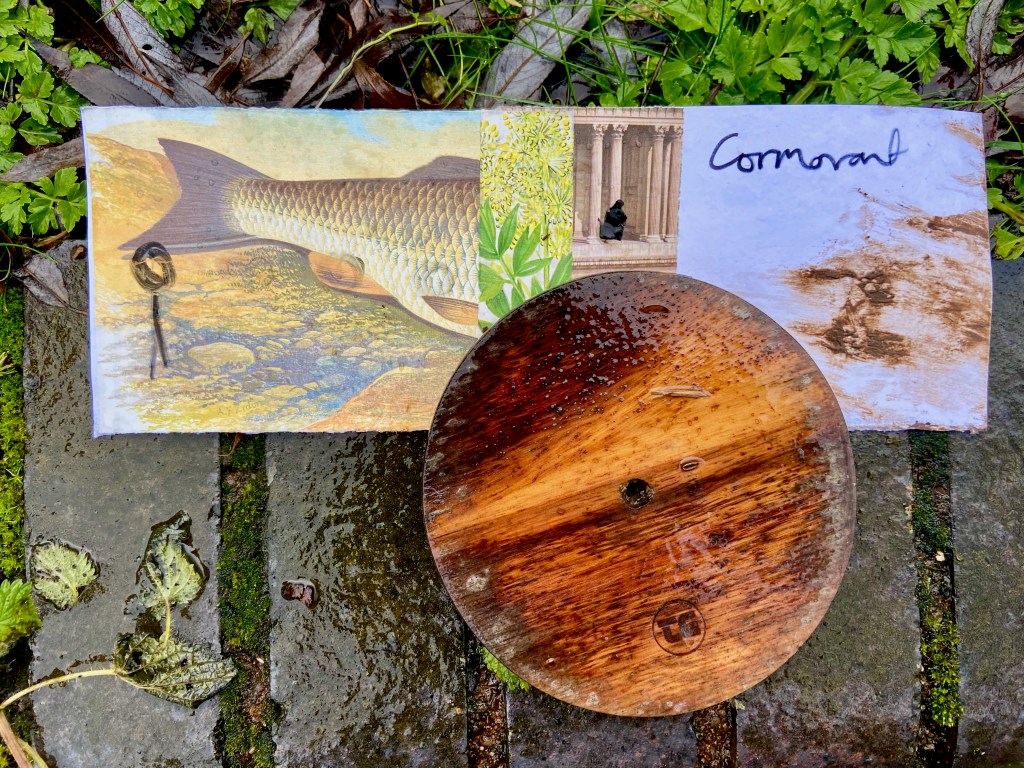
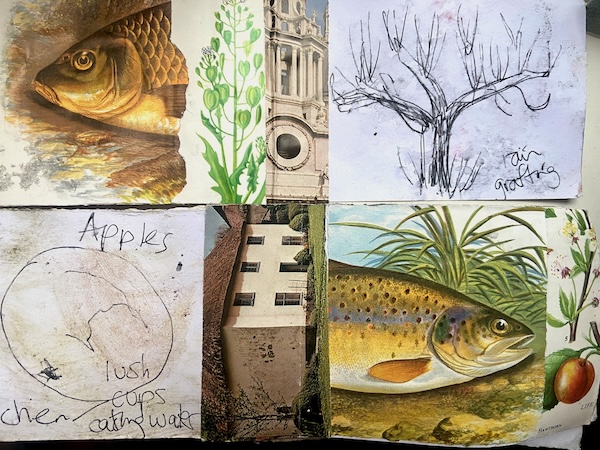
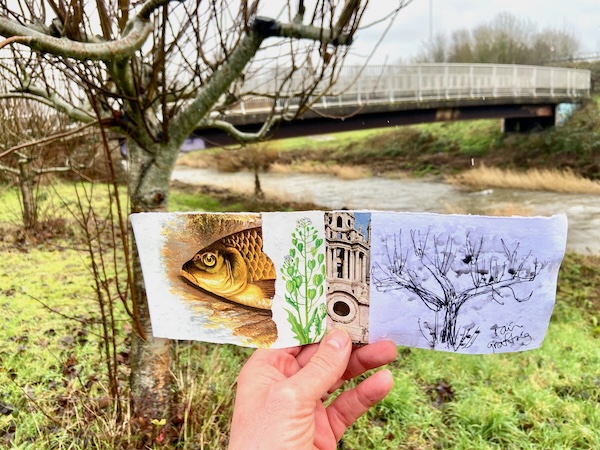
Ann-Marie and I walked from the station down to the banks of the Tone, and paused under the first bridge, where I shared some ‘fish cards’ that I had made for us to use, a form of Walking Pages, collaged together using imagery from charity shop finds. Everything was getting pretty soggy by then, so writing/drawing wasn’t easy, and we ended up rubbing on earth and lichen, and letting raindrops join in with pen sketches.
As we walked we talked of many things, but primarily Ann-Marie’s work with Salmon (see Salmon Run), my own work with Beavers, and the sometimes troubling language of native vs alien/invasive in terms of the other species we find ourselves living alongside (Signal Crayfish, Pacific Oysters, Japanese Knotweed etc). We questioned whether, as the impacts of climate breakdown increase, changing habitats and temperatures, the ways of classifying and ‘managing’ species not previously found in the UK may need to change too (see an earlier walk with Botanist Mark Spencer)..
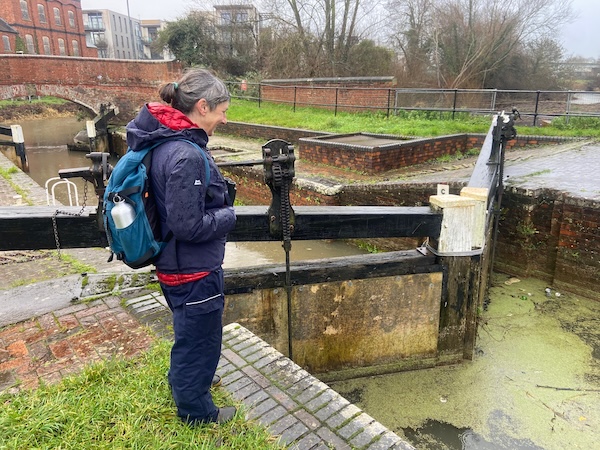
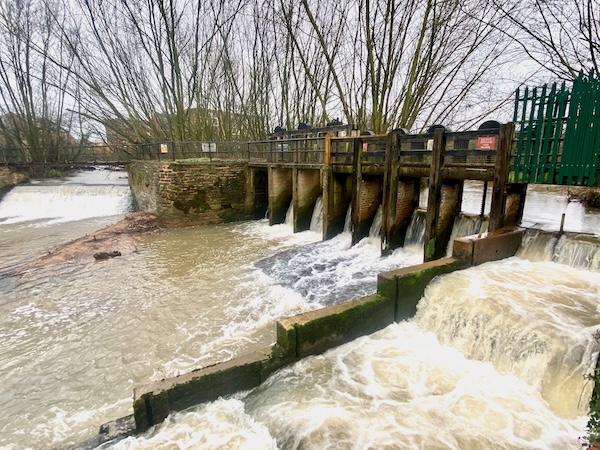
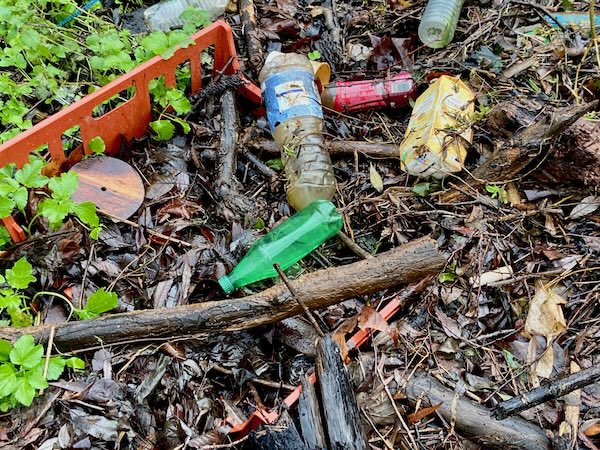
The Tone was full and heavy, muddied and brown, and had left piles of tangled branches and plastic on the banks, or hanging from trees. A Cormorant flew past following the path of the river, later followed by a Kingfisher. As visitors to the river we pondered the need for the barriers that form the two different sections of the Firepool Weir, and the Firepool Lock where the river flows into the Bridgewater and Taunton Canal We’ve each developed projects centred on improving river connectivity for migratory species, linked to the demolition of weirs, sluice gates etc. (e.g. Salmon Run and The Ripple Effect).
Moving on, our conversation turned to the different models that are being trialled around the world to bring power to ‘Nature’, often inspired by indigenous cultures. From councils of beings, to having ‘Nature’ on the board of companies and other organisations. As crises and emergencies unfold, people are understandably driven to develop and share models of working, from place to place and river to river.
We wondered out loud whether in contemporary Western contexts, when humans bring a model from one place to another, or speak for other beings, enough time and care is taken to root these practices in an understanding of their specific locality. Do we need to more fully apprentice ourselves to those beings that we represent, and perhaps use arts-based methods to learn from their embodied knowledge?
Ann-Marie’s own Assembly of River Beings ‘- developed with Friends of the River Exe, as part of an Arts Council England funded DYCP research project in 2025, exploring species-led practice and nature-centric governance – was an Exe specific process, which explored the idea of speaking on behalf of species: ‘a two day event working with participants (through making, knowledge, embodiment) to prepare for and research a river being, from a long list created with the Biodiversity Records Office, local Wildlife Trust and historical records. A three hour assembly then took place witnessed by members of the public, and an opening and closing ceremony with the river’
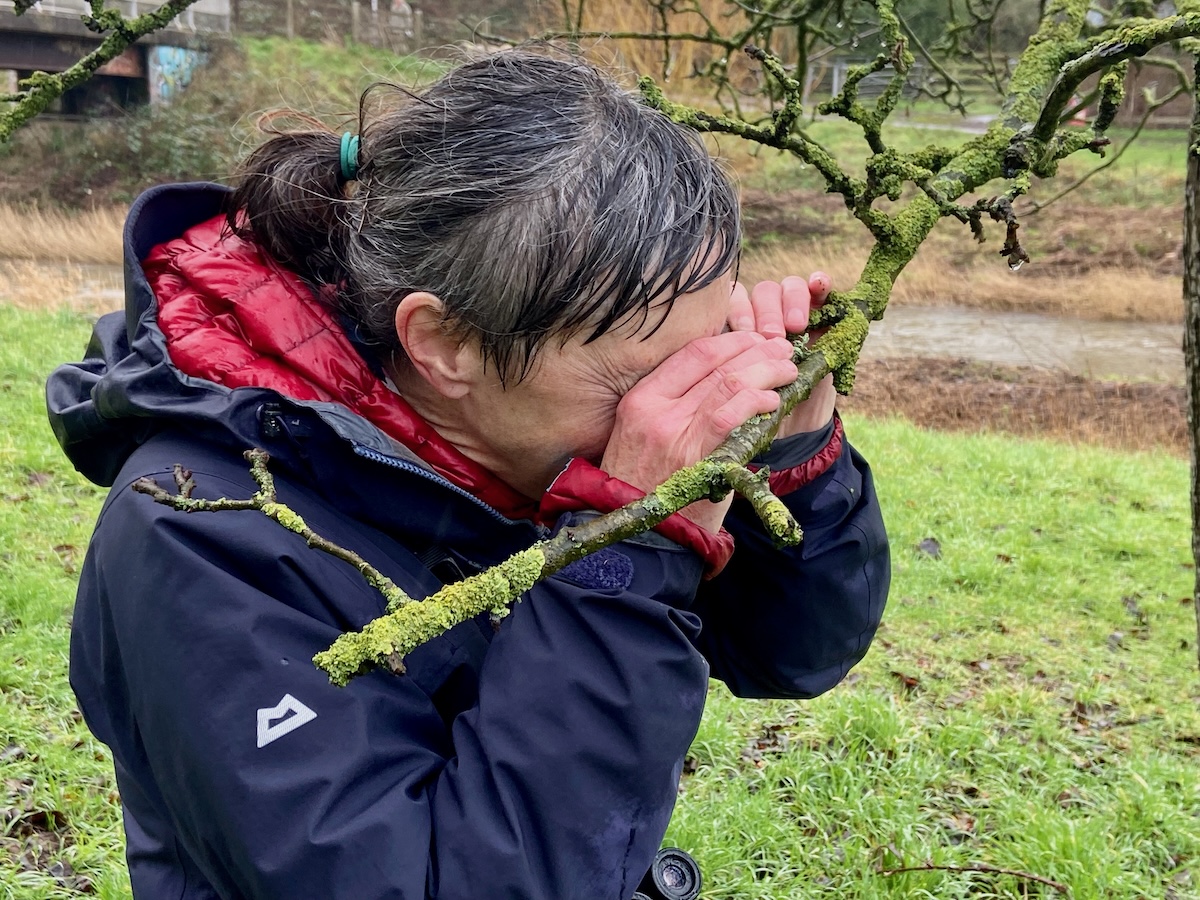
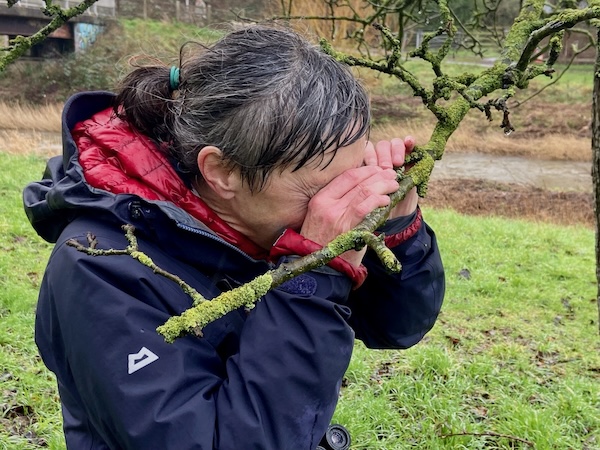
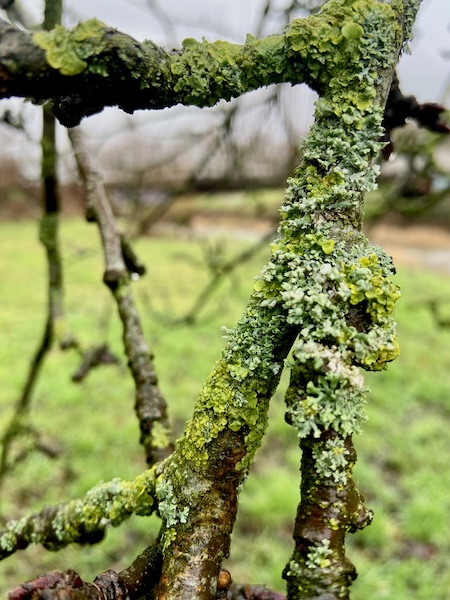
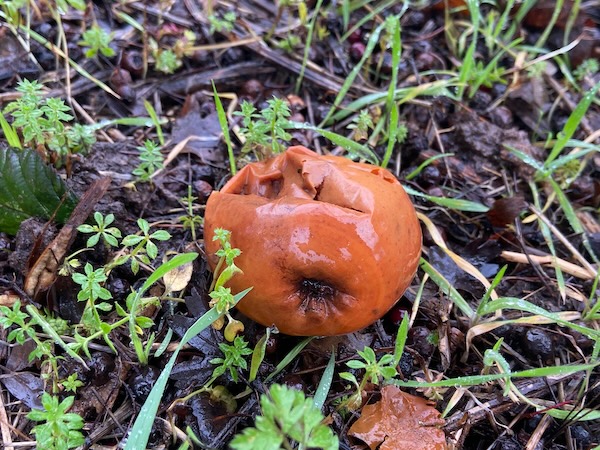
When we met the apple trees of a riverside orchard, Ann-Marie used a lens to magnify the lichens living on their branches. Viewed on a different scale, we saw their water-holding cups and fine spikes. Ann- Marie has worked with orchards regularly over the years and her experience brings a different insight and a deeper knowledge than me. Projects have included Flow, an 8 years old, ongoing project centred on ‘a ribbon orchard of 193 trees’ in the Riverside Park area of Exeter, with programmes of cultural events throughout the seasons, and Fruit Routes at Loughborough University ‘an edible campus (of) …fruit and nut trees along walking and cycle routes across the University Campus’.
As always with these walks, much more happens than I am able to record here. The knowledge gained and exchanged isn’t only about the words we share, but the trees touched, the objects collected from the banks, and much more that is outside of words and conscious thought.
We ended our walk in a cafe near the river with Fiona McDonald of Feral Practice (find out about Tonal, their audio project here) and had a catch up on books we’ve been reading and projects we’ve been involved with. Once we’d dried off and drunk coffee, our conversation turned to what communication can look/sound like beyond Western written/spoken languages.
All our work shares a focus on inter-species relationships, and the potential for arts-based research to open up ways of sharing knowledge across species boundaries, from Fiona’s work with Wood Ants to my exploration of Neuroqueer Ecologies and Ann-Marie’s everyday observation of ‘invasive’ Pacific Oysters via a temporary stay in her home.
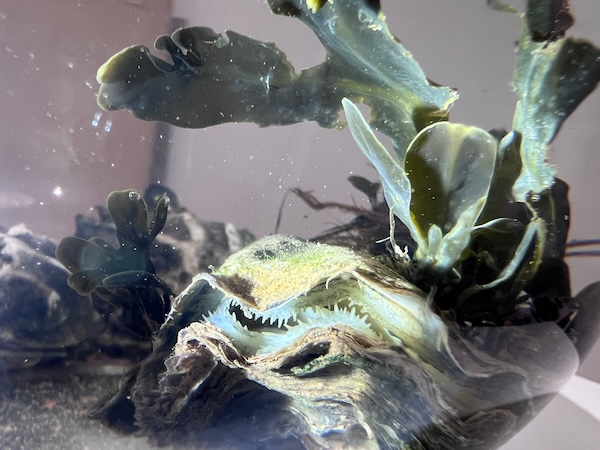
These walks, and the conversations that they lead to, are such an important part of my practice as an artist/researcher exploring queer and neuroqueer perspectives on ecosystems and multi-species relationships. As previous collaborator and Researcher Andy Marks put it ‘through Queer River you are building a community one person at a time’. I’m thankful to Ann-Marie for meeting and walking with me, and really looking forward to whatever may come next.
The community research project River Tone, Risks Beyond Human Eyes initiated by Phil Tovey, begins soon. Phil and I had a chat about few months ago about Queer River, and are planning to walk together soon.
Next month I’m really pleased to be walking and talking with Nature Guide and Birder Nick Patel at Heal Somerset. You can find out more about Nick and his work via the Wilder Skies website and on Instagram, and I’ll be sharing my reflections back here again soon.
 Queer River
fabulous post!
LikeLike
Thank you – really glad you enjoyed it!
LikeLike