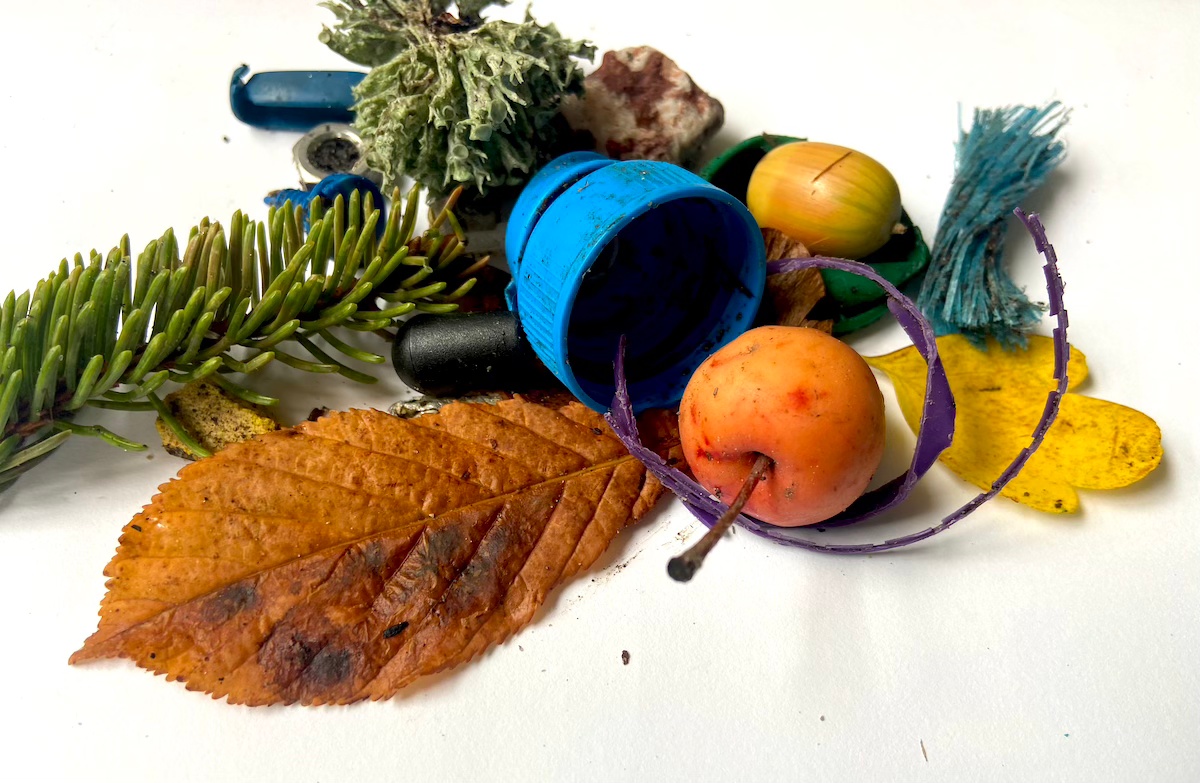
After a Summer of drought, I was wishing for some heavy rain. We had a little, then a little more, and now we’ve got the heavy stuff. As I wrote on instagram, the arrival of the rain relieves some of the tension in my body, hardened and tensed by the wait and the awareness of the damage being done to plants and animals, with the ground baked har and river levels dropping.
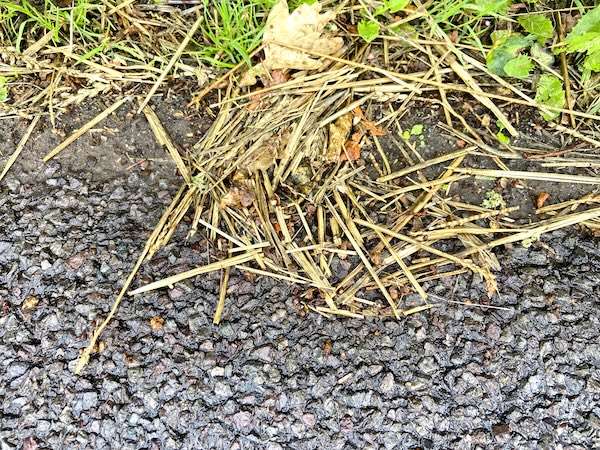
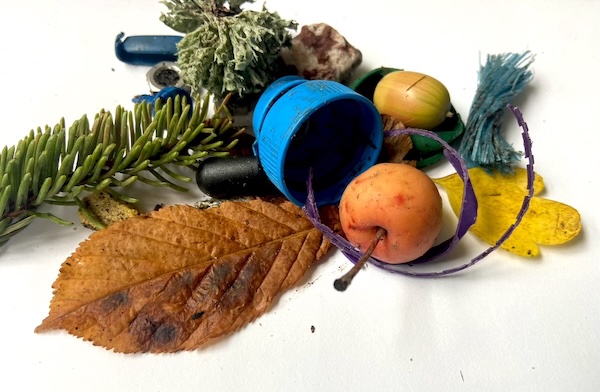
I live on a very slight hill, the continuation of the edge of Salisbury Plain, sloping down to the beginnings of the Hampshire River Avon. When rain is heavy it forms little streams down our road, heading for the river. These temporary streams leave behind clumps of straw from the recent harvest, along with plastic bottle tops and metal bits and pieces lost from vehicles, acorns and sycamore seeds.

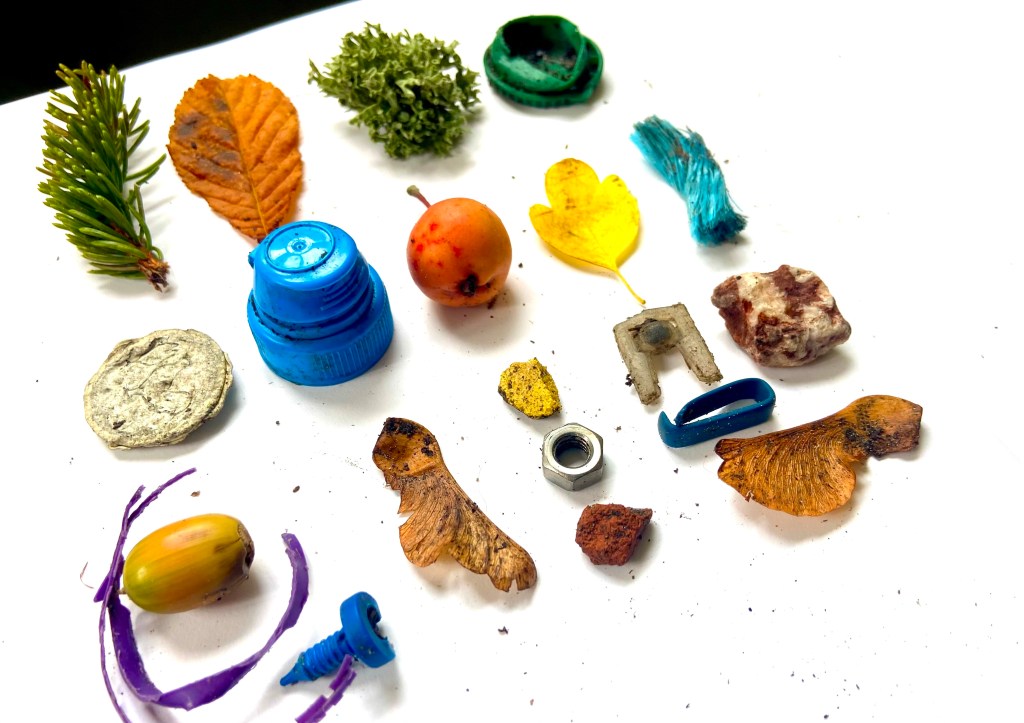
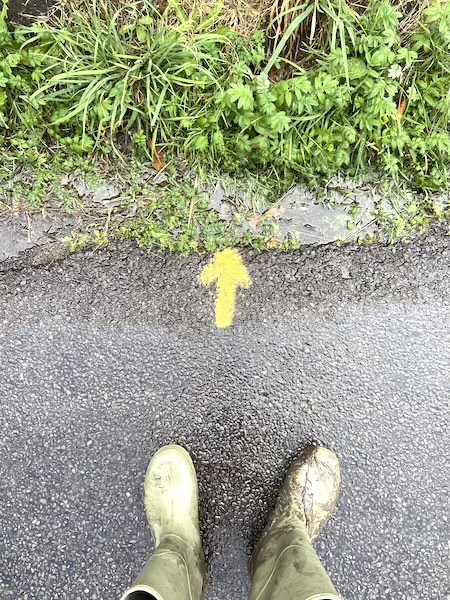
I took a walk after one of the first bursts of rain, and gathered a few things that had been washed up. I walked from my home along the road to the river bridge, tucking headlight plastic, pieces of yellow line and the odd seed or feather into my pocket. I’ve written about Roadcombing before, and the place of collecting in my practice, but not really about run off from our roads into rivers. The water is very welcome of course, and I can pick up a certain amount of rubbish, but after a long dry period what less visible stow-aways does the water carry with it?
In 2024 a white paper, produced by Keyline Civils Specialists found that:
‘Road runoff is responsible for 18% of waterbody failures in England (86% of the country’s inland water bodies fail to meet targets)...road runoff contains a toxic cocktail with heavy metals, including zinc, cadmium and copper, plus polycyclic aromatic hydrocarbons (PAHs) such as pyrene and benzo(a) pyrene. Microplastics and hundreds of other chemicals also routinely enter waterways in this way.‘
In a piece written about the paper’s findings for the Chartered Institute of Environmental Health, Professor Alex Ford of Portsmouth University said:
“We know these chemicals can be neurotoxic, immunotoxic, carcinogenic as well as reproductive toxicants.”
So what about the impact on river ecosystems? John Bryden, Head of Improving Rivers at environmental charity, Thames21 adds:
“Many rivers can now only support a limited number of pollution-tolerant species due to years of accumulated contaminants. We need urgent and comprehensive action involving both the technical solutions promoted in the recent white paper and the nature-based approaches identified by our tool.’
When I reached the river I climbed down to look under the bridge. It didn’t smell great. Water was pouring in from a pipe under the bridge as well as starting to flow through the river channel. Our nearest bridge has two ‘arches’, one that always has at least a trickle, and this other one that had dried up completely. It was encouraging to see a thin ribbon of water starting to make its way back to form the smaller channel, but the smell of sewage (or something like it) was pretty off-putting.
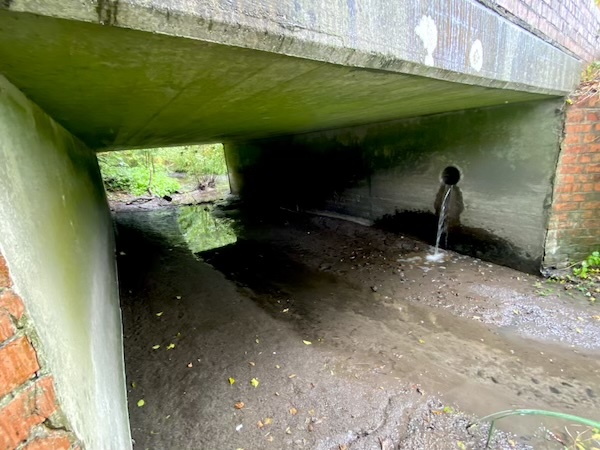
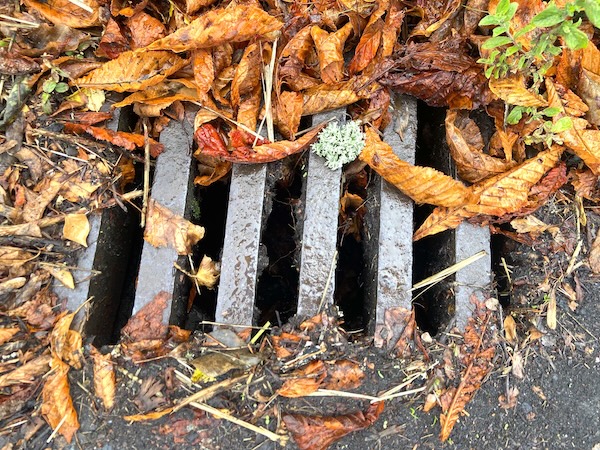
My individual, day to day artwork tends to deal with the material world, the things that I can touch and collect, or use to build or make marks. My process builds sensory awareness of environmental change. I record the footprints of animals that have passed under the bridge, or gather the feathers they’ve left behind. But hidden substances like the chemicals in road run-off are harder to notice, and so more difficult to raise awareness of. How can they be made more tangible? Is anyone doing any interesting creative or community engagement work around this? Something for me to ponder.
 Queer River
Hi James
One of my MA cohort, Lindsay Woodman, @catchthescent on instagram, has created her final project around following the River Avon from source to sea. She has recorded this journey in various ways, including pollutant sampling for a river monitoring group, that I’ve momentarily forgotten the name of. Her installation from this work will be at the MA end of year show from 6 – 10 September, 10-6 (Mon 8, 1-6), Locksbrook Campu, Bath BA1 3EL
Kristen
LikeLike
Thanks very much Kristen I love the sound of this work… is that when you’ll be exhibiting too?
LikeLiked by 1 person
I’m doing my MA part-time, so will be exhibiting next year 🙂
Btw this is an old profile, created by my youngest at the age of 11, 10 years ago! Haha!
LikeLike
Ah ok I didn’t want to miss it but not sure I can get to Bath this time.
I wondered who it was until you added your name!!
LikeLike
The org is https://earthwatch.org.uk/greatukwaterblitz/ Looking forward to seeing you soon!
LikeLike